

The great wolf
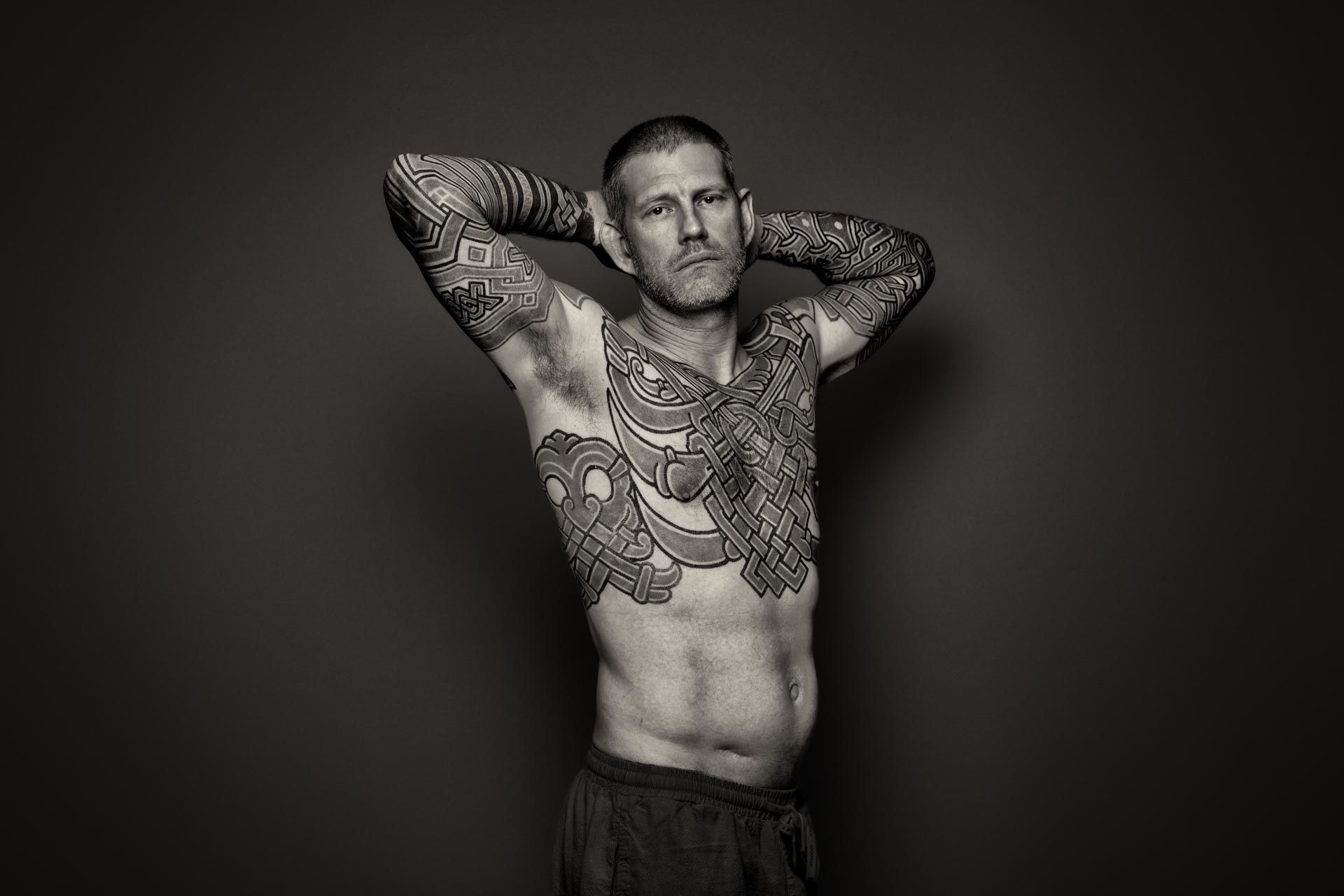
The circumstances from which the self emerges produce a force capable of consuming the very conditions of its existence.
The first attempt at containment fails. Its failure becomes a cause of what follows.
They make Drómi stronger, and Fenrir breaks that too.
More force does not solve a problem that force itself cannot solve.
Failure produces knowledge. Its consequences alter the conditions from which subsequent understanding arises.
The answer comes from a different kind of craft, itself a consequence of the force it serves to contain.
Gleipnir appears slight, soft and incapable of holding such a creature.
The strongest anchors may not look like chains. Love, friendship, respect, joy and belonging do not merely sustain the self. They are among the circumstances from which it emerges.
The destructive force participates in the production of the conditions of its own containment.
Knowledge, intention and action arise from preceding circumstances. There is choosing, but no independent author of the choice.
Fenrir struggles against Gleipnir, but the harder he struggles, the tighter it binds.
Resistance becomes part of the mechanism of containment. A cause becomes subject to its own consequences.
Transformation carries a cost. What is lost becomes part of the conditions from which what follows arises.
The destructive force is not merely opposed. It is held in relationship to other forces. Those relationships are constitutive of what we call the self.
Understanding the origins of a destructive force does not diminish its capacity for destruction. There can be containment without condemnation, and consequence without blame.
But Fenrir can no longer move as he once did.
The force remains, but the relationships through which it finds expression have changed.
The binding alters Fenrir, just as Fenrir has altered those who bound him.
Nothing acts without having been acted upon. Nothing is transformed without participating in further transformation.
The wound is both consequence and cause. What is absent continues to shape what is present.
No arrangement of forces is permanent. The conditions from which the present emerges are already becoming the conditions of something else.
The wolf, the binding, the anchor and the wound are each part of the same unfolding story.
Their distinction is useful in describing what occurs, but none stands independently of the process.
Neither the wolf nor the gods stand outside the fate that unfolds through them.
There is causation without independent authorship, perspective without a separate observer, and continuity without fixed identity.
The binding of Fenrir is neither the beginning nor the end.
Every consequence inherits a history and becomes part of the history of what follows.
The story continues.
There is no person watching from the riverbank. There is only the river.
There is no fixed thing that becomes.
There is only becoming.
Transforming and eternal.


 (c) Ilan Wittenberg

Leave a Reply
Want to join the discussion?Feel free to contribute!