









Tag Archive for: Award winning photographer
2018 Auckland Photographer of the Year
Delighted to win the prestigious title: 2018 Auckland Photographer or the Year by the New Zealand Institute of Professional Photography! The award goes to the Auckland and Northland NZIPP member with the highest accumulated score from their four top prints in the annual NZIPP Iris Professional Photography Awards. Held in Wellington this year, the Iris Awards is New Zealand’s only professional photography competition. The aim of these print awards is to recognise and honour the best in contemporary photography from New Zealand and overseas. The awards showcase cutting-edge imagery and top, creative photographic talent. They celebrate the excellence, providing a platform for recognition within the industry and the wider public. The event also raises the profile of photography throughout New Zealand, providing an annual showcase of superb imagery and creative photographic talent. It provides an excellent opportunity for photographers to gain widespread exposure for the fruits of their creative efforts. The Iris Awards are open to all photographers in New Zealand and to members of approved overseas professional photography organisations by entering up to 10 prints across a range of categories. All prints are judged in an open forum over a three-day period, the best of which are awarded gold, silver and bronze awards.
Here is a collection from Ilan award winning prints:
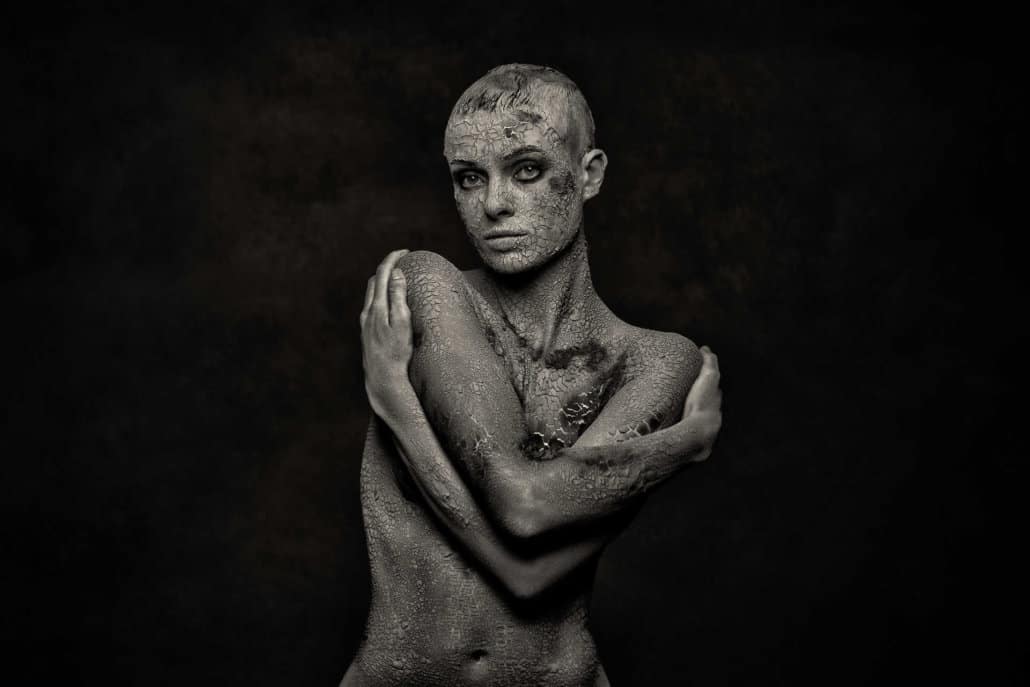
Cracked
“It took more than two hours to apply the paste onto Alicia when small pieces started falling apart. I love the sad look in her eyes!” The two each other online and began brainstorming ideas for a portrait photograph that was ‘timeless’. “I loved the idea of applying a mask onto her face and extending it to her torso. The idea was to create a cracked earth background using drought as the theme”, Ilan says.
“We actually first discussed doing something quite elaborate but the more we talked the more it developed into more of a personal piece”, Alicia comments.
Collaborating with someone else is always a risk Ilan states, it may not always work out the way you envision it to. After finding a potential model, the next challenge is to ensure that there is a shared vision. “We plan, we talk, we think about the outfit, about the theme. We talk about what the model is comfortable doing etc. The stars have to align too… The model and I have to be on the same wavelength and if they bring an idea that I think works then together we’re a great team.”
Ilan and Alicia both stress the importance of having an open mind when it comes to collaborating with someone, particularly for a creative project. “It’s difficult to add anything new to the creative space without honesty because it allows our unique selves to come through”, Alicia says.
Ilan focuses on monochrome portraits that allow the subjects to really shine in their channel of storytelling. His portraits often involve “ordinary people”, posing nude, which opens them up to a new sense of vulnerability and allows the audience to focus on the bare elements. “Most people stay hidden behind technology these days and lose that special human connection with each other so it’s a real art to work with people and bring out that magic in them.”
In a world overloaded with information and sensationalistic “visual clutter” which are competing for our attention; Ilan states that his goal is to create pieces that distinguish themselves as “extraordinary” “Forgetting the technicality of the picture, you really need to ask yourself, ‘is there a visual statement? Does it have any emotional impact?’”
Alicia agrees, “There are plenty of photos out there, of women especially, who try to look how they think they should look when in front of a camera due to the huge pressure on us to look a certain way. So the idea of was to try and work against that”.
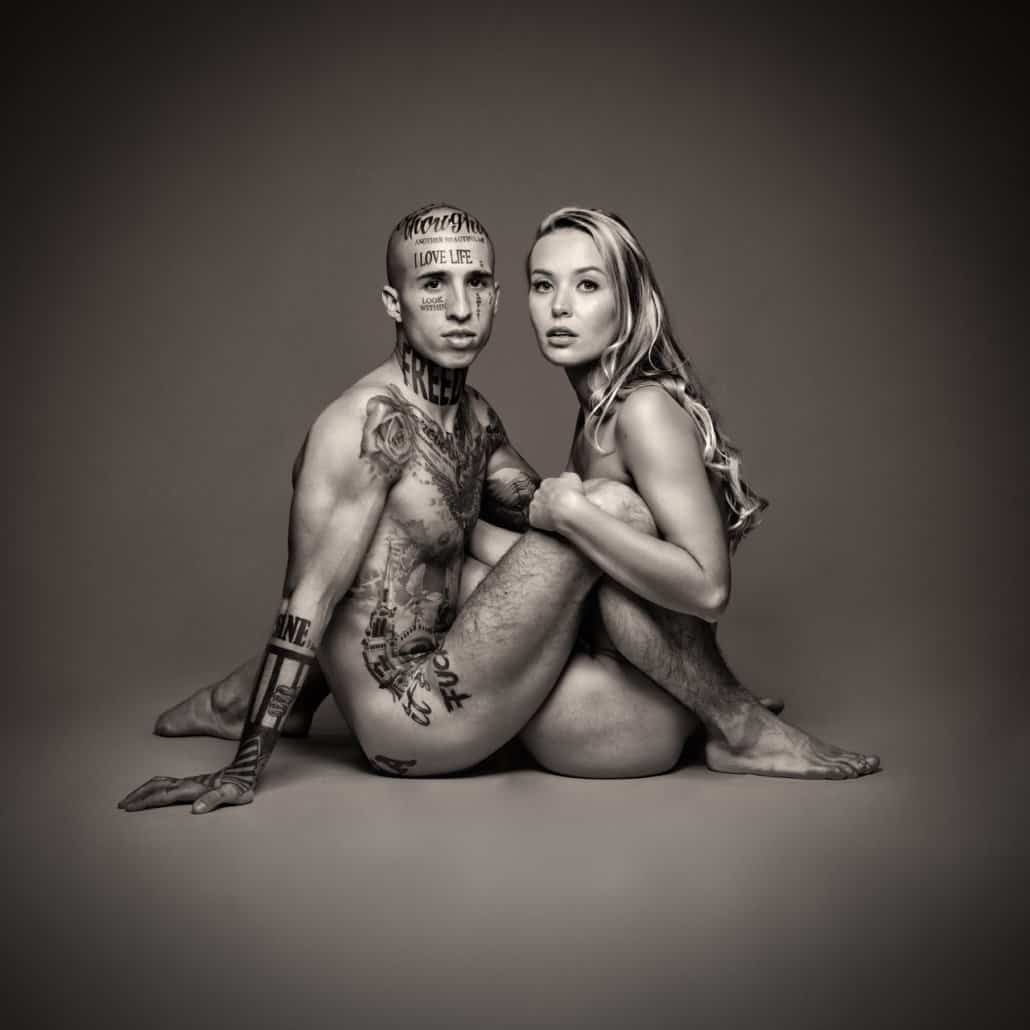
Beauty and the Beast
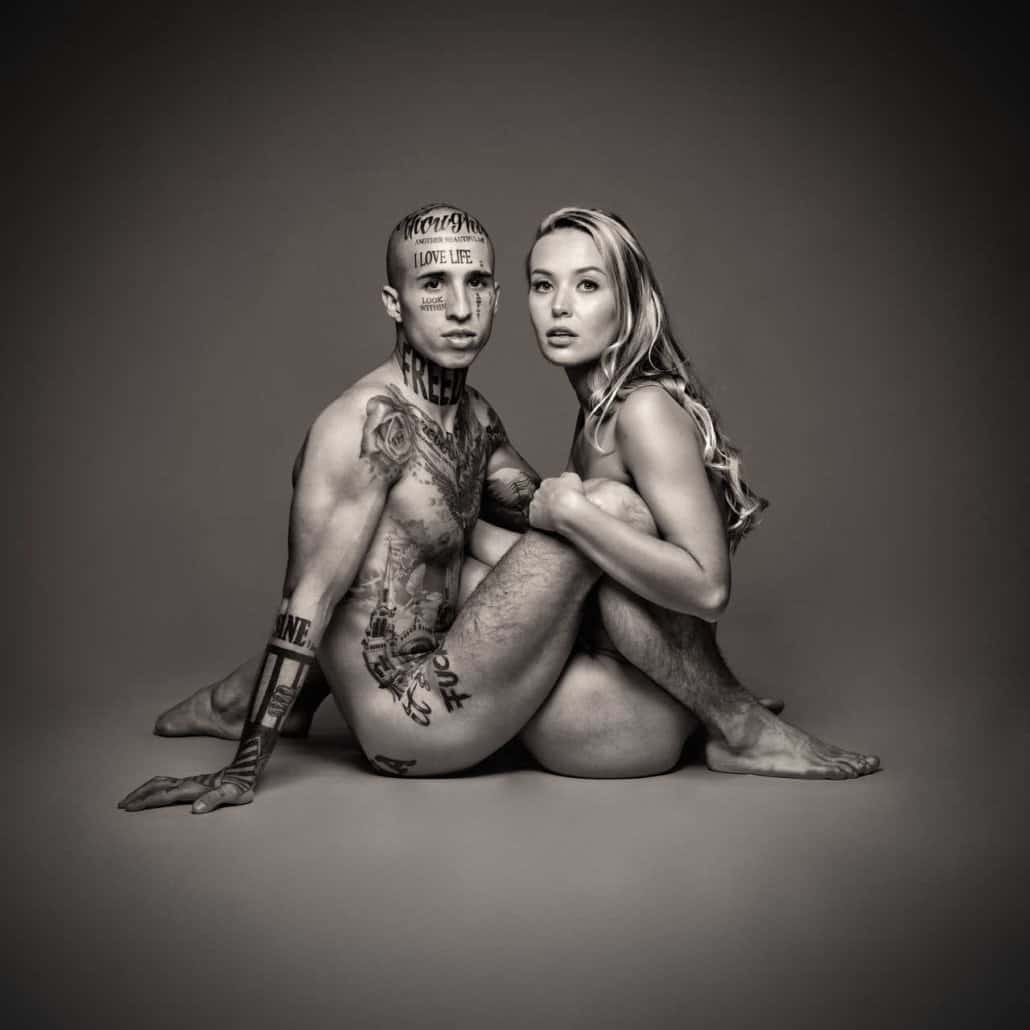
I met Catalin and Elena at the Takapuna Sunday market and this is the result!
Catalin’s message for life is written on his face – and his head – in Times Roman: “another beautiful day”, his first face tattoo, on his forehead, beneath “watch your thoughts” in large italics, circling his shaven head.
Below his right eye, a clearly defined “look within” contrasts with a vertical “un-comfort” running from above the left eye down his cheek but divided by the eyebrow.
And the word FREEDOM is highly visible around his neck. His message is “it doesn’t matter what you look like. You don’t have to impress people. Look within yourself. Respect each other. Don’t give up on dreams”. He dropped out from school at 17, having developed depression because of back injuries.
By the age of 18, he began using alcohol and drugs, because “that was the message in the media”. At 21, he decided to run away from his problems and went to Australia. There he was arrested three times and collected minor convictions for bad behaviour.
Then “it all changed”. He left behind his bad associates, stopped using alcohol and drugs, and focused on “being the best I could be, every day”. His mission is to “inspire and motivate teenagers and young adults to make wise decisions, stay on the right path and never give up on dreams”.
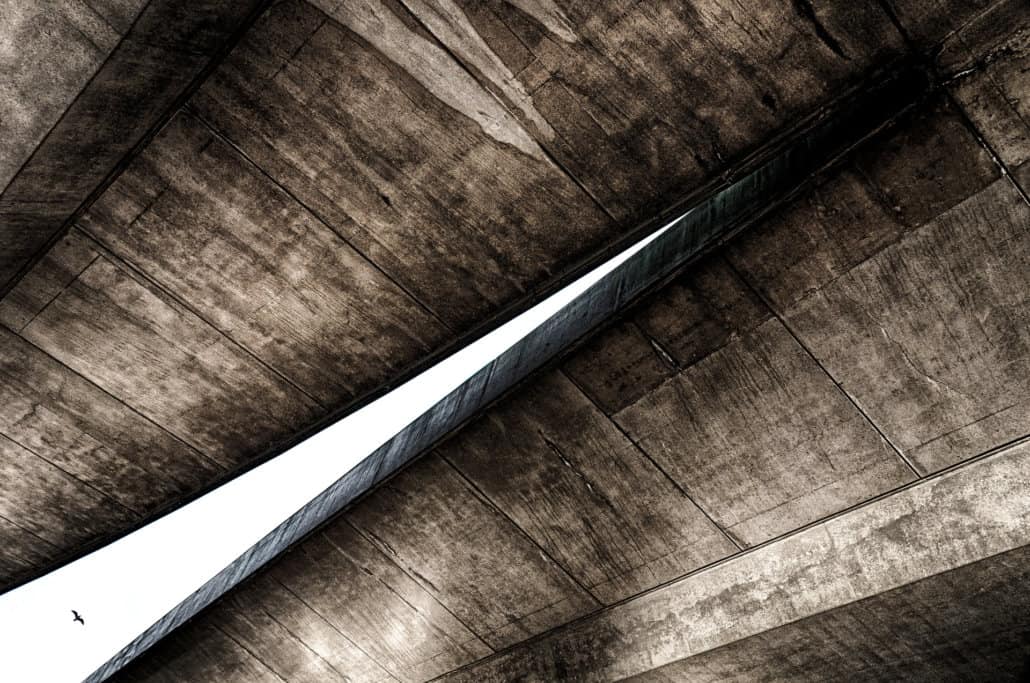
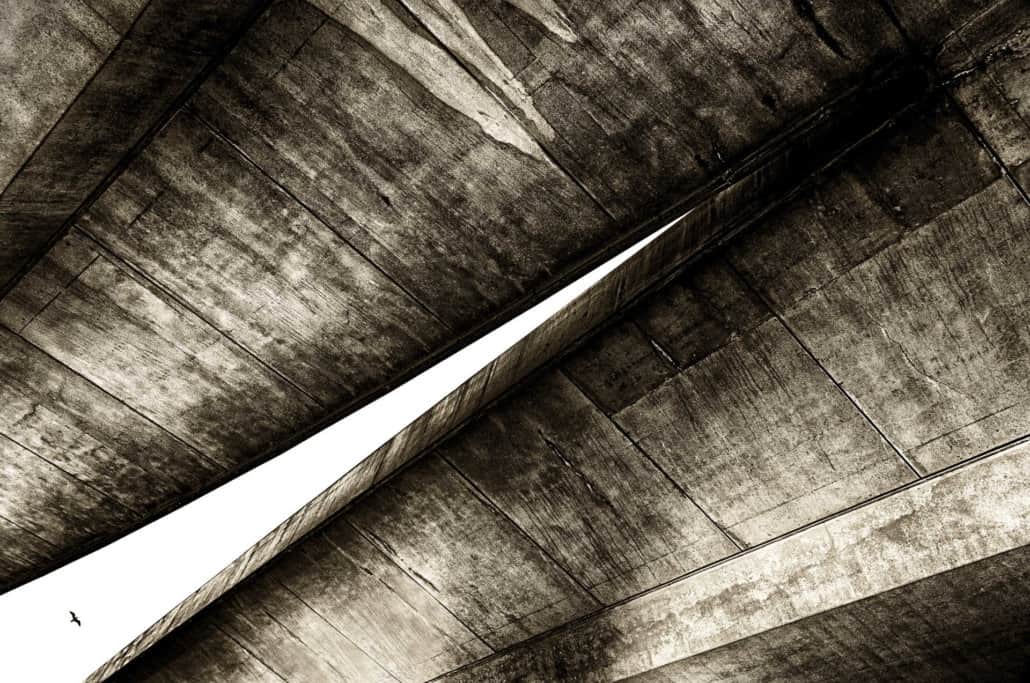
Convergence
“I photographed this beautiful underpass of two merging lanes in Vancouver. The bird is not really a lucky coincidence, just some creative Photoshop.”
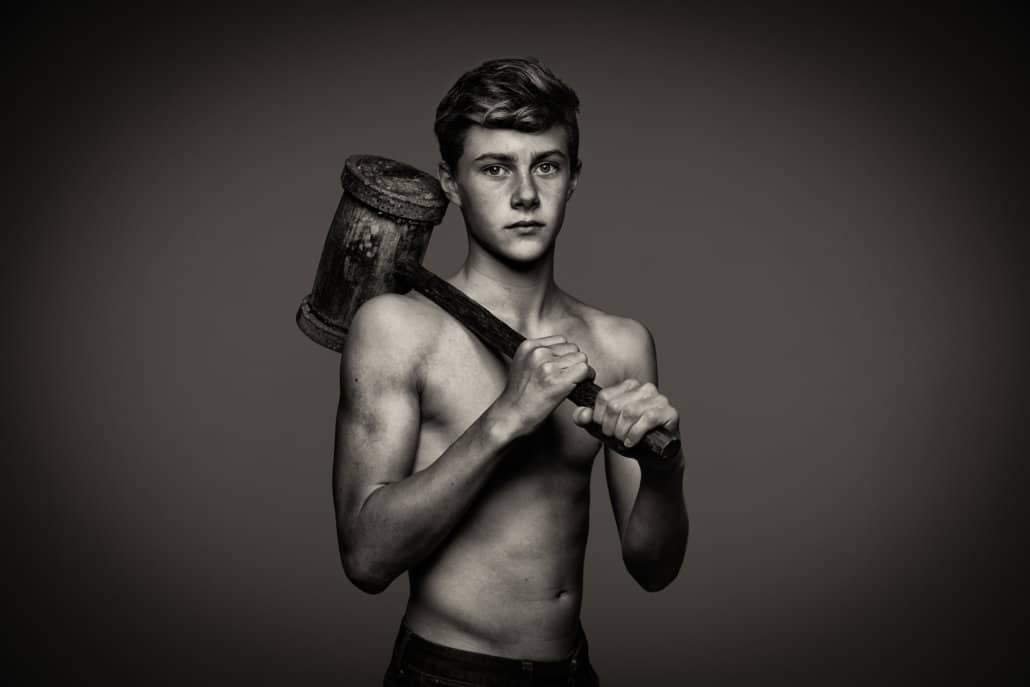
“I met young Riley and mum at the Radiology clinic and said that he should be a model! Bronwyn called me about six weeks later and I met them both at Wow Photography studio – this is the result! I love his innocent and confident eyes, his beautiful hair and the way his fists grab the large hammer – simply classic!
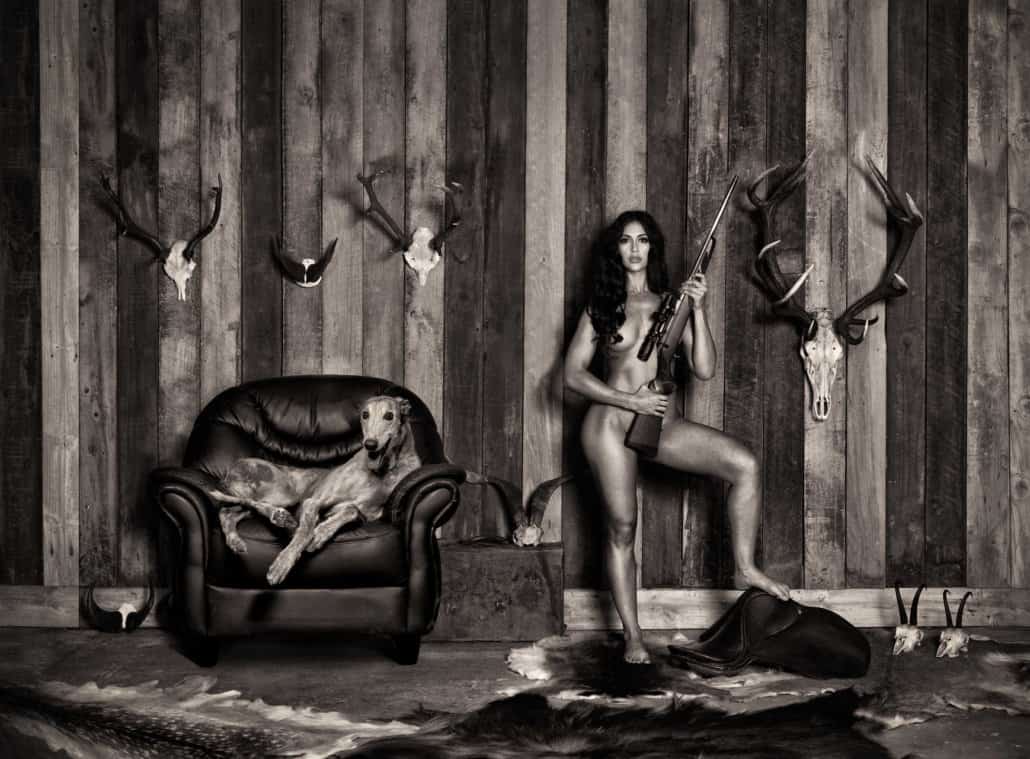
The Hunter
“I met stunning Kaitlin at an old barn. We set up her stags on the wall and the skins on the floor. Kaitlin posed beautifully with one foot on the horse saddle which I purchased three days earlier at the Takapuna Sunday market. Kaitlin is a body builder and a hunter, the dog’s photo was created in my studio.“
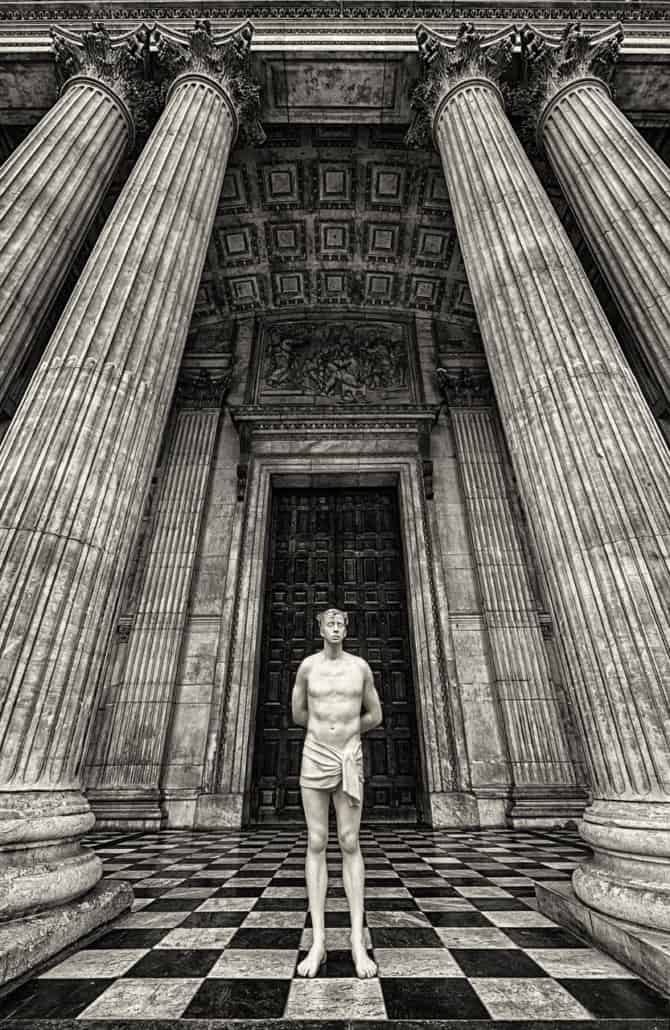
Jesus Christ
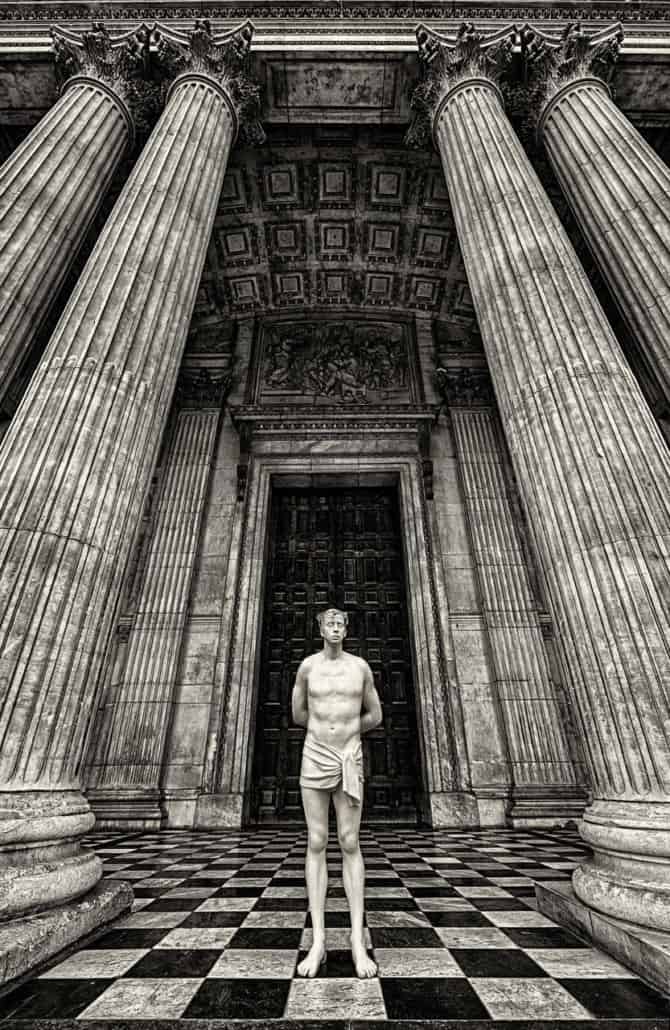
“This is life-size sculpture of Jesus Christ with his hands tied behind his back which was placed at the entrance to St. Paul’s Cathedral in London. Most people think that this is a real person – that is really cool! I love the leading lines and the majestic arches with the massive columns on both sides!”
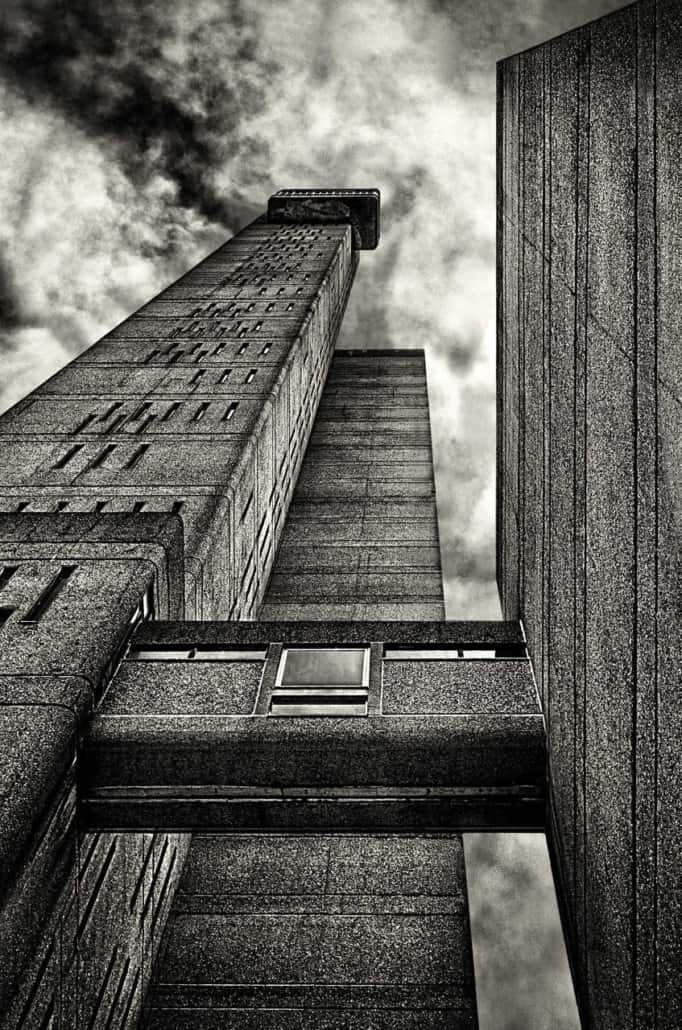
Trellick Tower ©Ilan Wittenberg
Trellick Tower is located on the Cheltenham Estate in Kensal Town, London. Opened in 1972, it had been commissioned by the Greater London Council and designed in the Brutalist style by architect Ernő Goldfinger. “I waited for the right formation of clouds to enhance the tower’s gritty and ominous look. I love the leading lines and the texture of the bare concrete!”
Beautiful Kemi
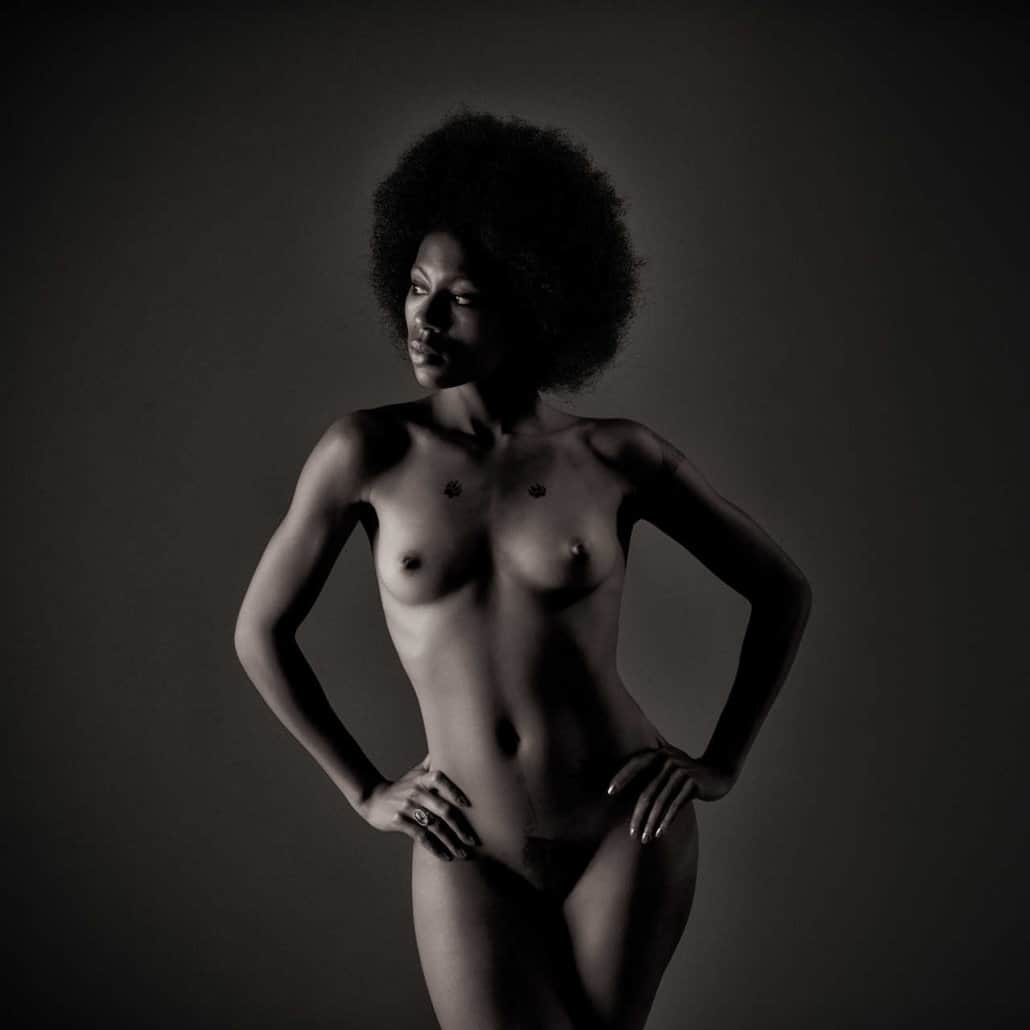
I received an email from beautiful Yemi with the title “Model from the USA”! It turned out that Yemi is also a fashion designer who was staying in Davenport for holiday and was looking to get a few editorial shots to add to her portfolio. Yemi was flying back to the States then next day so we quickly got together to create a series of beautiful portraits. During lunch, Yemi was very hungry and said she might be pregnant… We spoke about the possibility of her having an abortion when Yemi explained that her mom conceived her behind stage at the end of a rock concert and that her mom chose to keep her. Yemi is now a proud single mom.
Lest We Forget
New Zealand entered the Second World War by declaring war on Nazi Germany on September 3rd 1939. Around 140,000 New Zealand personnel served overseas for the Allied war effort. At its peak in July 1942, New Zealand had 154,549 men and women under arms. By the end of the war a total of 194,000 men and 10,000 women had served in the armed forces. On Anzac Day, April 25 2014, NZIPP members across the country combined their efforts for a project of national significance: to photograph New Zealand’s last surviving World War Two servicemen and women. These portraits are gifted to the Royal New Zealand Returned Services Association and to the National Archives, showing our veterans that they are remembered and that the sacrifices they made for our freedom is still honoured. This is the story of 21 World War Two veterans.
Emil Bilinski

Portrait Photographer Auckland
Austrian photographer Emil Bilinski lives and creates between Warsaw, Berlin and Vienna. His work is internationally recognised throughout Europe and Australia. A member of the Ilford masters, the Coloratti Pro and the Rotolight masters of light. His professional path started at the side of Andreas Bitesnich. Throughout 20 years of his career, Bilinski has collaborated with remarkable artists, including Anne Leibovitz, Peter Lindbergh and David La Chapelle. His editorial work featured in renowned publications, such as Harper’s Bazaar, Cosmopolitan, Elle, Matador, Diva, Women, Playboy, Schön, Sunday Times Perth and others. He is frequently a jury member at the tv modelling competition shows such as Top Model (Austria and Poland) and Supermodel. Emil Bilinski specialises in beauty, fashion and commercial photography. He created signature campaigns for L’oreal, Carlo Rossi, Timotei, Wella, Sebastian Professional, Samsung and Braun among many others. His photographs have continued to contribute to the Schwarzkopf Austrian hairdressing award for the last 11 years. His imagery inspires with subtlety of aesthetics, timeless vision, remarkable perception of reality and meticulous approach to the construction of light.
Trellic Tower
Trellick Tower is located on the Cheltenham Estate in Kensal Town, London. Opened in 1972, it had been commissioned by the Greater London Council and designed in the Brutalist style by architect Ernő Goldfinger. The tower was planned to replace outdated social accommodation, and designed as a follow up to Goldfinger’s earlier Balfron Tower in East London. It was the last major project he worked on, and featured various space-saving designs, along with a separate access tower containing a plant room.
High-rise apartments and Brutalist architecture were falling out of favour by the time the tower was completed, and it became a magnet for crime, vandalism, drug abuse and prostitution. Its fortunes gradually improved in the 1980s after the establishment of a residents’ association. Security measures were put in place and a concierge was employed, which led to lower crime levels. By the 1990s the tower had become a desirable place to live, and although it still contains predominantly social housing, demand for private flats has remained high. A local landmark, it has retained its distinctive concrete facade as a result. A fire broke out in 2017, but the concrete structure meant damage was limited, unlike the nearby Grenfell Tower. Trellick Tower has featured on film and television several times. The tower is 98 metres tall. It has a long, thin profile, with a separate lift and service tower linked at every third storey to the access corridors in the main building, which overall has 31 floors. Flats above and below the corridor levels have internal stairs, while the 23rd and 24th floors are taken up by maisonettes split over the two floors.
The service tower has two additional floors higher than the main building, which includes a projecting plant room that holds the main heating system. It is fully linked by stairs in addition to the lifts, and also has a refuse chute mechanism. The majority of the plant and the hot water storage tank is located in the plant room, which reduces the need for pumps and reduces the amount of pipework needed. Shorter pipe runs also reduce heat loss. The oil-fired boilers originally used became obsolete due to the 1973 oil crisis, the year after the tower opened. The flats now have electric heaters and the plant room, although disused, still houses most of the now defunct mechanism.
Goldfinger designed the entire tower block freehand on butcher’s paper. He planned various communal areas, and purposefully put slight variations in the structure so that each apartment would look different. Throughout, quality materials were used in construction, including better fixtures and finishing the balconies with cedarwood. It it was intended to be a good example of social accommodation alongside modern design.
Goldfinger had been encouraged to construct Trellick Tower by the London County Council. He took his inspiration from Balfron, where he had moved into one of the apartments in order to experience what life would be like for the tenants, and invited residents round for regular cocktail parties to tell him their likes and dislikes. This feedback was incorporated into the design of Trellick Tower. Many immigrants from the West Indies and the Caribbean settled in Trellick Tower, as for them it was one of the few affordable places to live in London. Construction costs ran to £2.4 million.
By the time Trellick Tower opened, high-rise tower blocks were becoming unfashionable. Goldfinger had intended that tenants should to be vetted for suitability, and petitioned the Council for the building to have proper security and a concierge but to no avail. This meant that the building was open access, and rough sleepers and drug criminals took up residence in its corridors. Drying rooms on the ground floor, designed by Goldfinger to stop tenants hanging laundry on the balconies, were vandalised before the tower block opened.
By the late 1970s Trellick Tower was a scene of crime and anti-social behaviour, and many tenants were very reluctant to move in. On one occasion vandals set off a fire extinguisher on the 12th floor, with water from the sprinkler system flooding the lifts and leaving the tower without electricity, heat or running water over the Christmas period. A pensioner was forced to use the stairs after all the lifts were out of order, and subsequently collapsed and died. On the 15th floor, a 27-year-old woman was dragged from one of the lifts and raped. The tower became nicknamed “The Tower of Terror” and residents attempted to be re-housed. In 1982 a man was killed after jumping off the top of Trellick Tower when his parachute failed to open. He was a member of a group of dangerous sports enthusiasts who were interested in jumping off fixed objects.
With the introduction of the “right to buy” council homes, several of the flats were bought by their tenants. On 8 October 1984 a new residents’ association was formed. As a result of pressure from the occupants, several security improvements including a door entry intercom system were installed and a concierge was hired in 1987. In 1994 residents in the tower, along with other residents in Kensington & Chelsea council properties, elected to self-manage the properties, in order to avoid increased rents and the threat of eviction.
In 1991 Sand Helsel, Professor of Architecture at RMIT, made a BBC documentary praising Trellick Tower, which helped to change public opinion in its favour. The tower subsequently became more respectable owing to its location in Notting Hill and the gentrification of Golborne Road. Property prices rose and flats in the tower came to be regarded as highly desirable residences; requests to sell flats began to be posted on the tower’s communal noticeboard. By 1999 a flat in the tower could sell for £150,000 (£239,000 as of 2016). The tower itself has become something of a local cult landmark and was awarded a Grade II listing in 1998, which included the main building and the adjacent row of shops and amenities.
On 19 April 2017 the top floors of the tower caught fire, believed to have been started by a discarded cigarette. There were no injuries. The building’s listed status meant that the concrete facade could not be covered over, which is thought to have prevented a far worse fire similar to Grenfell Tower which happened a few months later.

Cracked
Cracked (c) Ilan Wittenberg 2018 Buy Now

The power of two – when creative visions collide

Advice from the winner of the Sony Alpha Awards 2018
When it comes to producing award winning photography, Ilan Wittenberg is the man to talk to. Recently adding the Sony Alpha Award 2018 (winning both the Portrait category and the Grand Prize) to his collection of industry accolades, Wittenberg says that the key to producing the award winning eerily beautiful portrait was collaboration with model Alicia.
The two found each other online and began brainstorming ideas for a portrait photograph that was ‘timeless’. “I loved the idea of applying a mask onto her face and extending it to her torso. The idea was to create a cracked earth background using drought as the theme”, Ilan says.
“We actually first discussed doing something quite elaborate but the more we talked the more it developed into more of a personal piece”, Alicia comments.
Collaborating with someone else is always a risk Ilan states, it may not always work out the way you envision it to. After finding a potential model, the next challenge is to ensure that there is a shared vision. “We plan, we talk, we think about the outfit, about the theme. We talk about what the model is comfortable doing etc. The stars have to align too… The model and I have to be on the same wavelength and if they bring an idea that I think works then together we’re a great team.”
Ilan and Alicia both stress the importance of having an open mind when it comes to collaborating with someone, particularly for a creative project. “It’s difficult to add anything new to the creative space without honesty because it allows our unique selves to come through”, Alicia says.
Ilan focuses on monochrome portraits that allow the subjects to really shine in their channel of storytelling. His portraits often involve “ordinary people”, posing nude, which opens them up to a new sense of vulnerability and allows the audience to focus on the bare elements.


Sony Alpha Awards – Winner of Grand Prize and Portrait Category
“Most people stay hidden behind technology these days and lose that special human connection with each other so it’s a real art to work with people and bring out that magic in them.”
Ilan has won a plethora of awards and also judges at competitions for the Photographic Society of NZ and the NZ Institute of Professional Photography.
In a world overloaded with information and sensationalistic “visual clutter” which are competing for our attention; Ilan states that his goal is to create pieces that distinguish themselves as “extraordinary” “Forgetting the technicality of the picture, you really need to ask yourself, ‘is there a visual statement? Does it have any emotional impact?’”
Alicia agrees, “There are plenty of photos out there, of women especially, who try to look how they think they should look when in front of a camera due to the huge pressure on us to look a certain way. So the idea of (the winning portrait) was to try and work against that”.
Ilan strongly encourages budding photographers to meet up with like-minded individuals such as through the NZ Photographic Society meetings, to have their work critiqued by professionals in order to grow, just like he does. “It’s a friendly environment for people to be critiqued and grow because you don’t know what you don’t know. Even listening to critiques of other photographs really helps”.
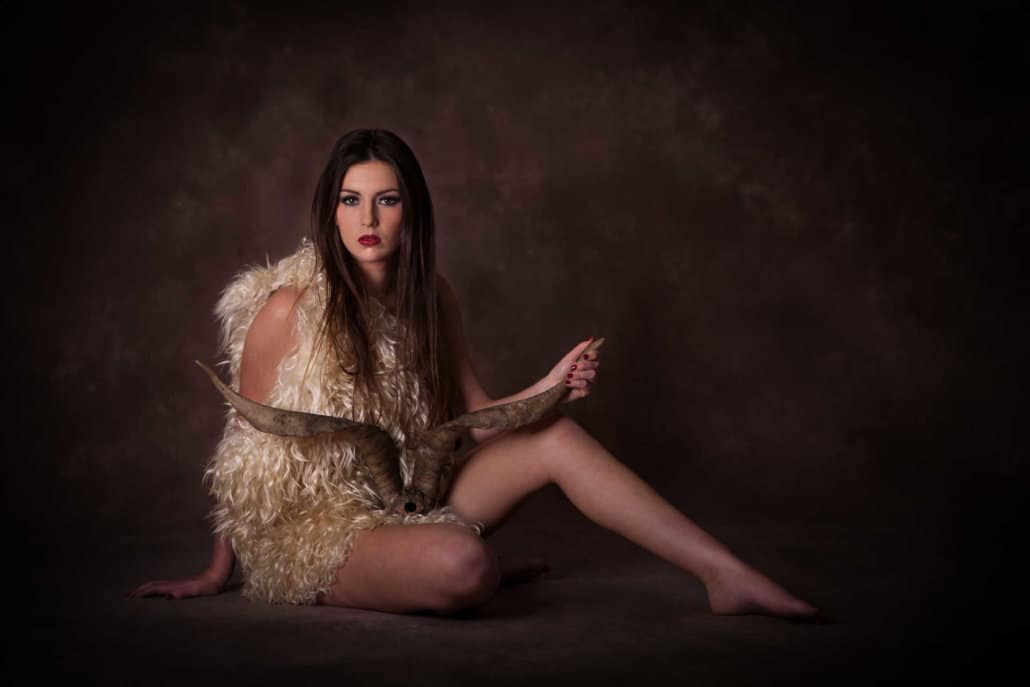
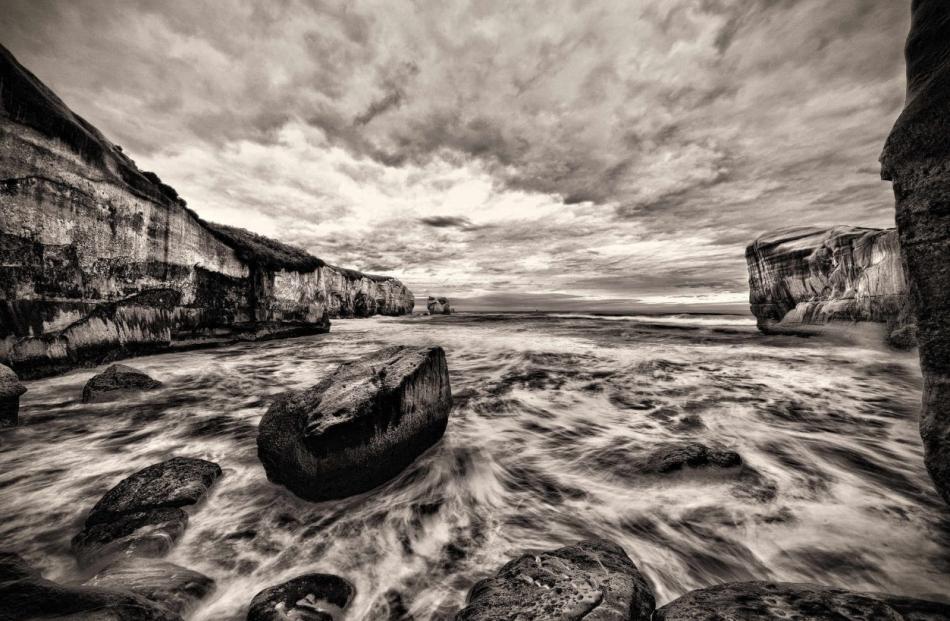
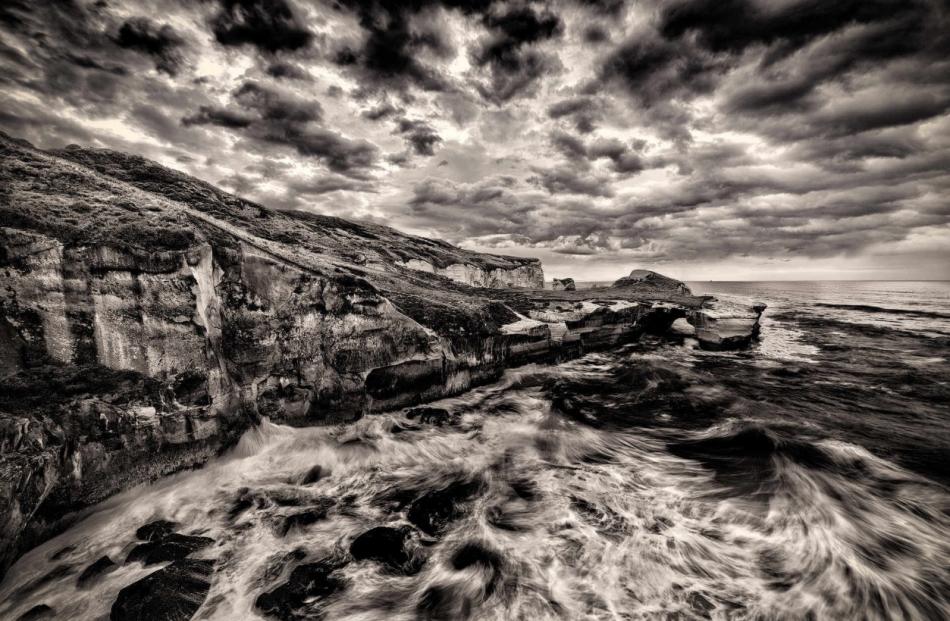
The Huntress

The Huntress © Ilan Wittenberg 2020 Limited Edition of 9 + 2AP Buy Now



Liane and the Patu stone

Liane with Moko Kauwae tattoo wearing a Korowai cloak and holding a Patu stone
Behind my eyes are my tupuna.
Behind me is a waka, carrying my tupuna and loved ones. Now and then, my waka is out of balance, with too many on one side. Without full understanding how to keep it balanced and without the guide of my father’s kaumatua,
Walking my path alone.
With pride I stand staunch with my moko, upholding our family name, especially in the public eye.
I was born in the small town of Temuka. My father was a shearing contractor and mother owned a craft shop. My father is full blooded maori from Te Akau, Ngati Tahinga, and mother is half cast from Taranaki, Ngati Ruanui (Tangahoe). I didn’t know why I didn’t fit into society when I was younger until I was told at 33, that I could only speak maori when I was 5, when I moved to the city. I was 28 years old when I received my moko. I was blessed with two whangai children, my world. My life experiences are full and far between. I went to Avondale College then James Cook High. I left home when I was 15 (I just walked out) went to Mangawhai Heads by extended whanau. Moved back to Auckland when I was 16, went on a course at Kakāriki marae, Green Bay learning Te Reo Maori, gardening, maori crafts and helping with the Kohanga reo. Shortly after, moved in with my first serious boyfriend, had a miscarriage, which my first experience of heartbreak. At 18 I moved in with my next boyfriend (which lasted 25 years plus 5 years after) in West Harbour which opened my eyes to a new world. I got my first job doing horticulture at Hortex, exporting kiwifruit and feijoa plants.
Life has been an experience. Spiritual, family, love, happiness alcohol drugs, hurt, pain, violence, gang wars. I have met many people and walked many paths through life.
Here I am now. With nothing, starting another life. Finding myself again and looking for a job that I can fit in to, a fulfilling meaningful job.