

Tag Archive for: Monochrome


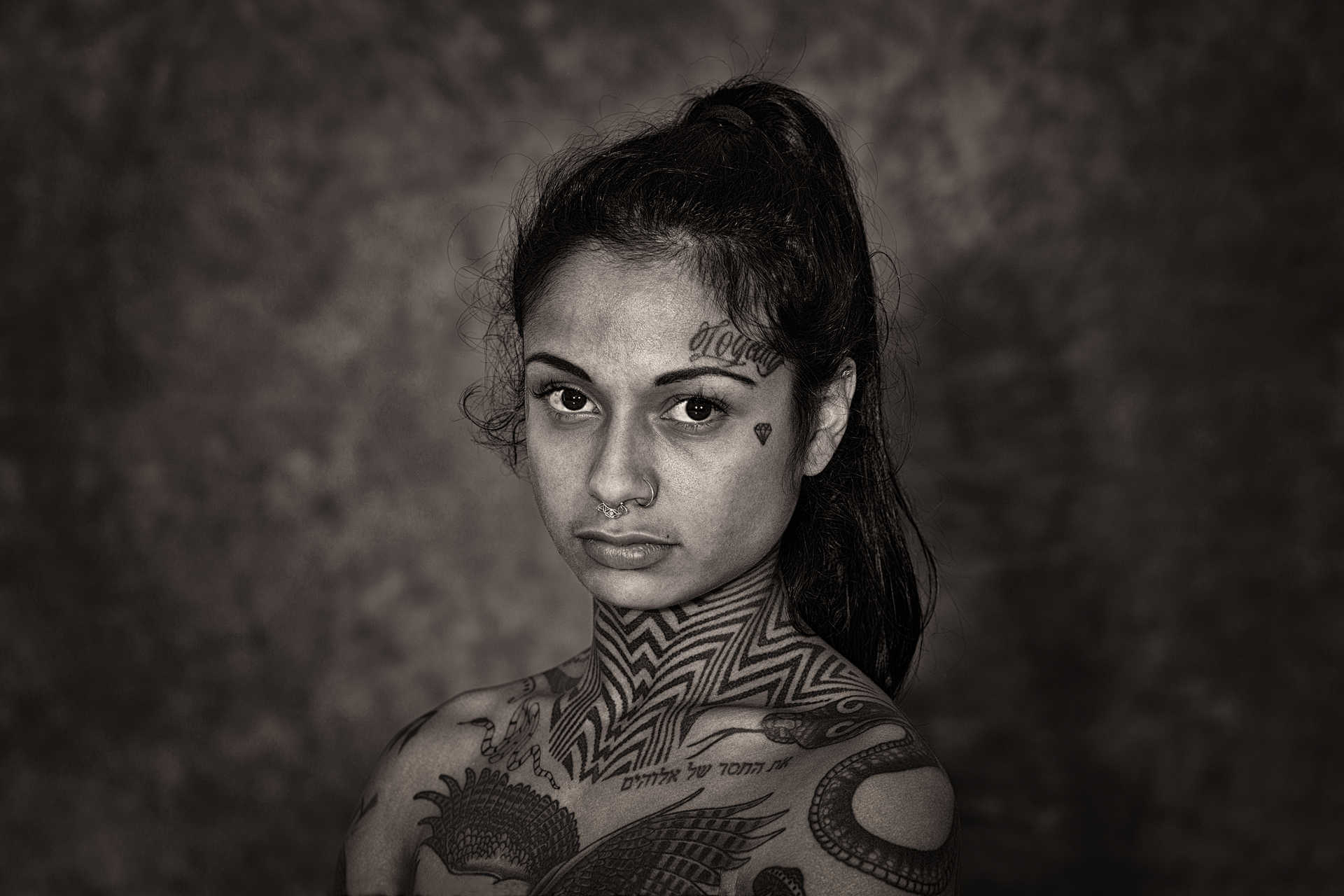
Mia
Mia
“NOTHING last forever not feelings not your bad situation nothing !! I’ve had this weird negative outlook on New Zealand for a long while I will always be a kiwi and appreciate the natural beauty of the country but the economy is seriously fucked and tall poppy syndrome is all to real stop cutting each other down !! be happy for other people’s success instead of been jealous or trying to find a way to exploit them personally when someone tells me about something good they are doing or something they are proud of I am genuinely happy for them and praise their efforts or even offer my help. this year I’ve walked away from people I thought would be in my life forever but have been rewarded with New beautiful souls who add to my life in a positive way. Often now when I meet new people I here whispers of oh she’s a rich kid or she’s got it easy. I just smile because the reality is I’m not “from money”
I made money my first job was actually McDonald’s it taught me lots I learnt to treat people with respect no matter what they looked like because hey everyone eats at maccas , millionaires the homeless everyone .. eventually I became a sex worker it got more hate than anyone I know for doing the oldest trade in the world. I invested wisely and it paid off I retired at the start of the year brought houses mortgage free and now I am working on projects so I can employ and help others. I did exactly what so many said I could not .
Exactly 4 years ago today I was going to kill myself I had no support no one to turn to for some absolute miracle I didn’t I pulled myself out of the shit I was a junky a meth addict I couldn’t see the light so I made my own. I always remember that is where I came from try stay humble and appreciate what I have Check up on your mates praise people for been good and get off your arses and do something instead of been jealous today I am 4 years meth clean and fucking proud “





Fearless
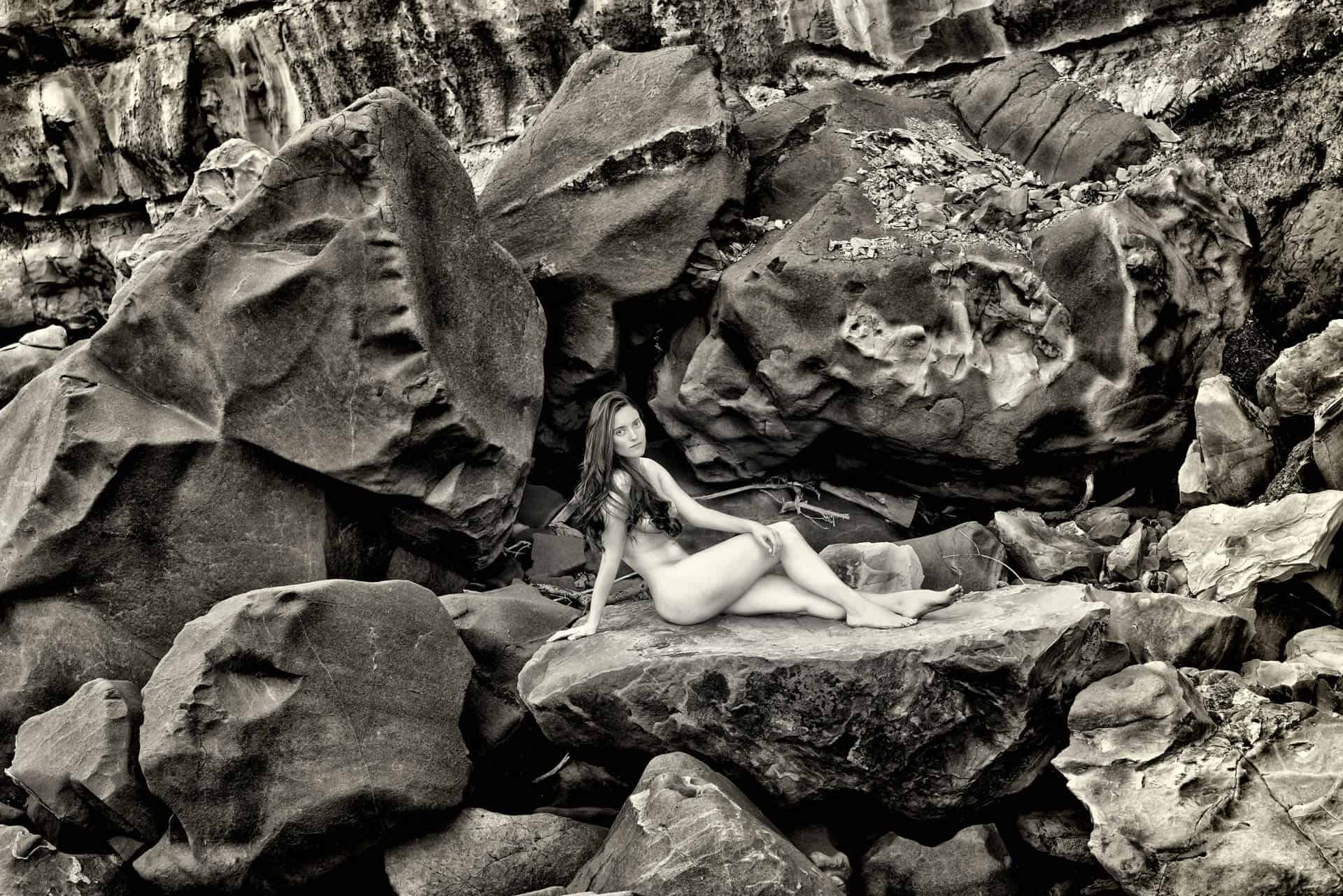
Sophie
The subject of the female figure is an artistic tradition which indicates the historic value of beauty and fertility. Nudity has been a fundamental element of art throughout history. It has been used in paintings, sculptures, and other art forms to depict the human form, to express emotions and ideas, and to convey cultural and social messages. The role of nudity in art has changed over time, with changing cultural, religious, and social attitudes towards the human body.
In ancient times, nudity was often used in art to represent the supernatural. Nude female figures represented in art can be found as early as the Upper Palaeolithic era – the last Stone Age period. Similar images which represent fertility deities, gods and goddesses in Babylonian and Ancient Egyptian art were precursors to the works of Western antiquity. Greek and Roman artists frequently depicted gods and goddesses in the nude, as a symbol of their power and divine nature. Other notable traditions of artistic nude representations can be found in India and Japan: in particular, traditional Hindu temple sculptures and cave paintings -some very explicit- indicate the value of sexuality; a reveal a culture where partial or complete nudity was common in everyday life. In Early Christian art, the naked human figure was seen as a symbol of corruption and sin.
During the Renaissance period, artists began to incorporate the nude figure in their work more frequently, using it to express the beauty of the human form and to explore the complexity of human emotions. Athletes, dancers, and warriors statically express human energy and life, while nudes express basic and complex emotions. Artists like Michelangelo and Leonardo da Vinci created famous works depicting the nude figure. In the 19th and early 20th centuries, nudity became a more controversial subject in art. Artists like Édouard Manet and Gustave Courbet challenged traditional attitudes towards the human body, introducing more realistic and honest depictions of nudity. This trend continued into the 20th century, with artists like Pablo Picasso and Salvador Dali incorporating nudity into their works to express more surreal and abstract ideas.
Today, nudity in art continues to be a source of debate and controversy. Some see it as a powerful expression of human beauty and emotion, while others view it as inappropriate or even offensive. Despite this, nudity remains an important element of art, continuing to push the boundaries of what is acceptable by society. The nude has been a prominent subject of photography since its invention, and played an important role in establishing photography as a fine art medium. Fine art nude photography is a genre that captures the beauty and aesthetic of the human body, with an emphasis on form, composition, emotional content, and aesthetic qualities. This form of photography has been practiced for centuries and can be seen in various art movements such as classical, romantic, and modern. Fine art nude photography challenges and subverts societal norms and stereotypes surrounding nudity and the human body. It also celebrate the human form and explore themes such as sexuality, gender, and identity. It can also be controversial and may be subject to censorship and societal criticism.
Erotic interest, although often present, is secondary; which distinguishes art photography from both glamour and pornographic photography. The distinction is not always clear, and photographers tend to characterise their own work subjectively, although viewers may have different impressions. The nude is a controversial subject across all artistic mediums, but more so within photography due to the inherent realism. The medium examines issues of representation and identity, sexuality and voyeurism – some nude photography deliberately blur the boundaries between erotica and art. In the context of the 21st century, it is difficult to make an artistic statement in the medium of nude photography, given the proliferation of pornographic imagery – which has tainted the artistic subject in the perception of most viewers, limiting the opportunities to exhibit or publish artistic nude images
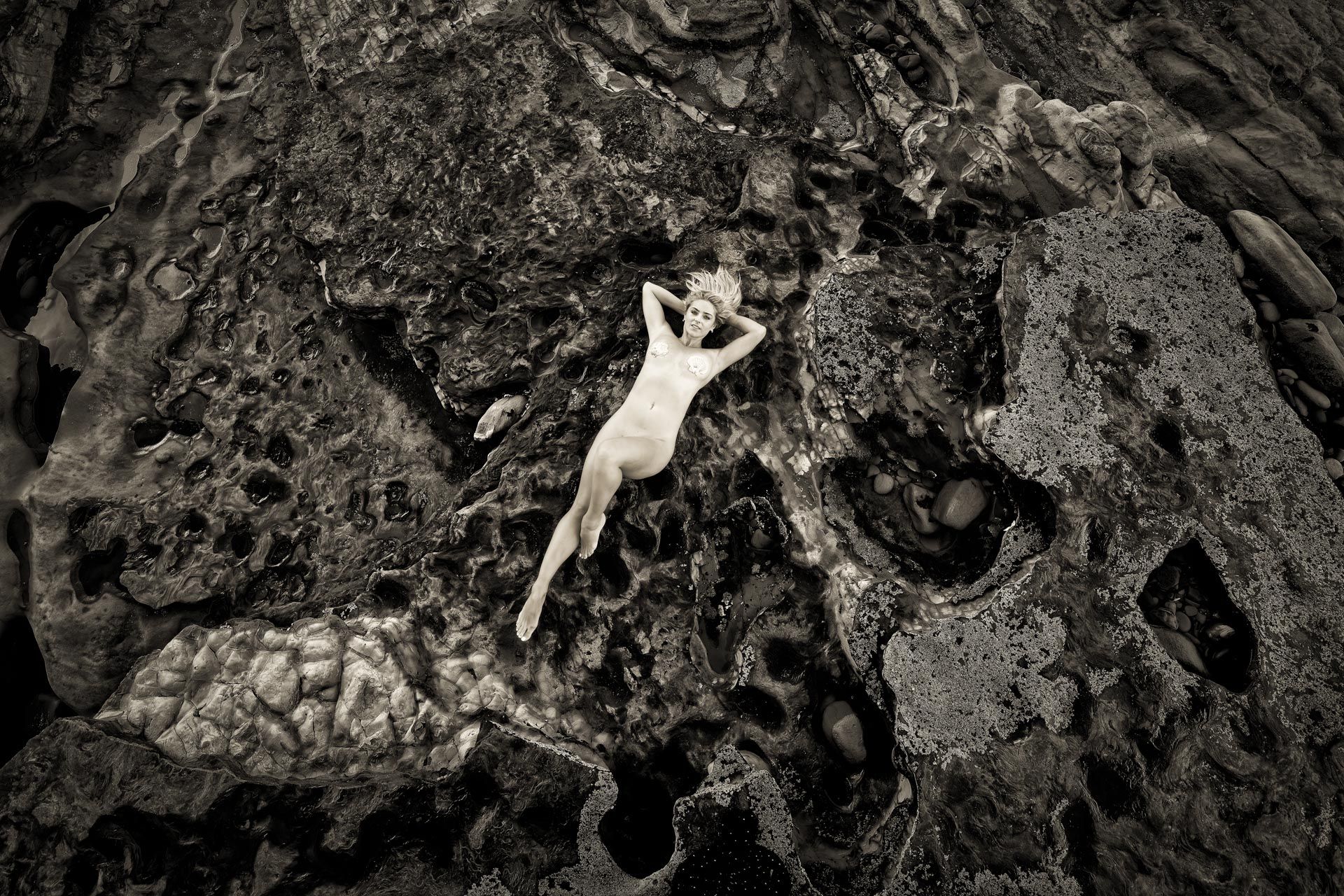
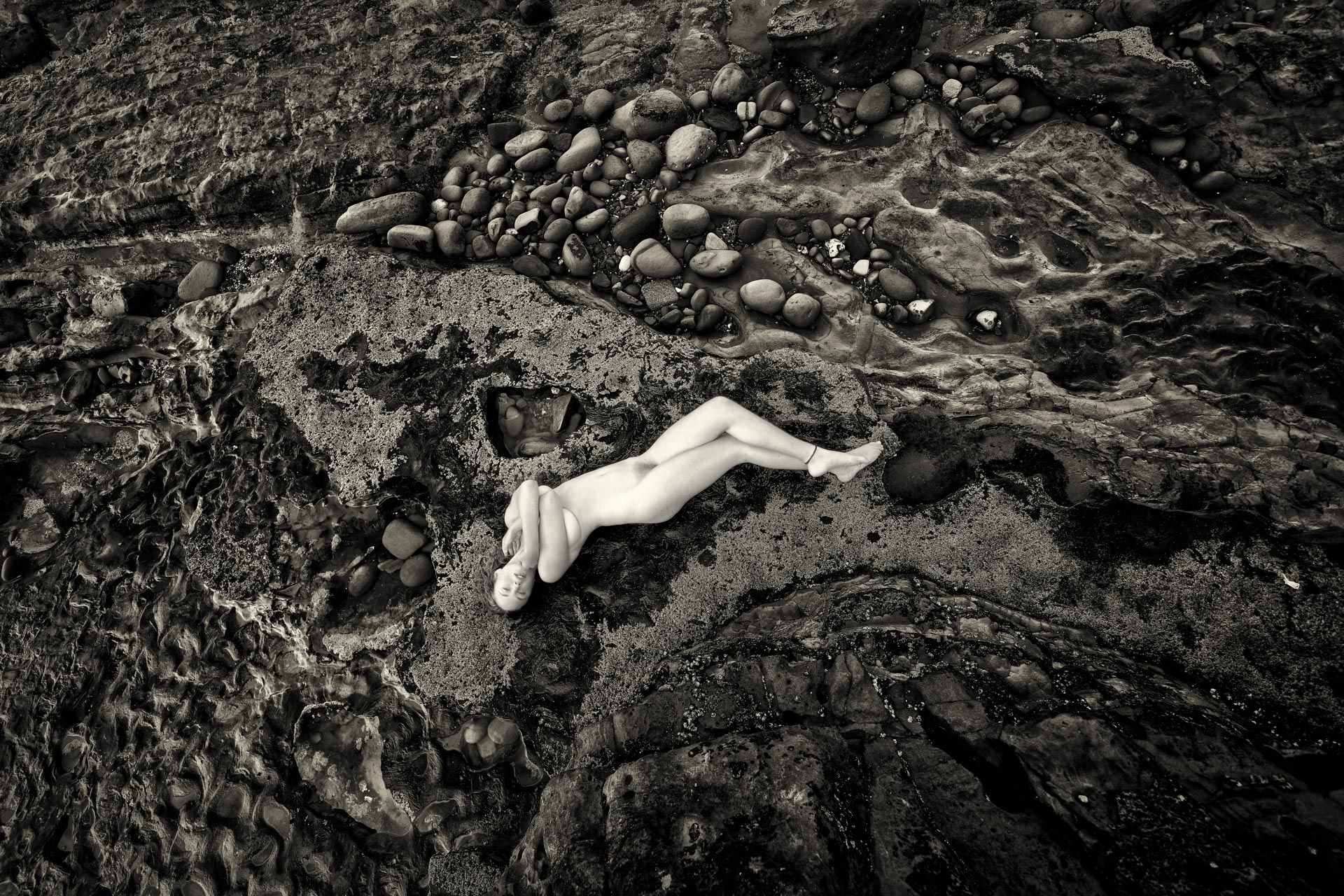
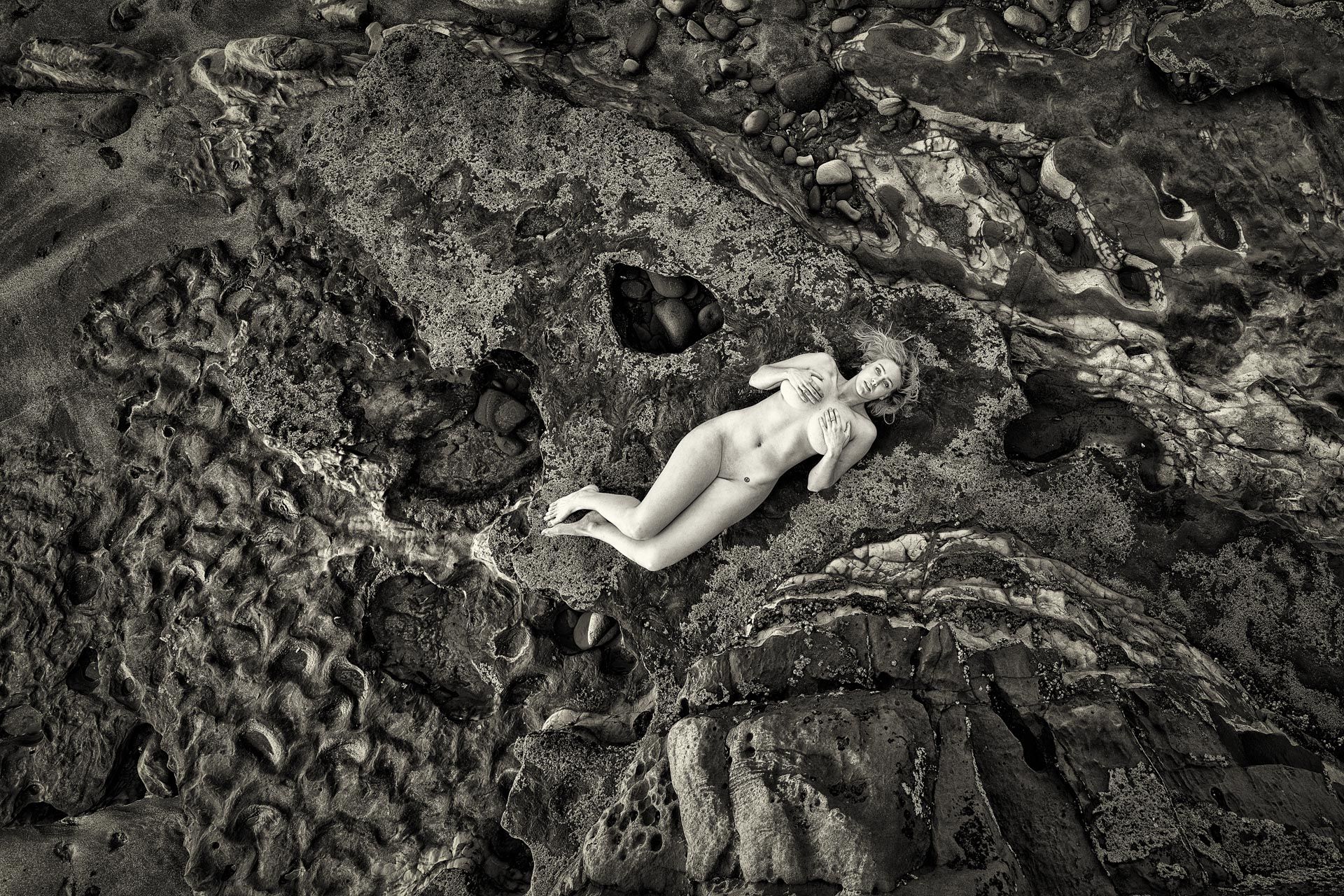
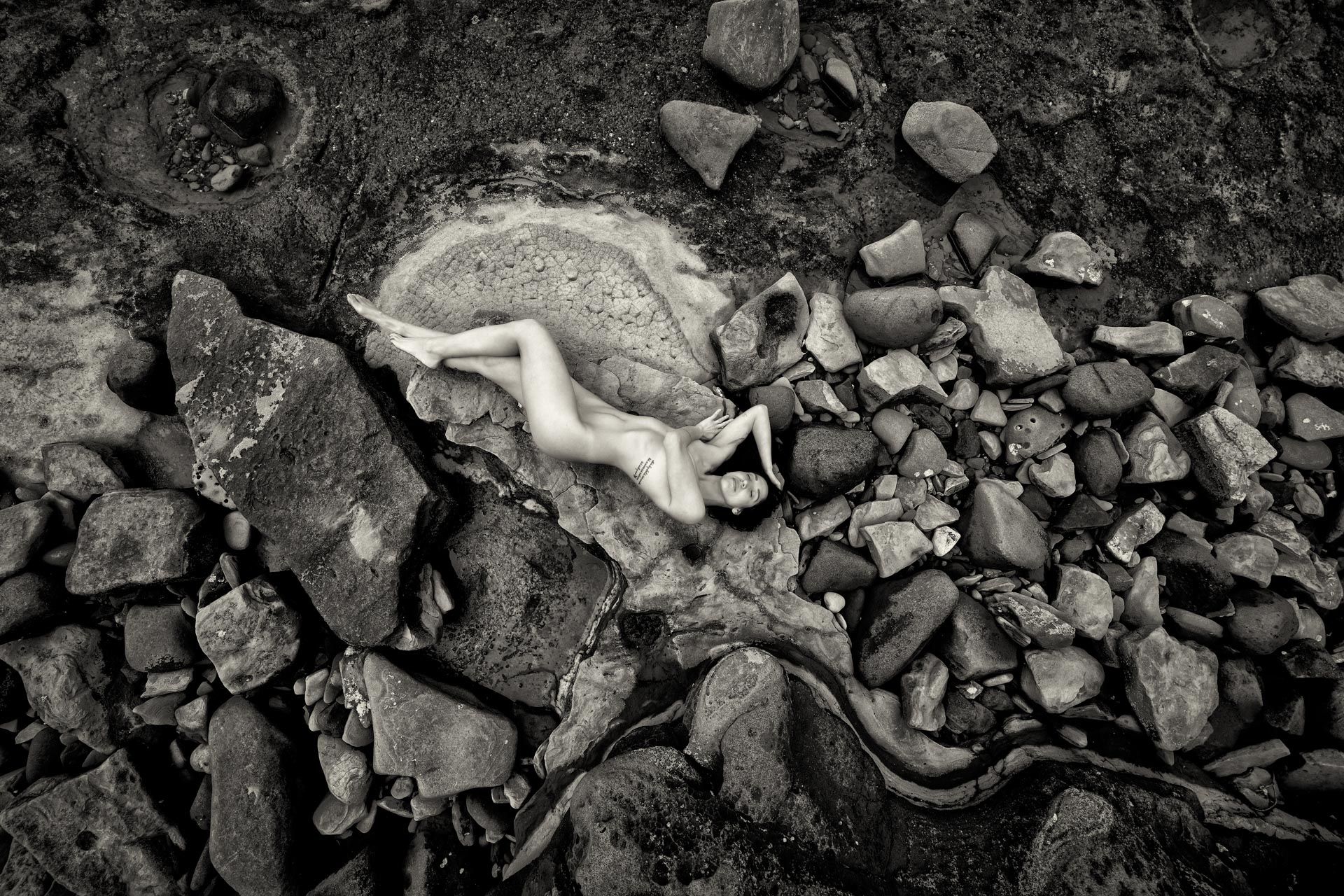
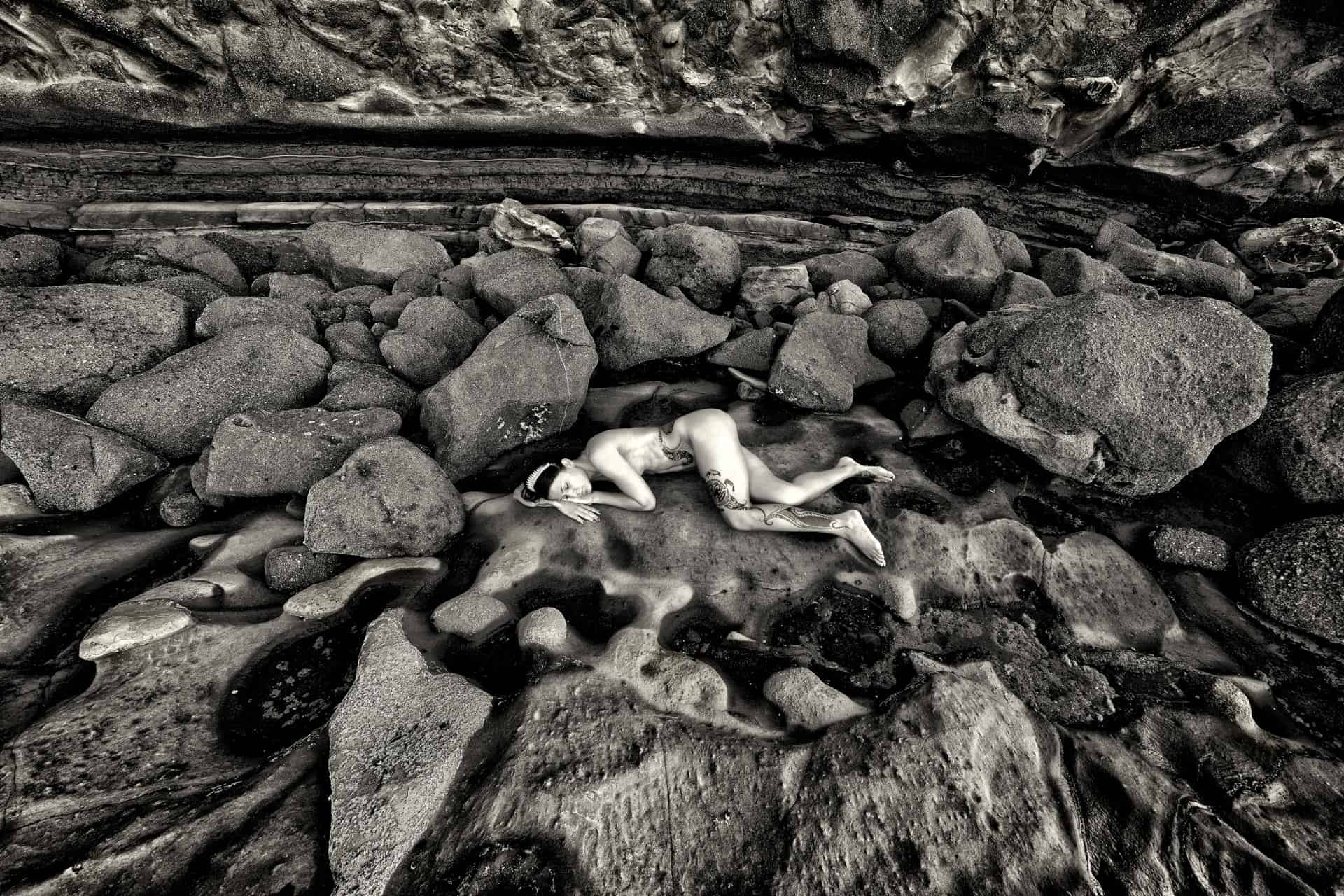
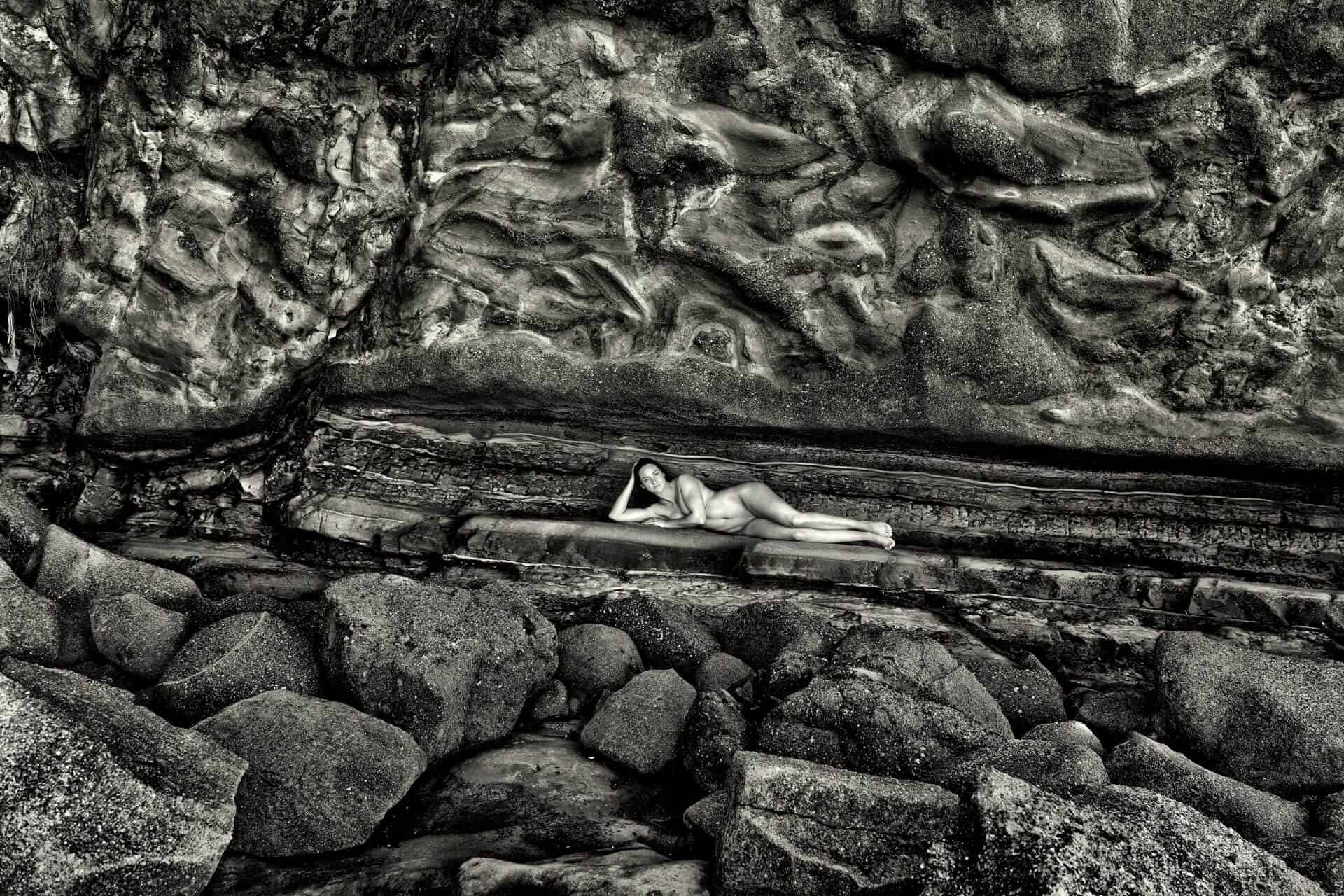
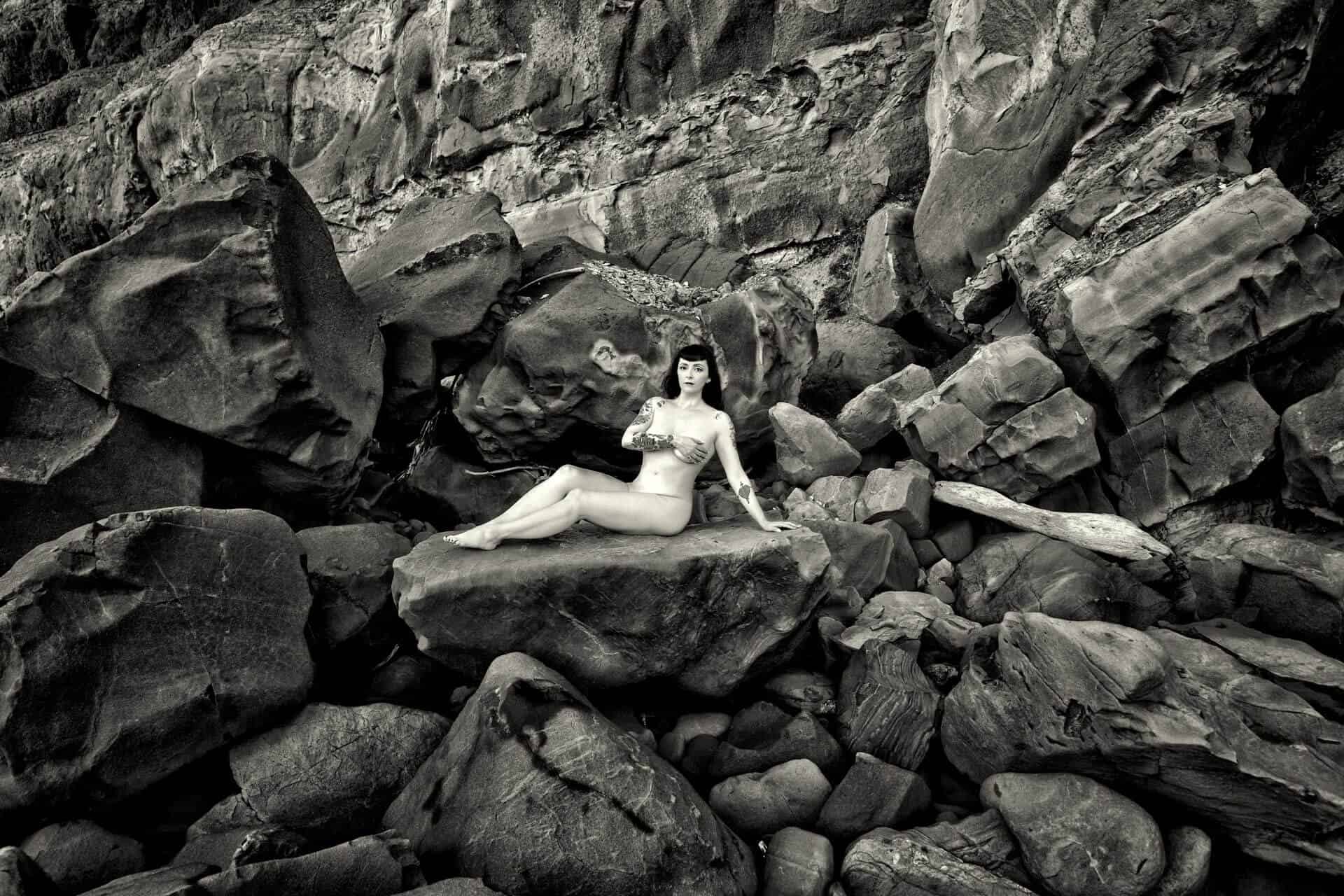
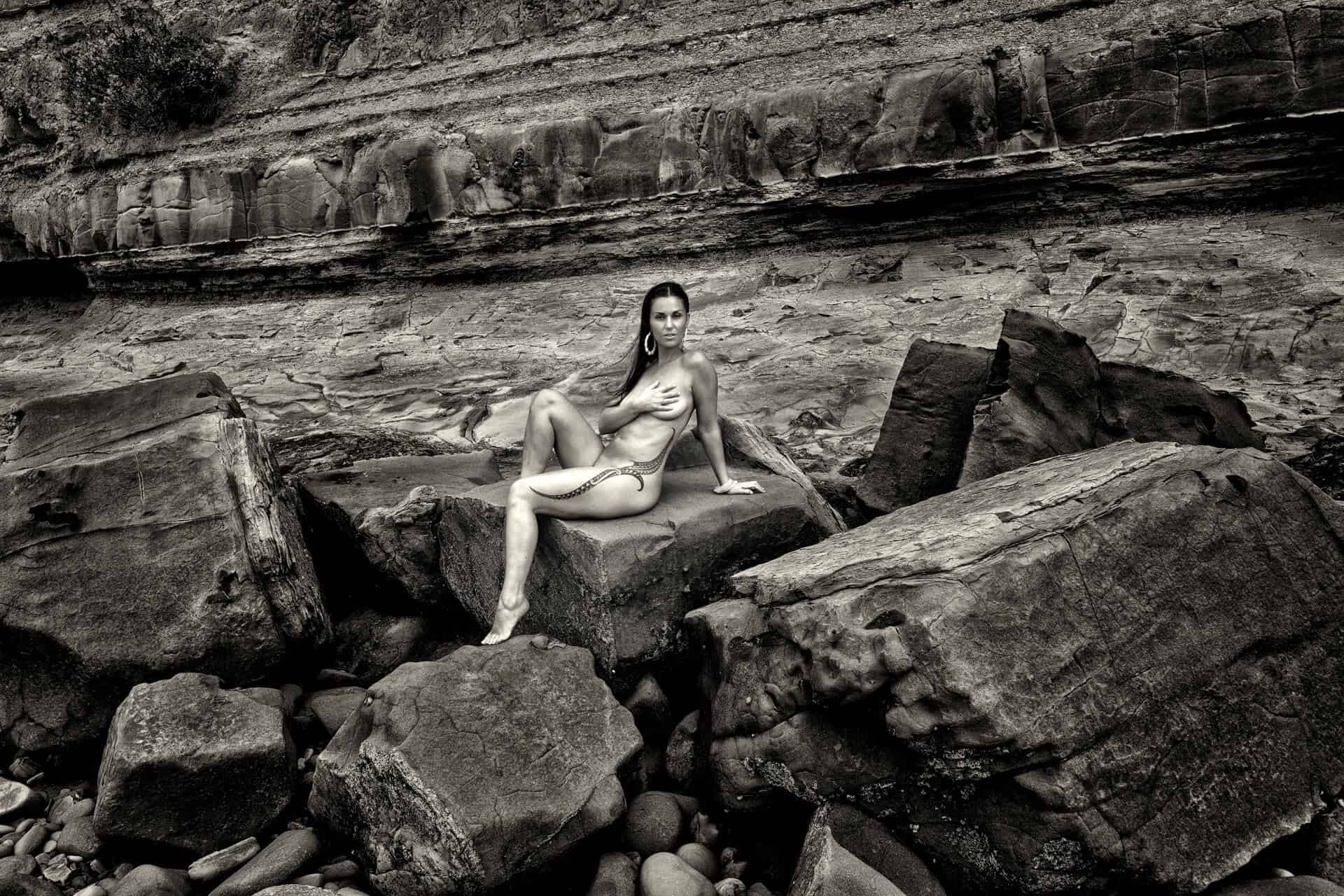
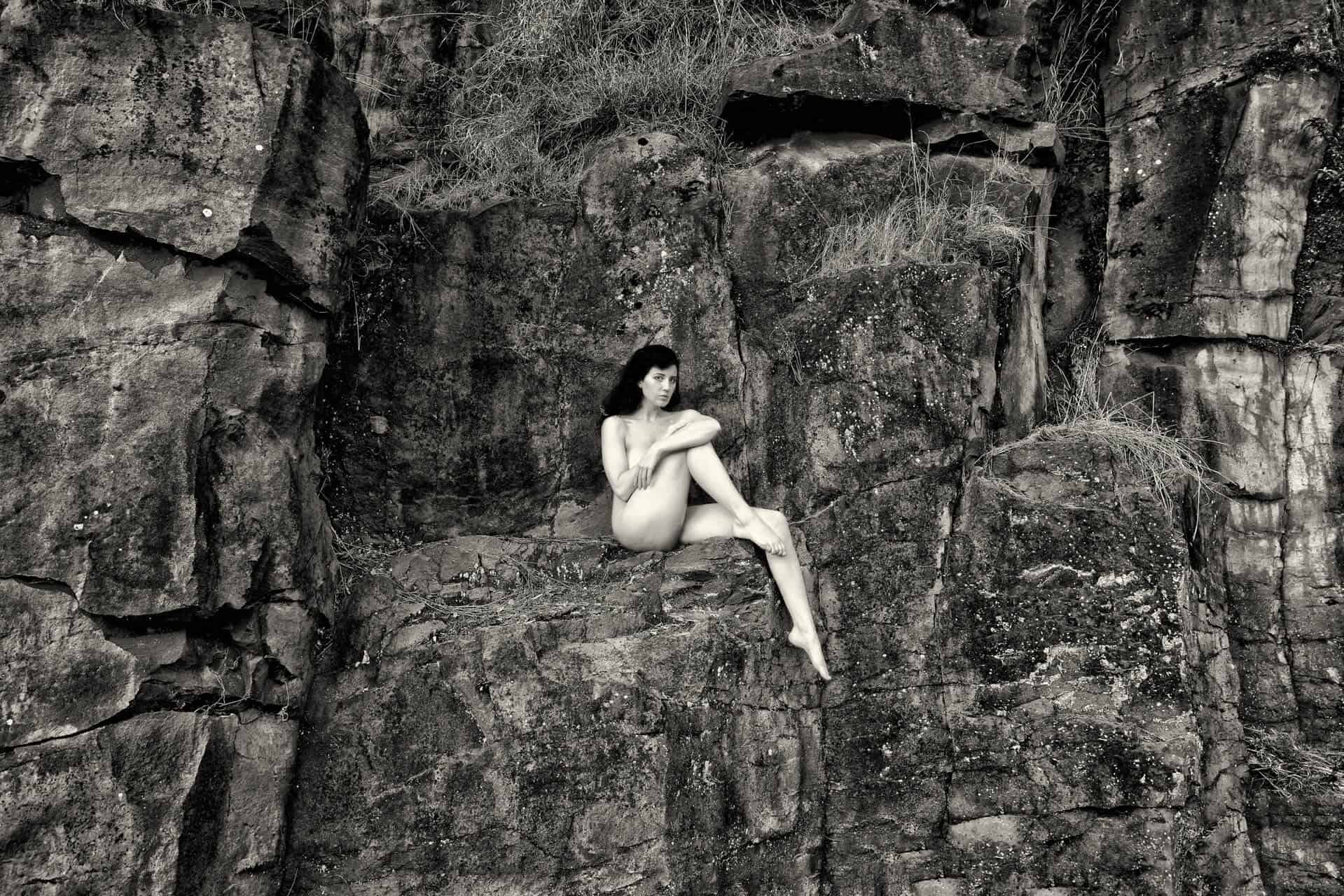
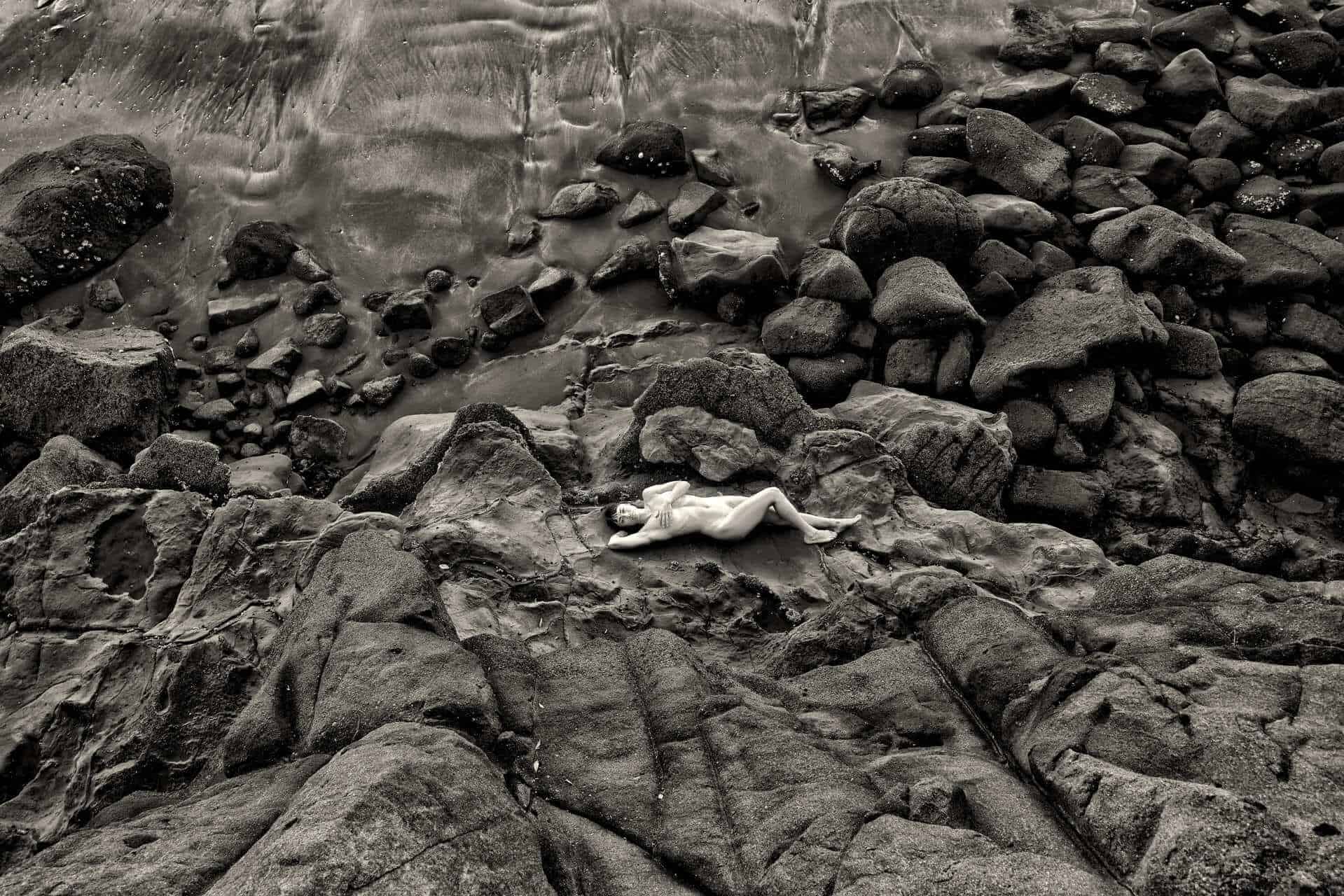
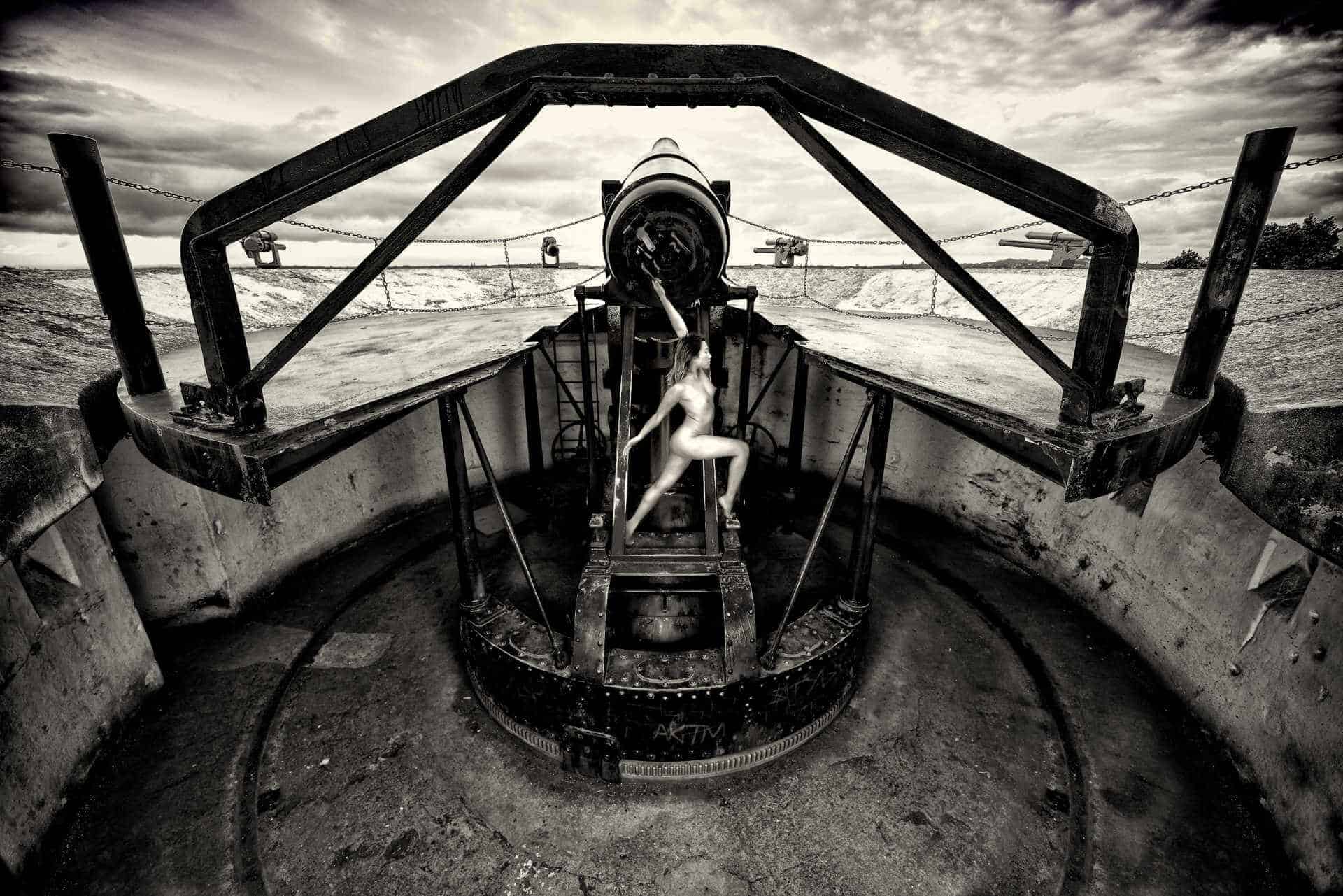
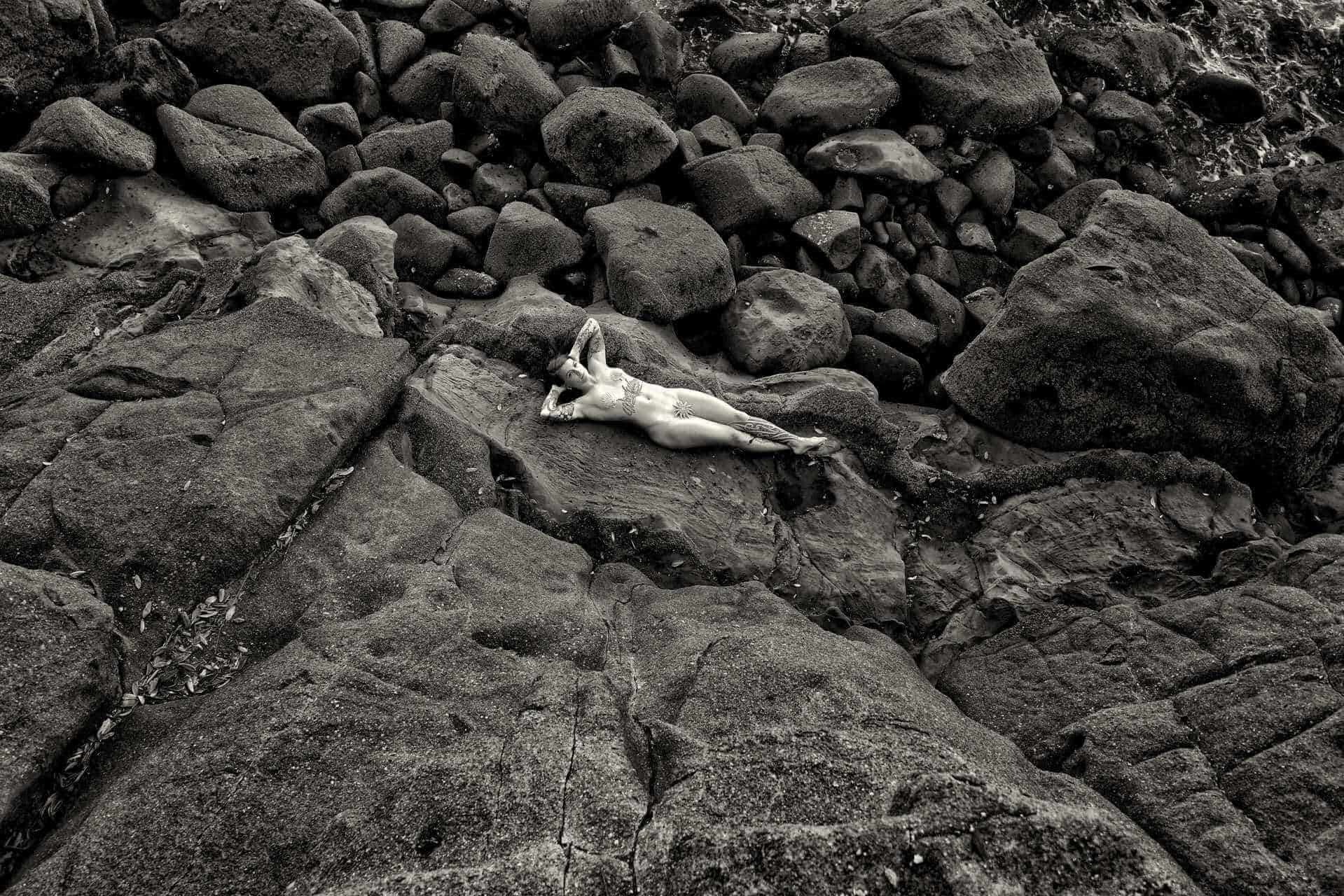
In this series, I explore the female nude figure through a collection of photographs on location. I aim to create images that are aesthetically pleasing and evoke an emotional response. I use lighting, composition, and posing techniques to create mood. I endeavor to respect the boundaries and sensitivities of my subjects and viewers and always obtain informed consent before creating these images. In presenting this series, I offer opportunities to contemplate and appreciate the juxtaposition between human and nature: soft flesh and harsh environment; life and stillness; white and black. The use of monochrome emphasises the nude shape and form, removing distracting elements to ensure that you focus on the beautiful feminine body language. These photographs portray powerful, vulnerable, and independent women who are depicted through fresh, inspiring and original artwork.
In presenting this series, I offer opportunities to contemplate and appreciate the juxtaposition between human and nature: soft flesh and harsh environment; life and still; white and black. The use of monochrome emphasises the nude shape and form, removing distracting elements to ensure that you focus on the beautiful body language. These photographs portray powerful and independent women who are depicted through fresh, inspiring and original artwork.
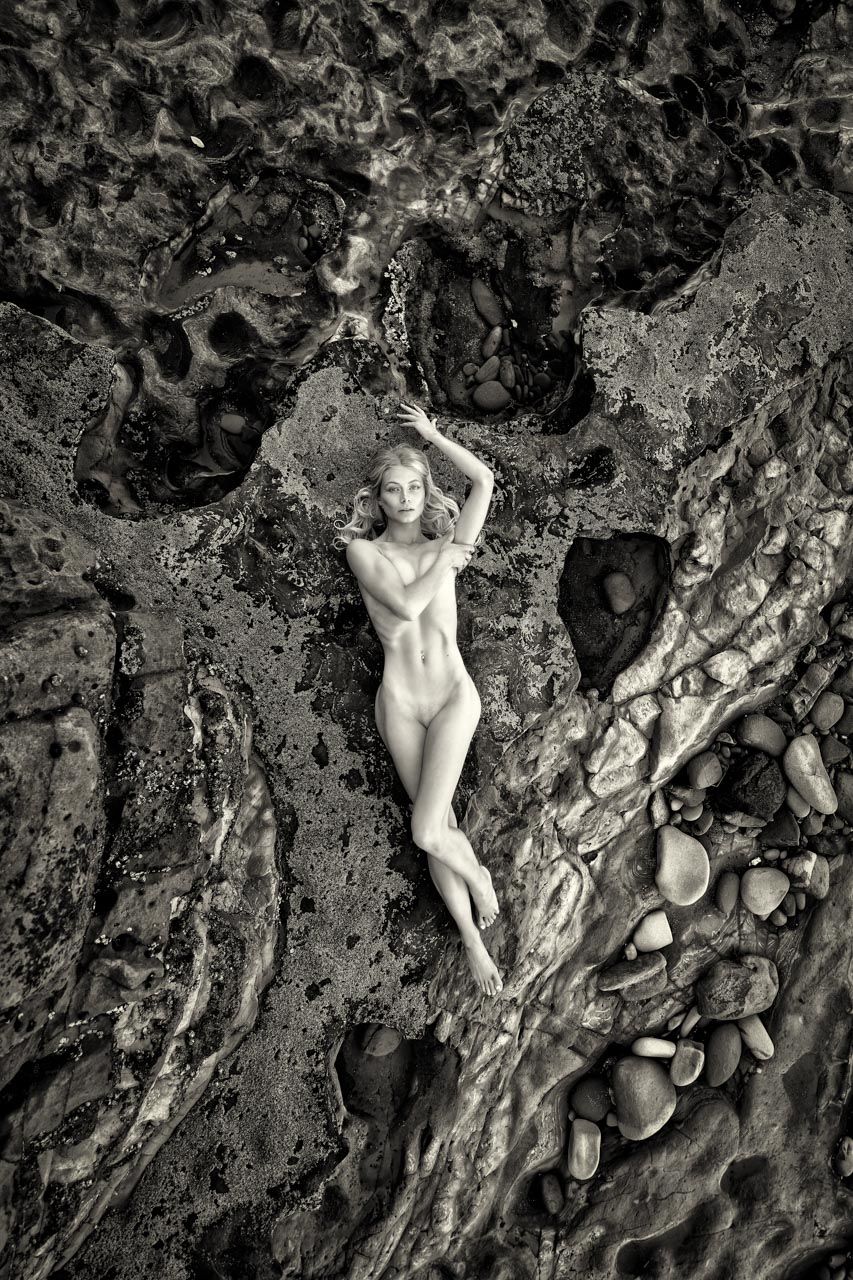
Lucy
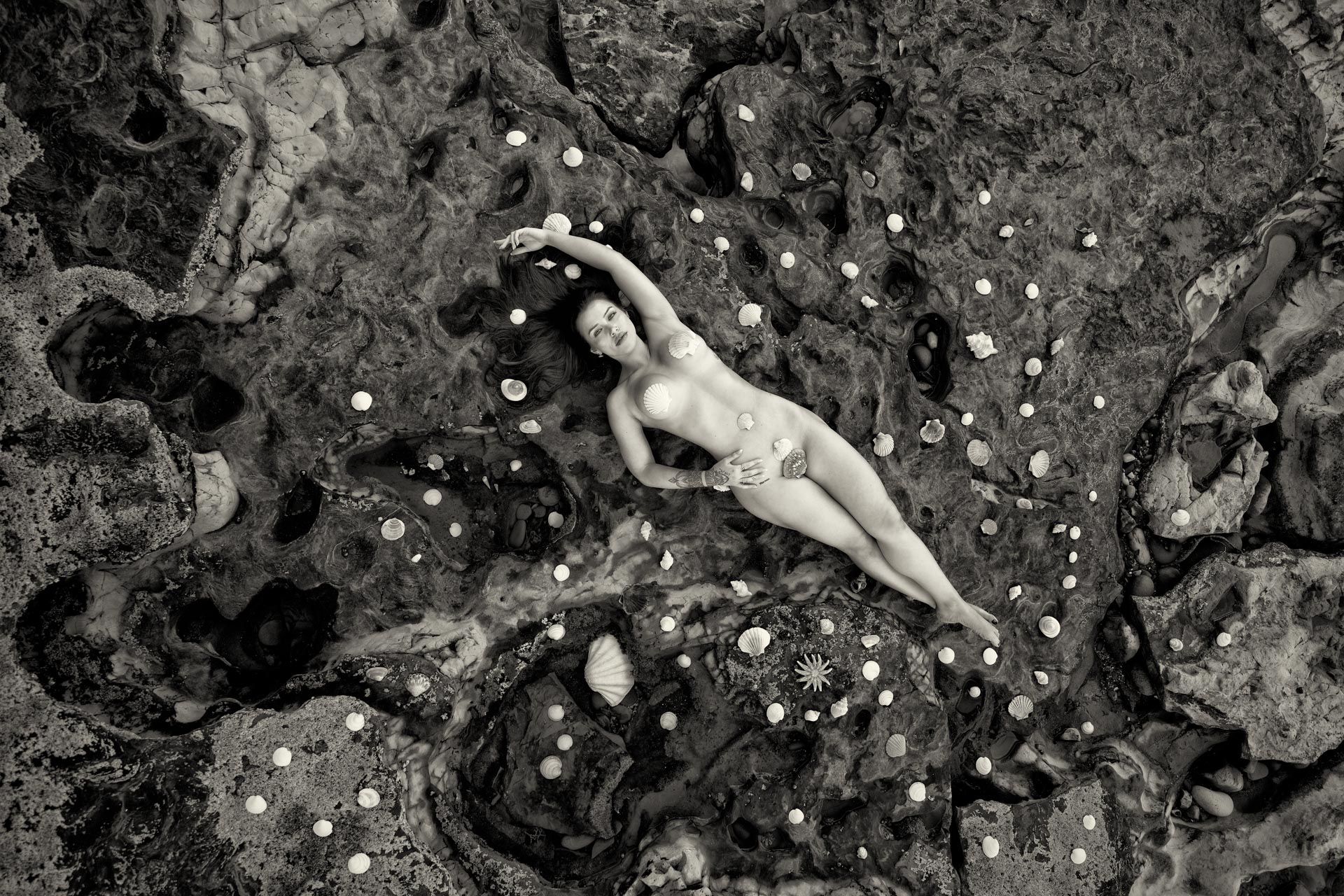
Robyn
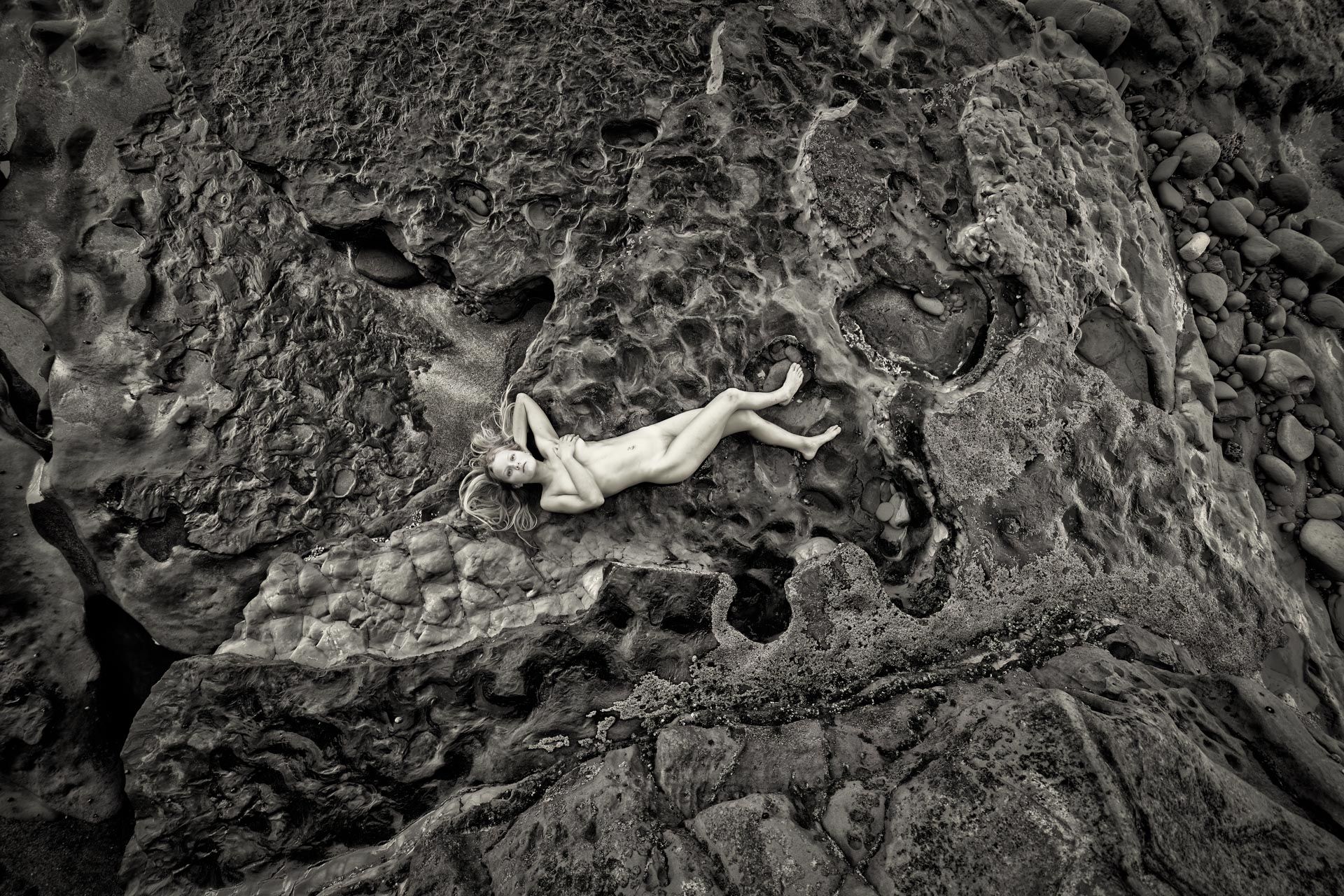
Keri
Jana
Mia
Maggie

Zoe
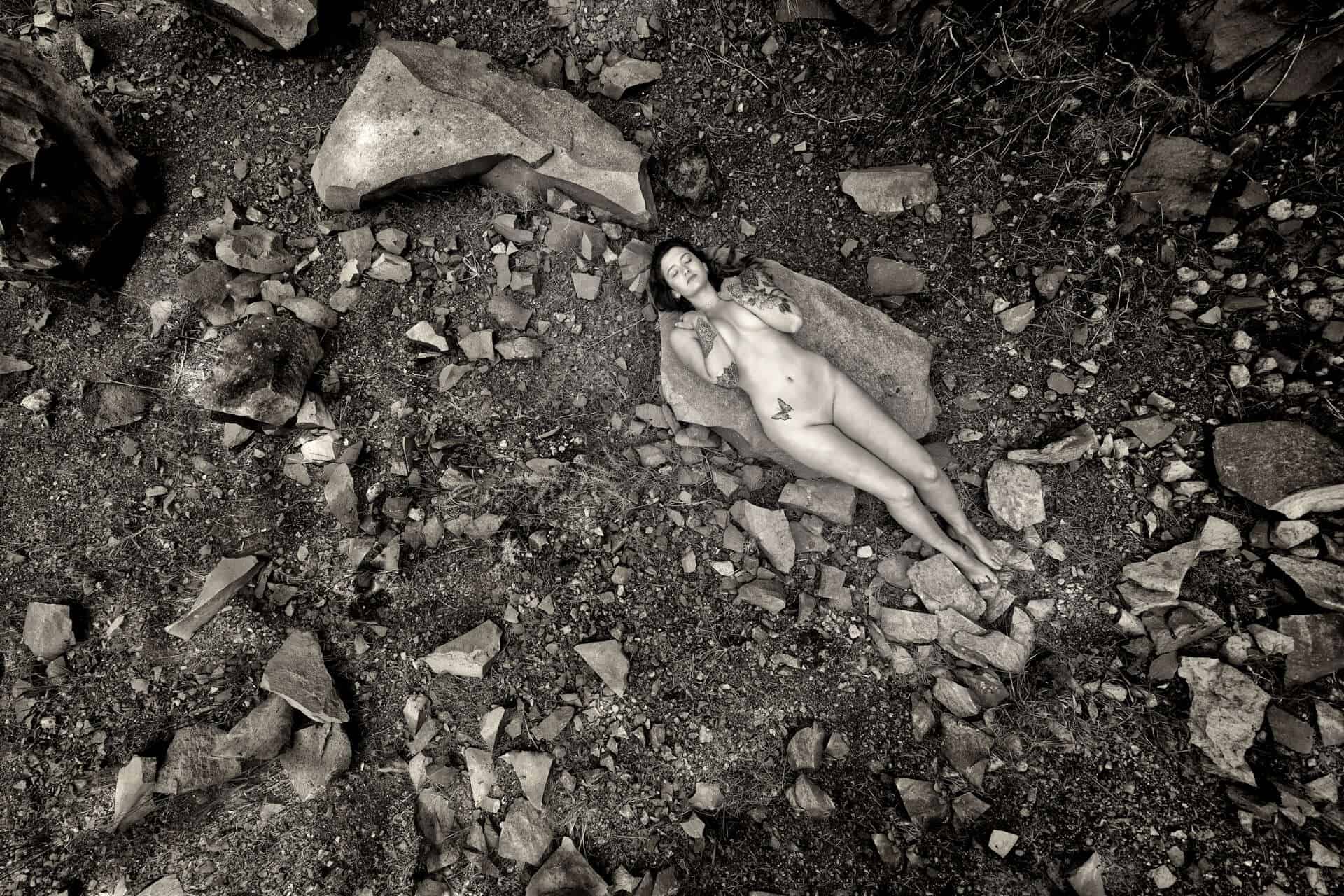
Tamsin
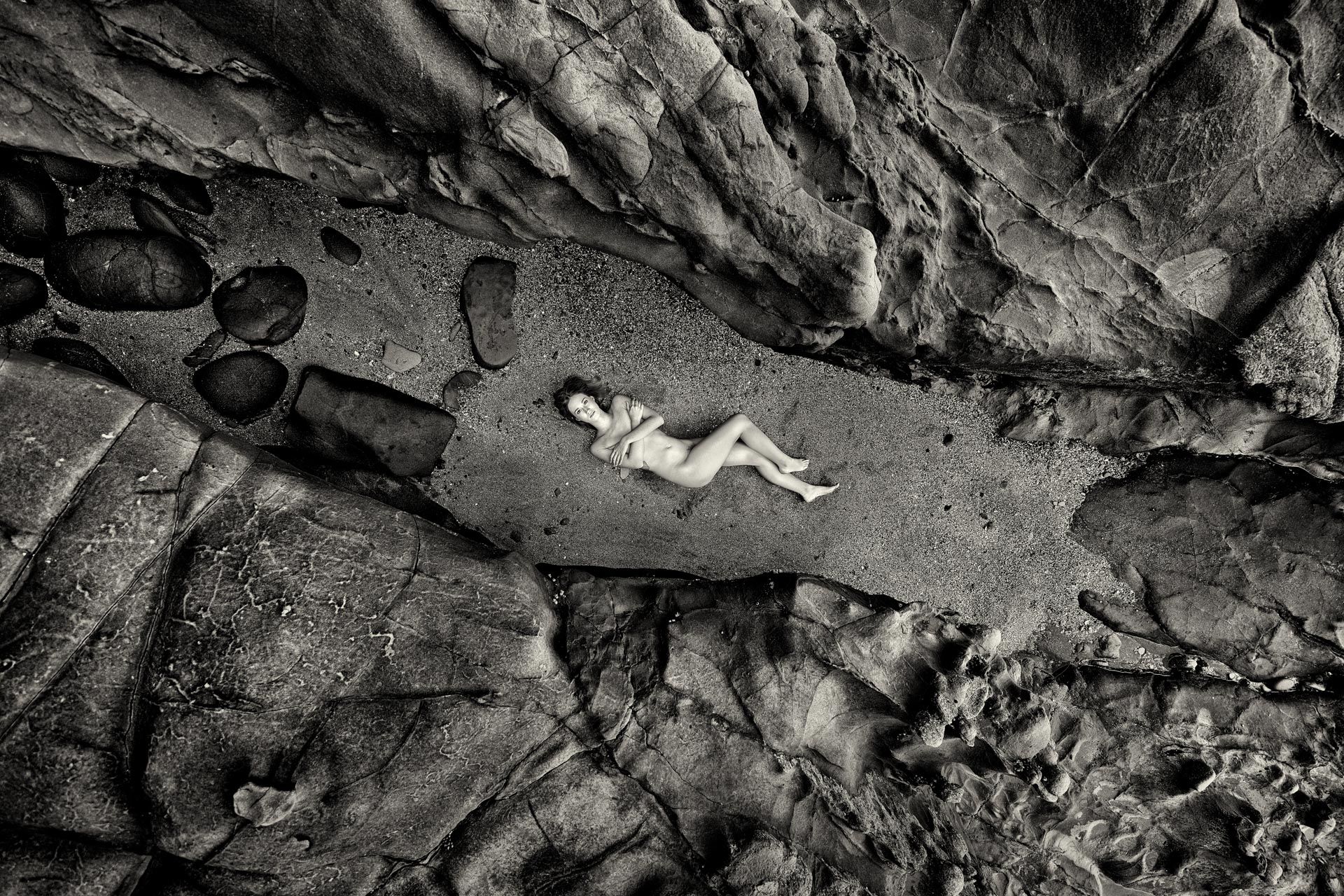
Melissa
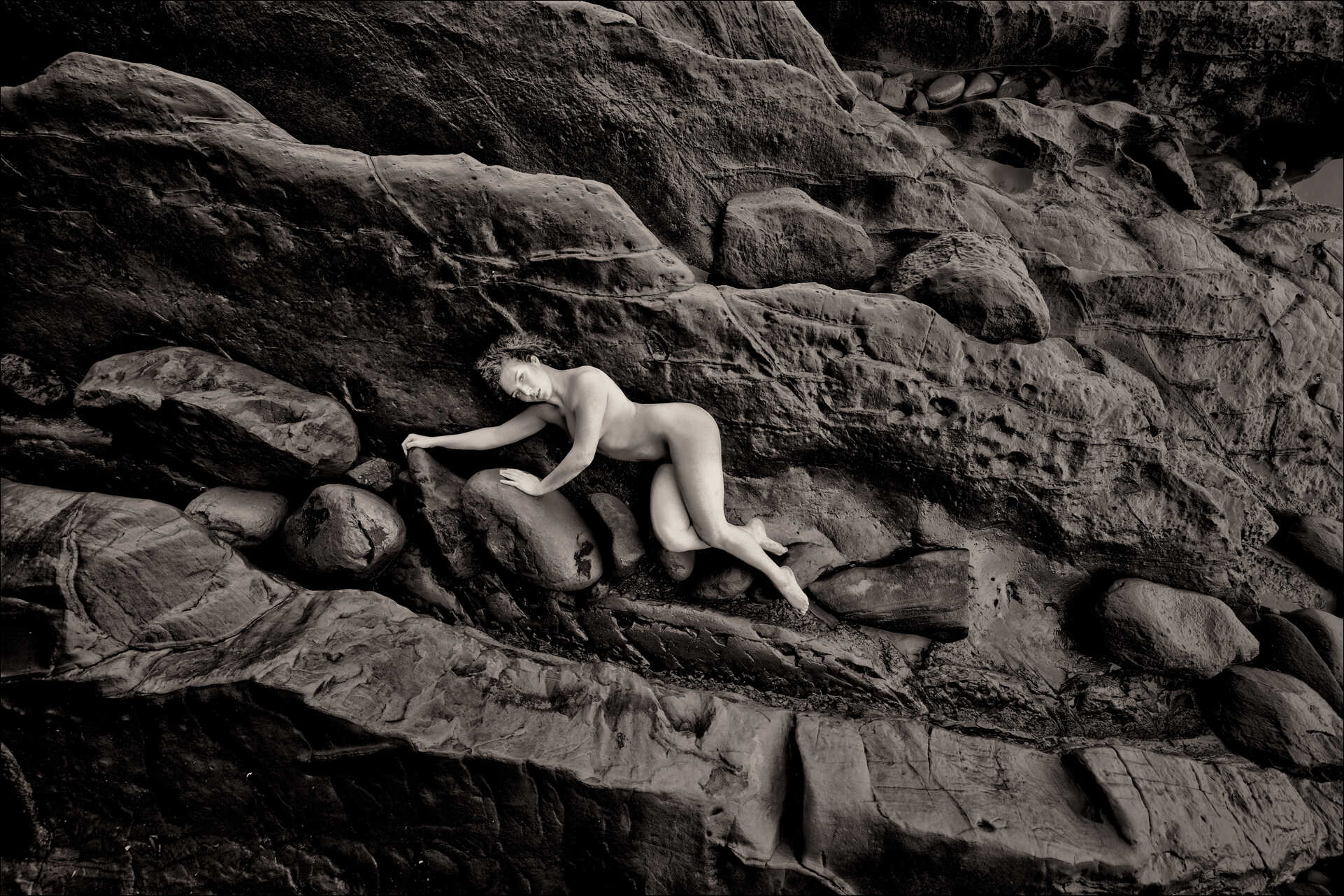
Ivy
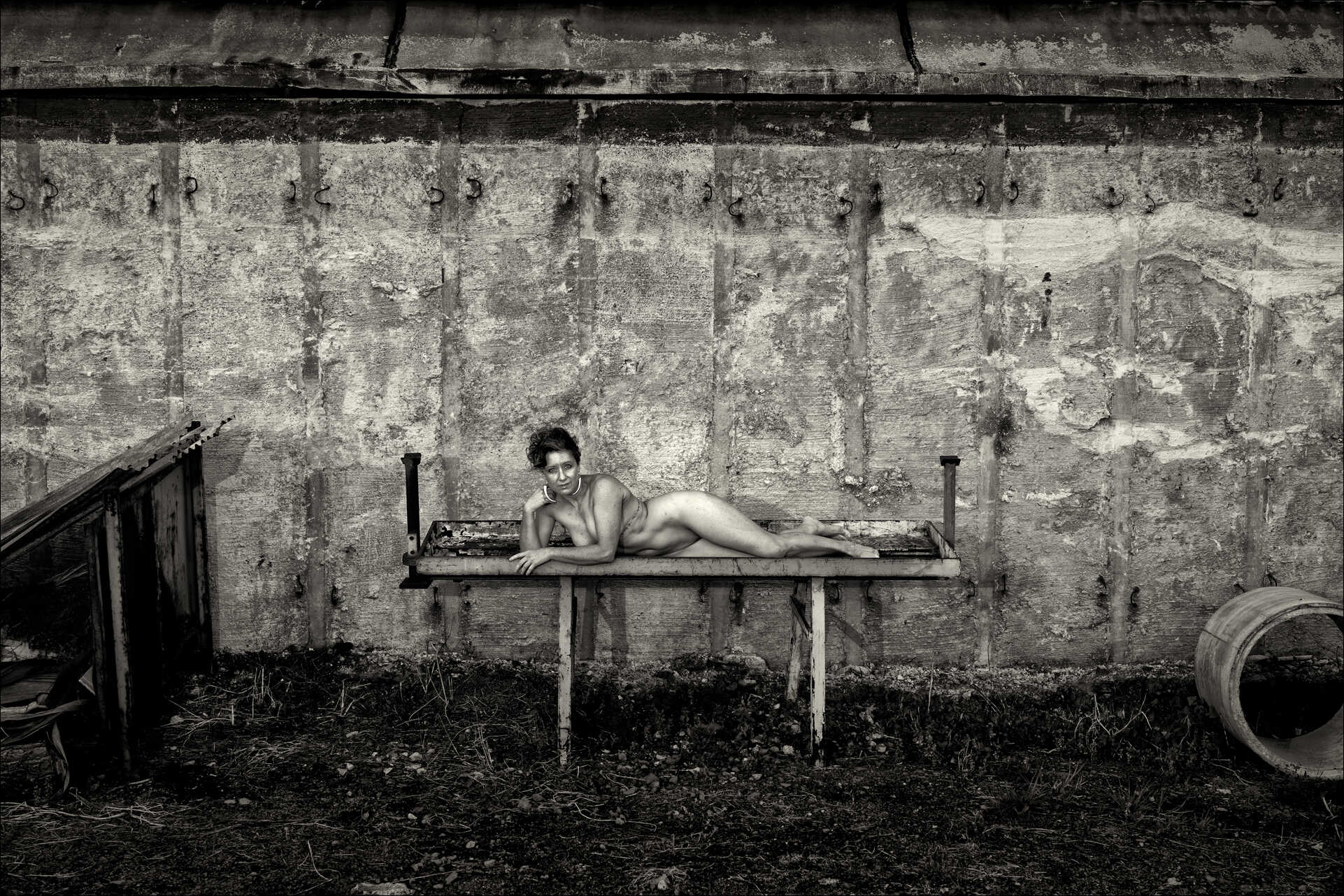
Eve
Lucie
Fernanda
Viviane
Karin
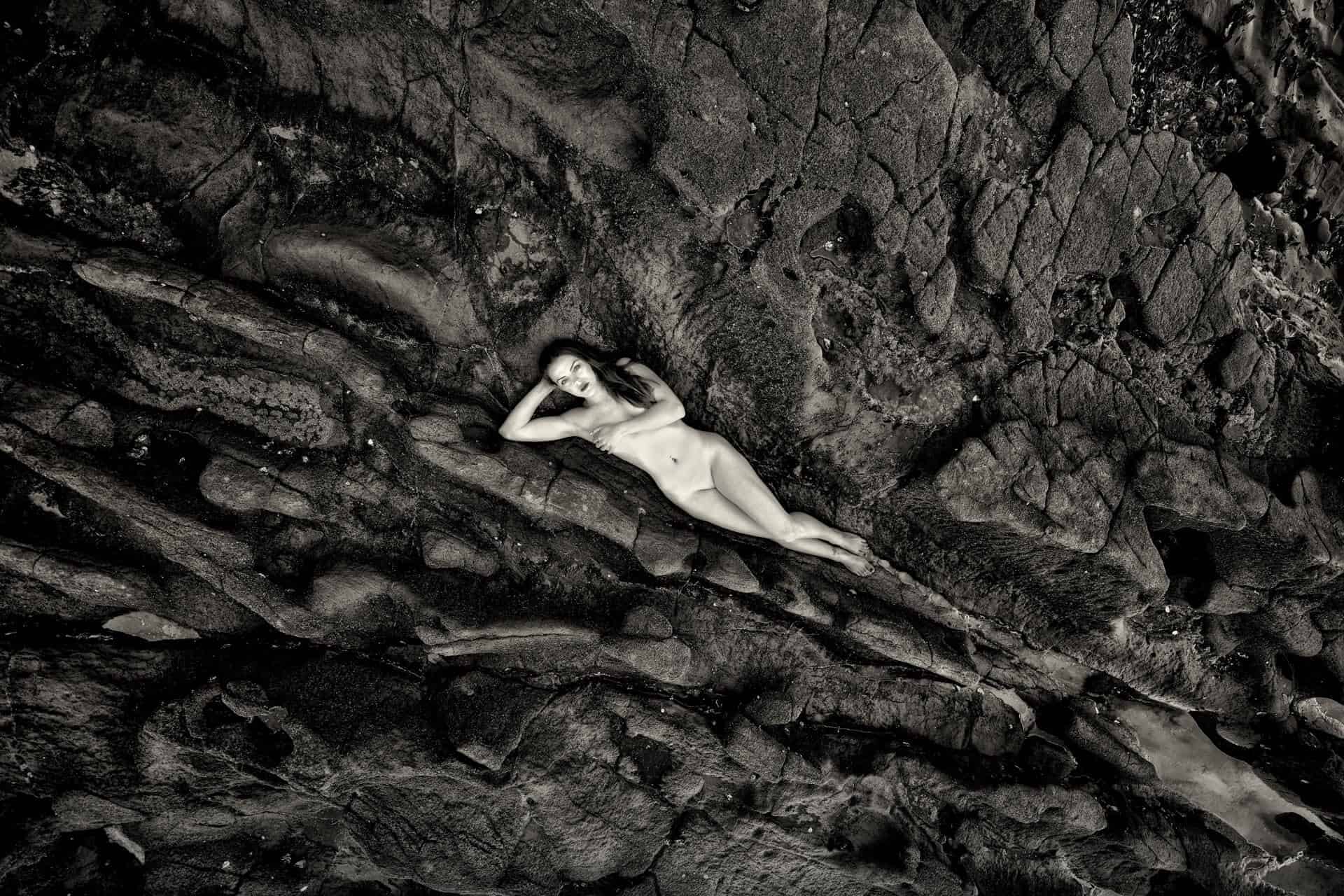
Virginia
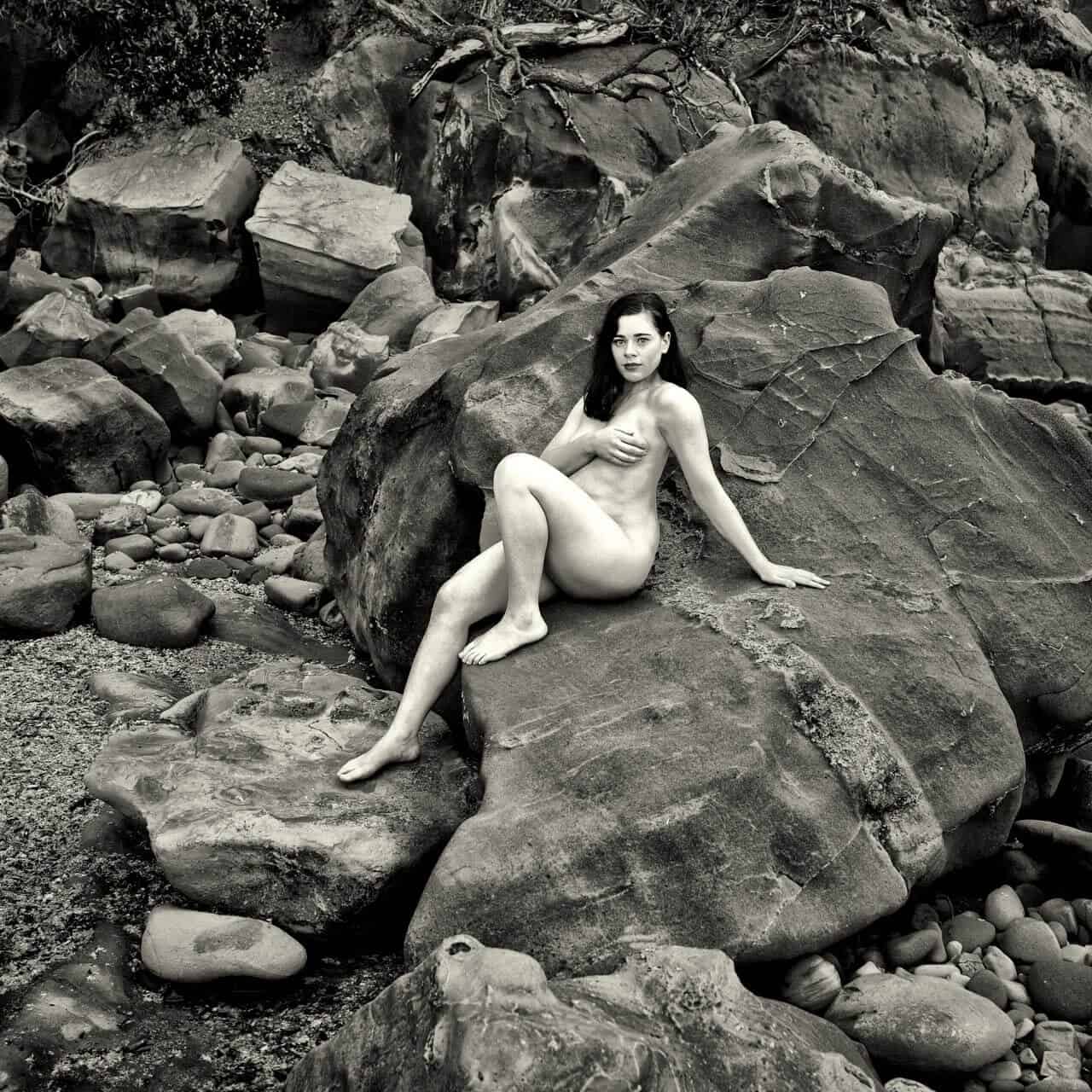
Nakita
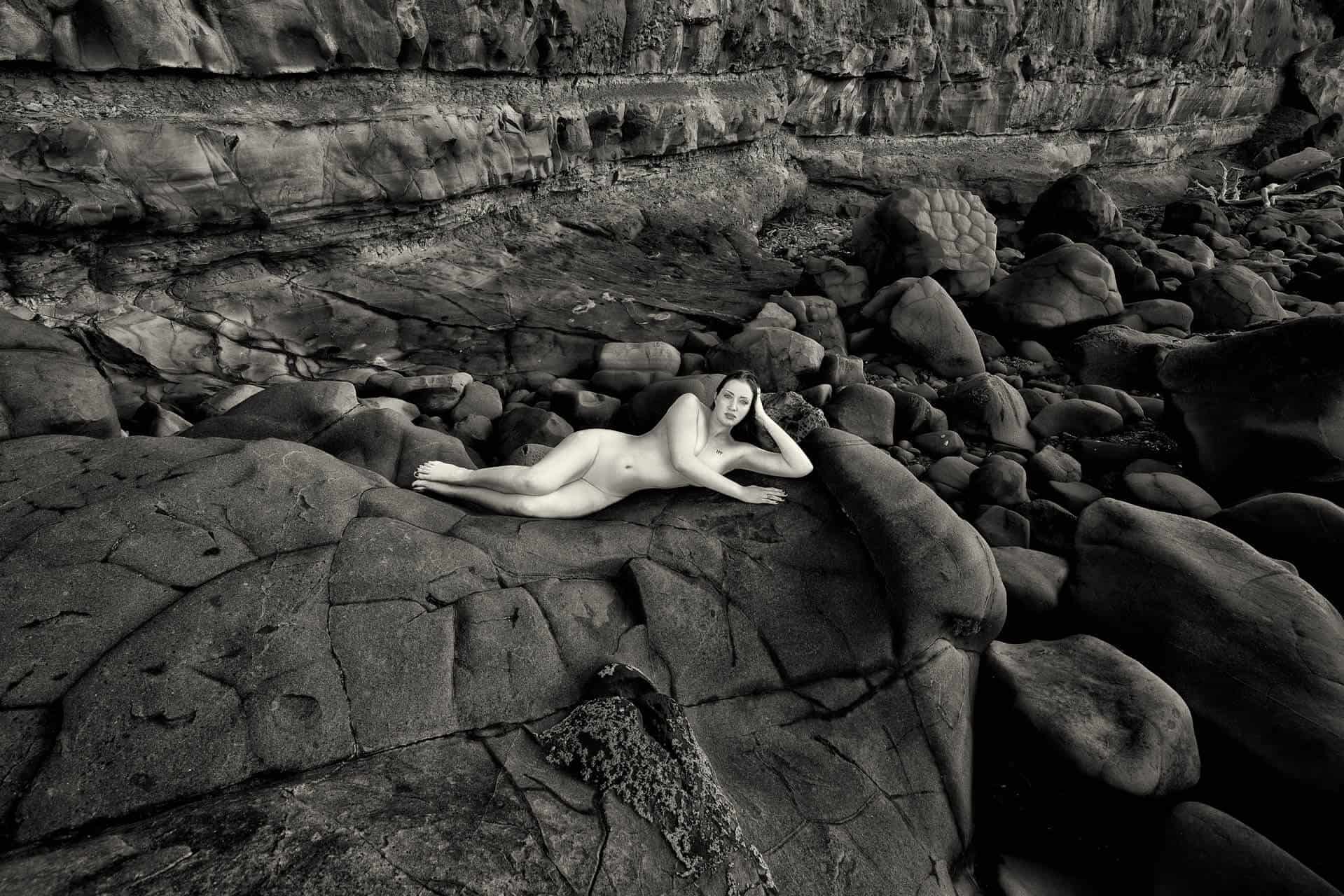
Meg
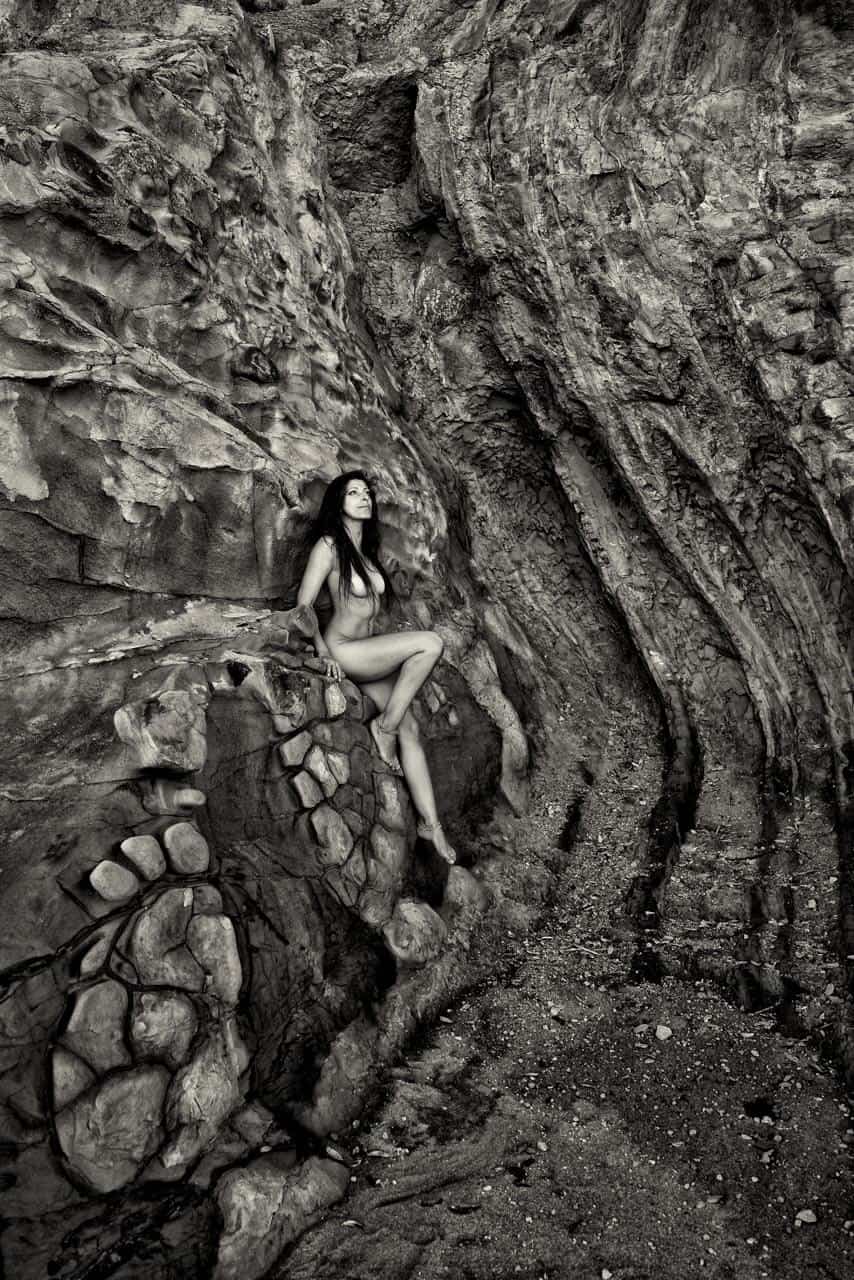
Shazia
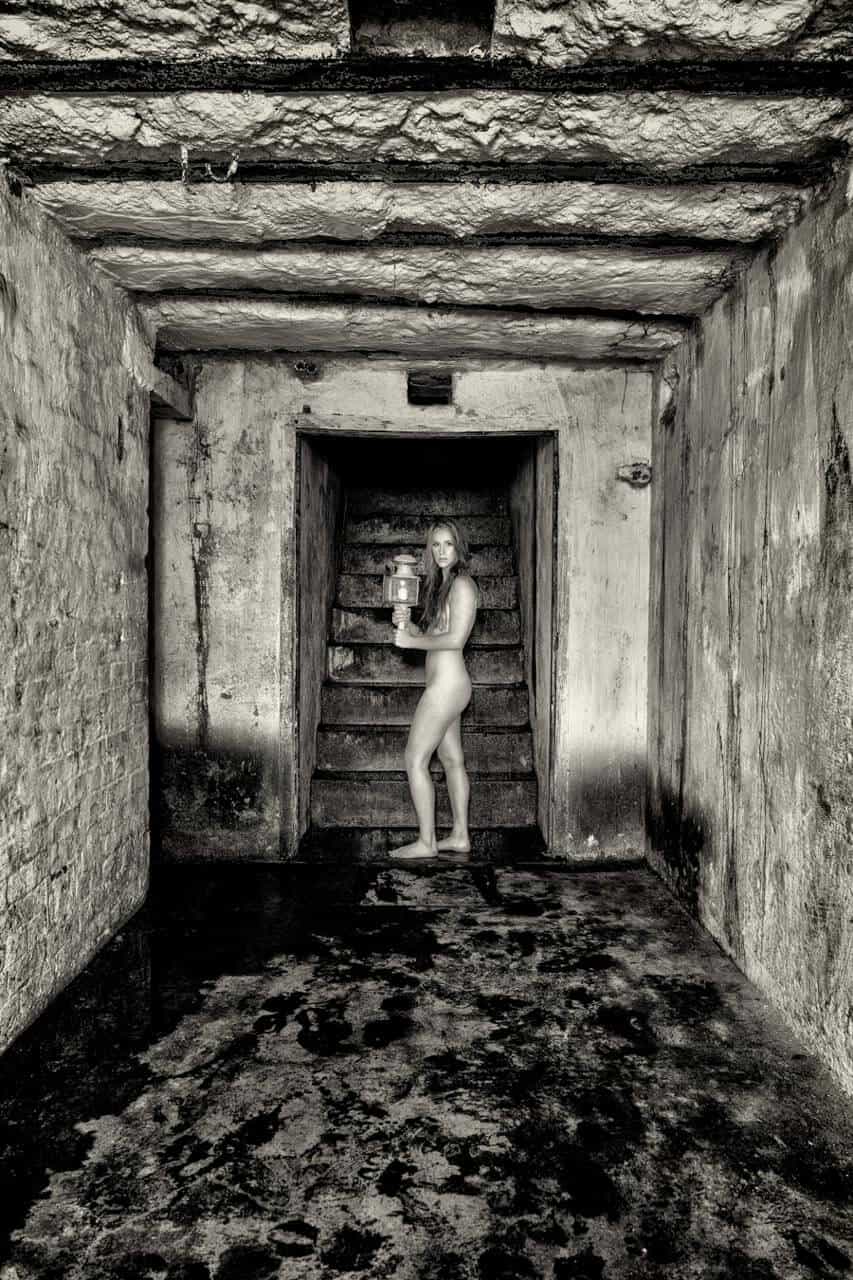
Light at the Tunnel
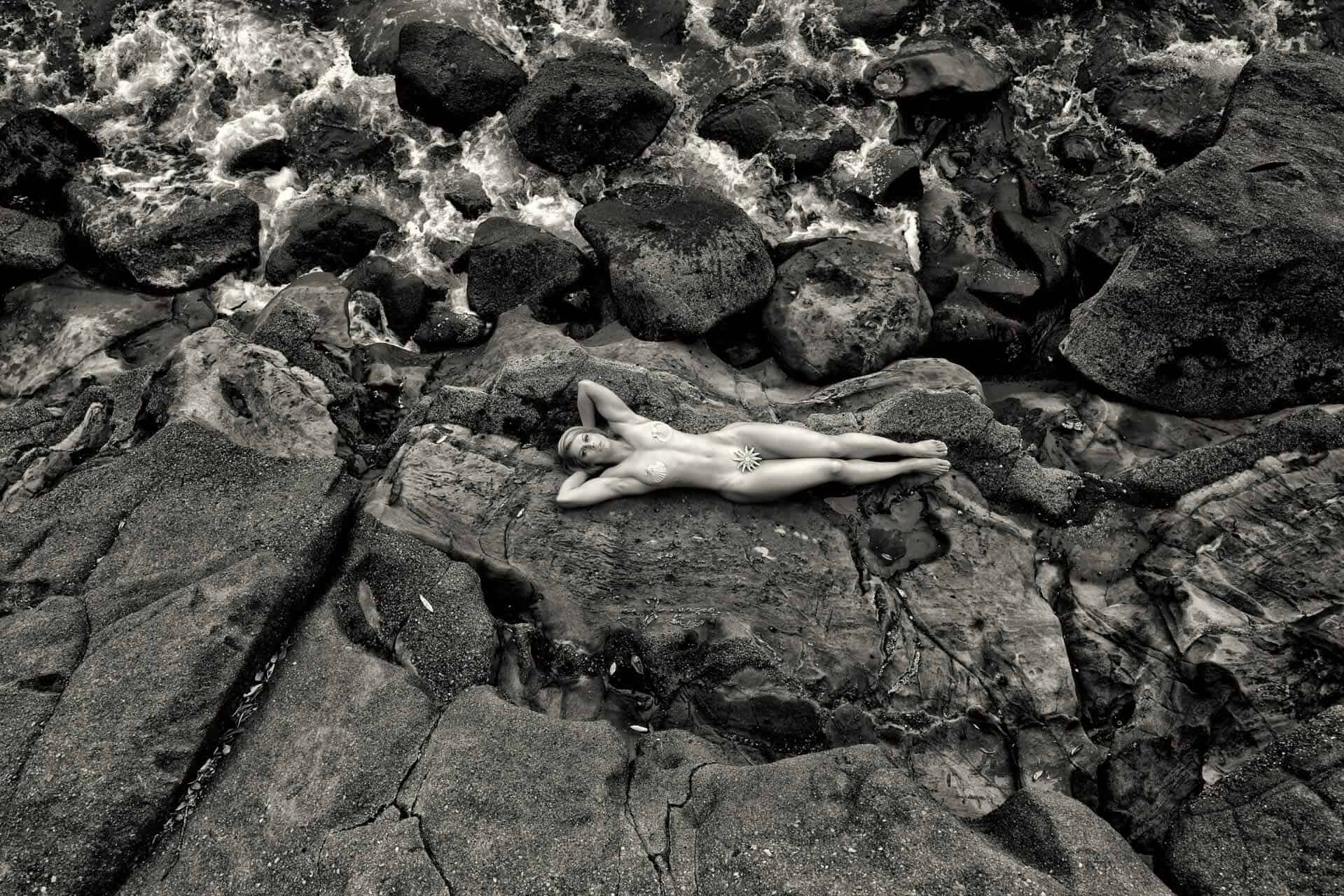
Vendy
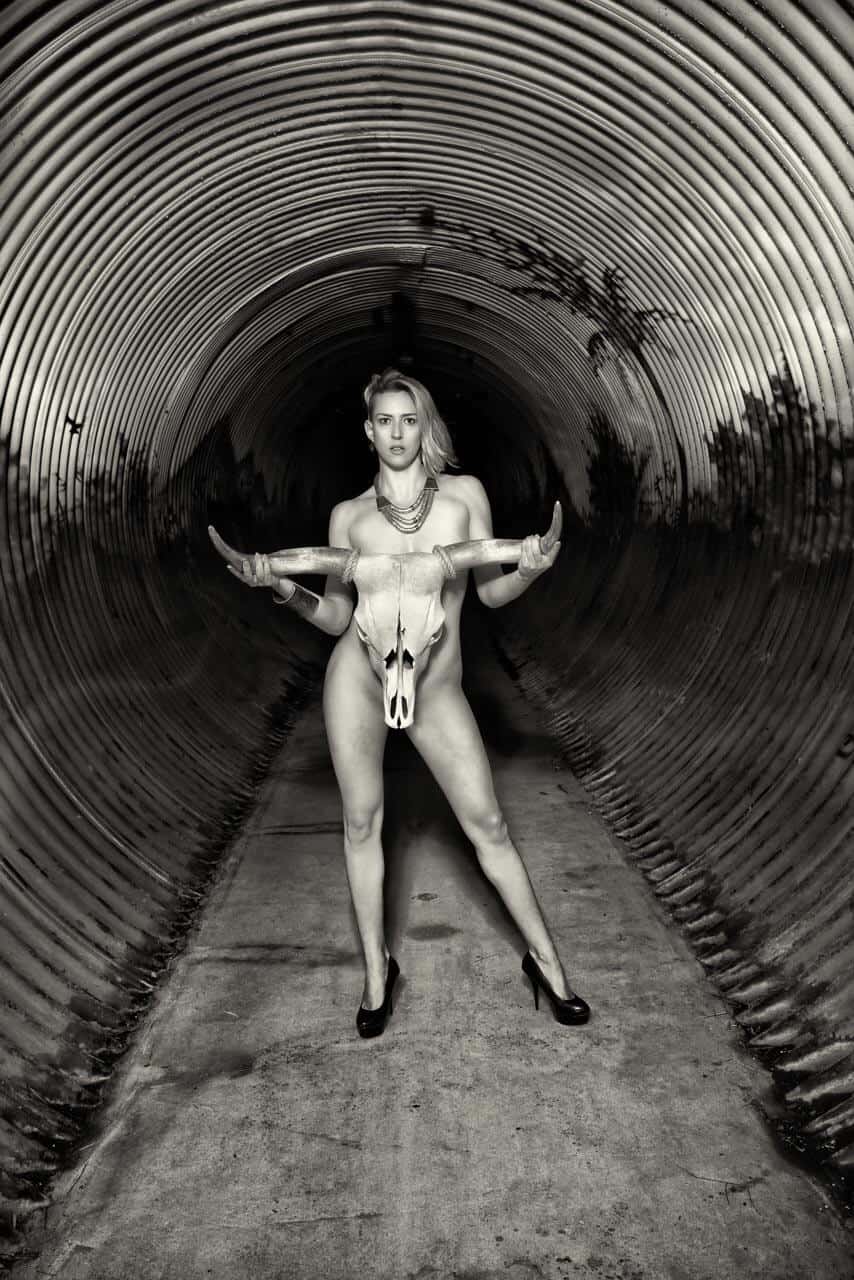
Le Corre
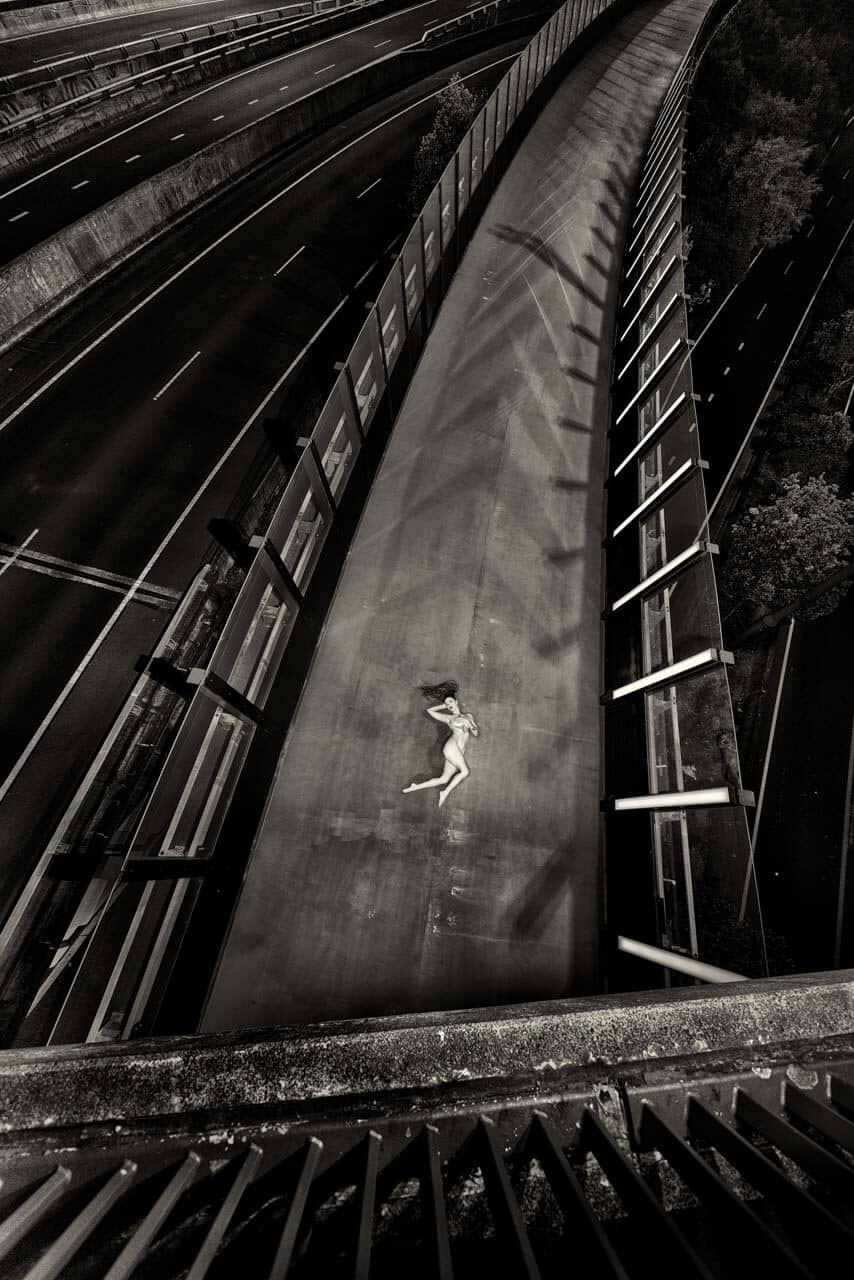
Poppy
Maddison
Aimee
Minh-Ly

On the Rocks

Autumn Leaves

The wave Breaker

The Nymph
Giuliana

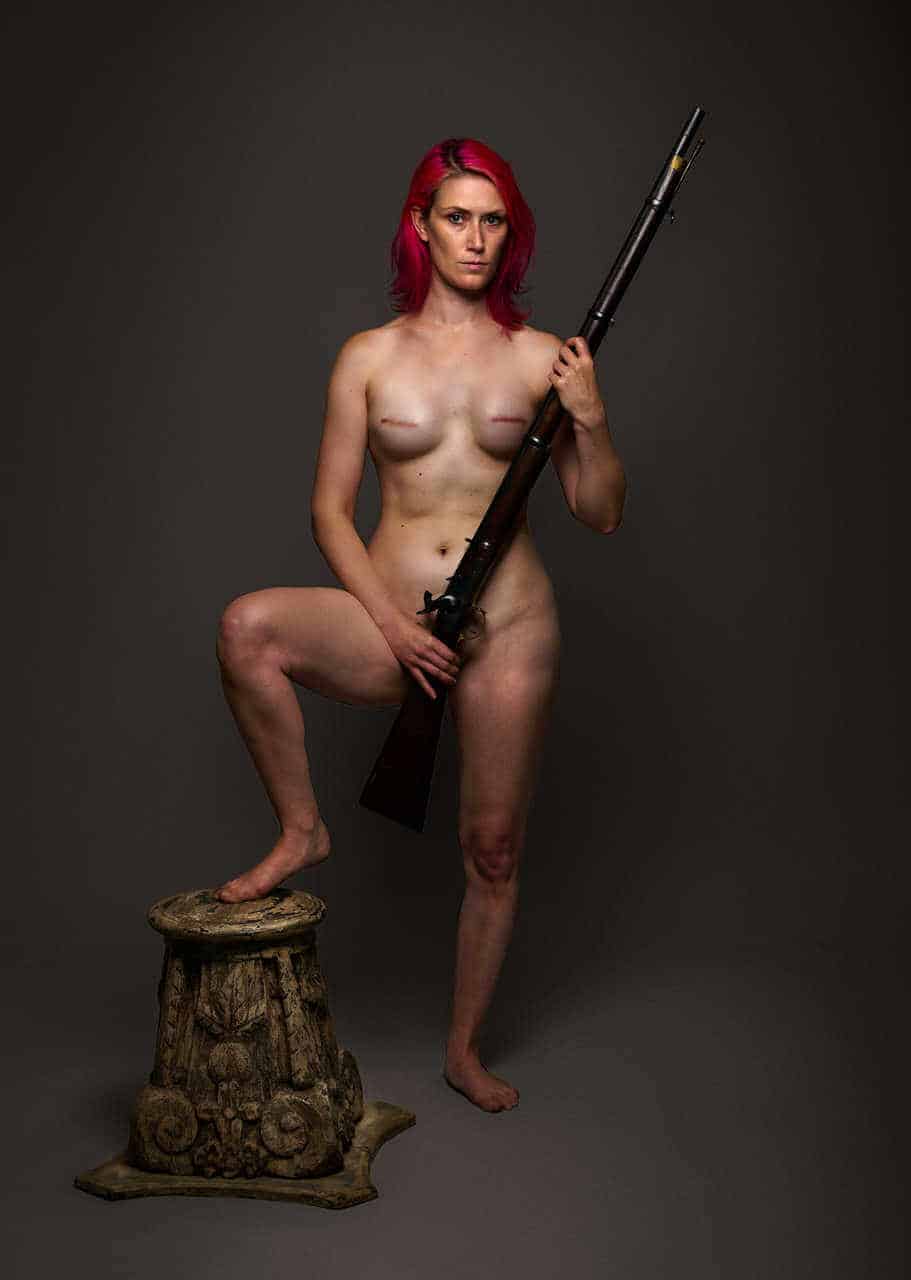
The Huntress
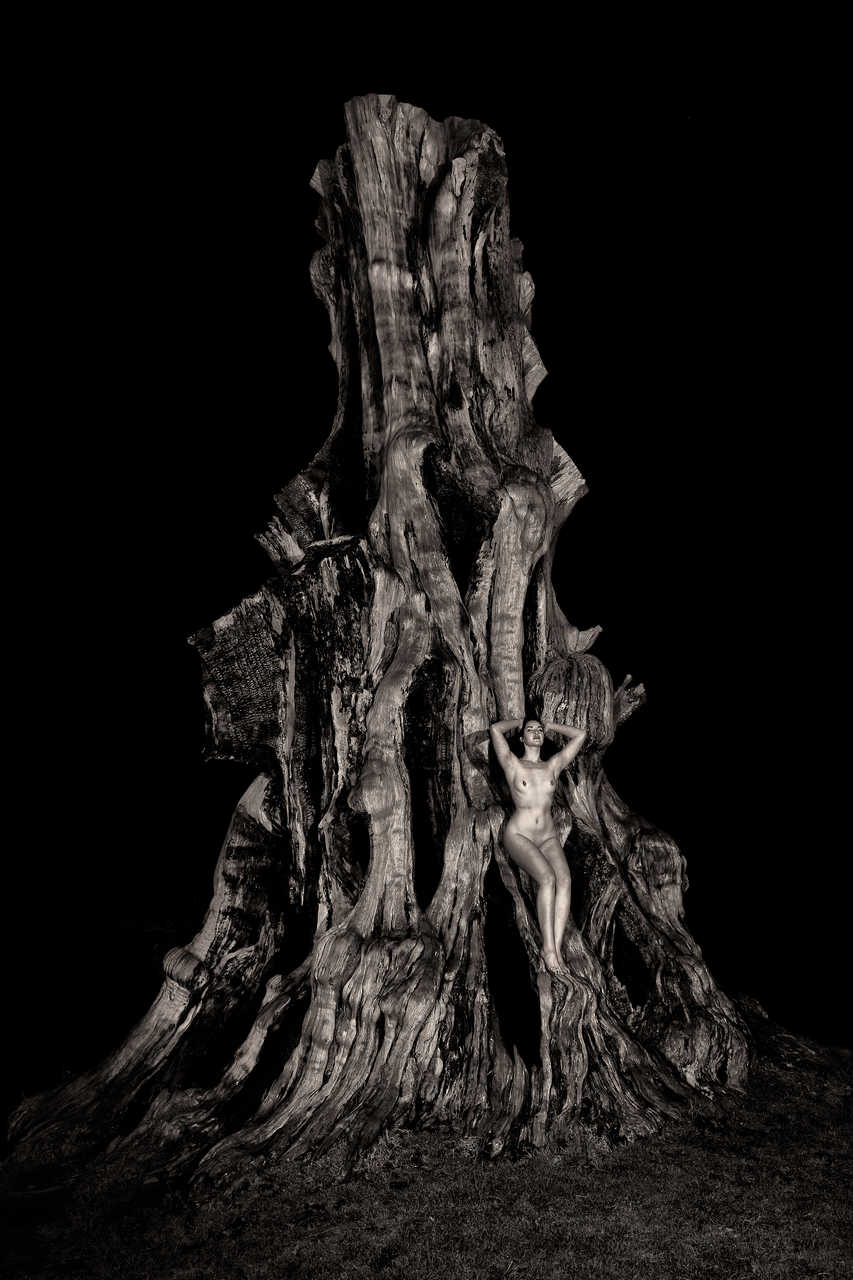
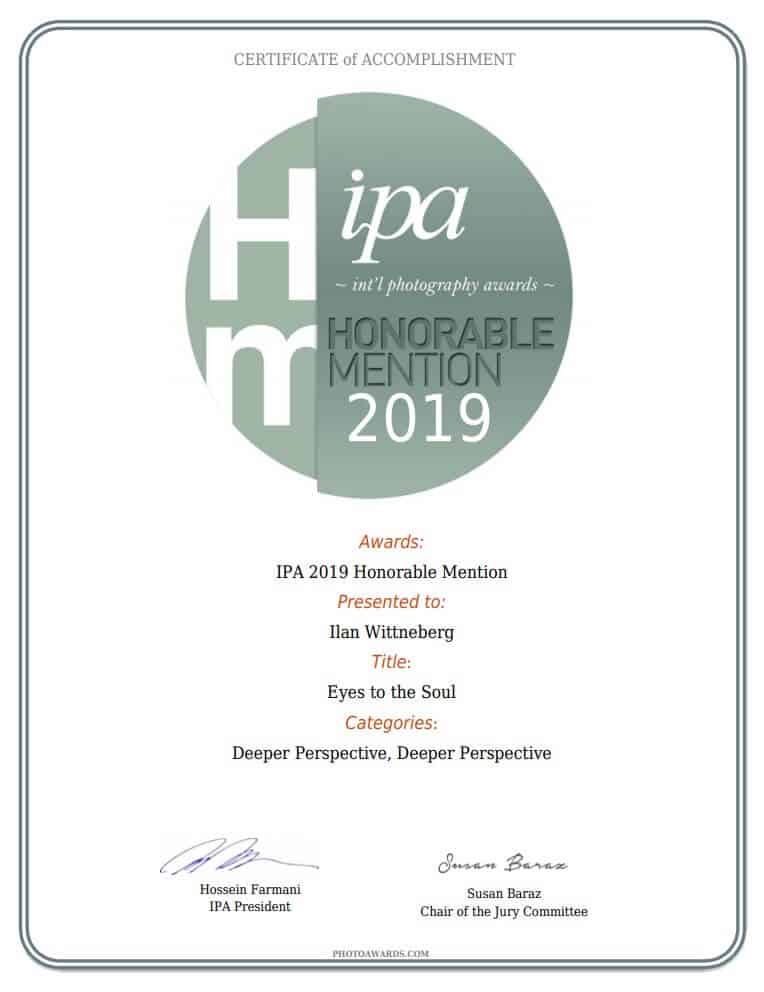
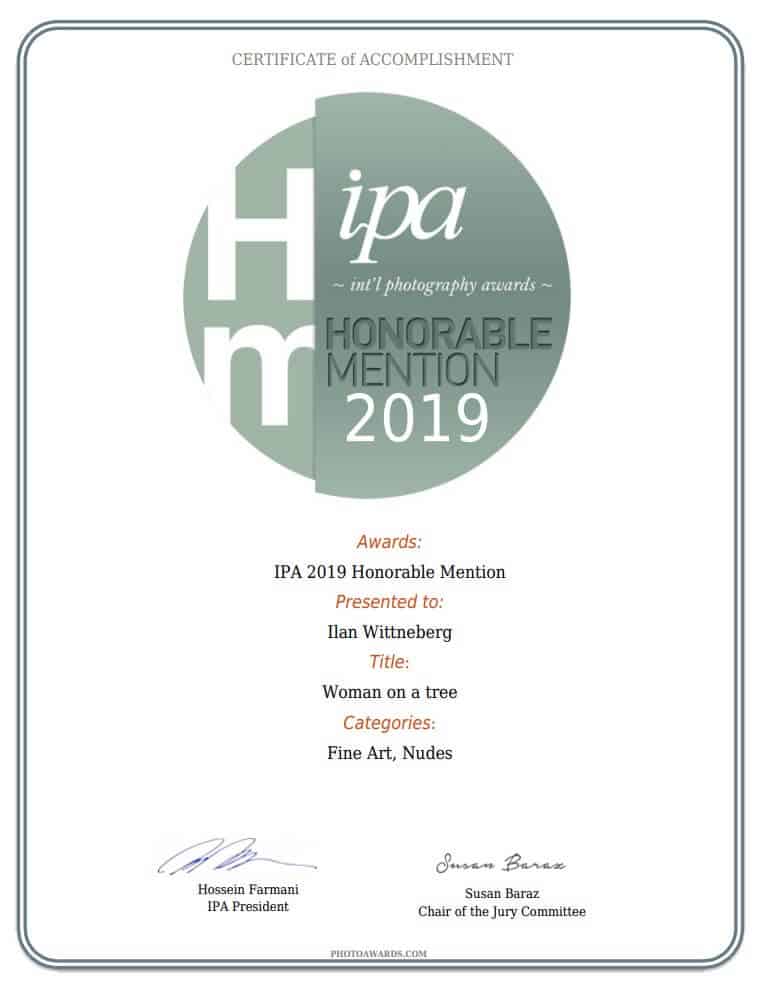
Woman on a Tree
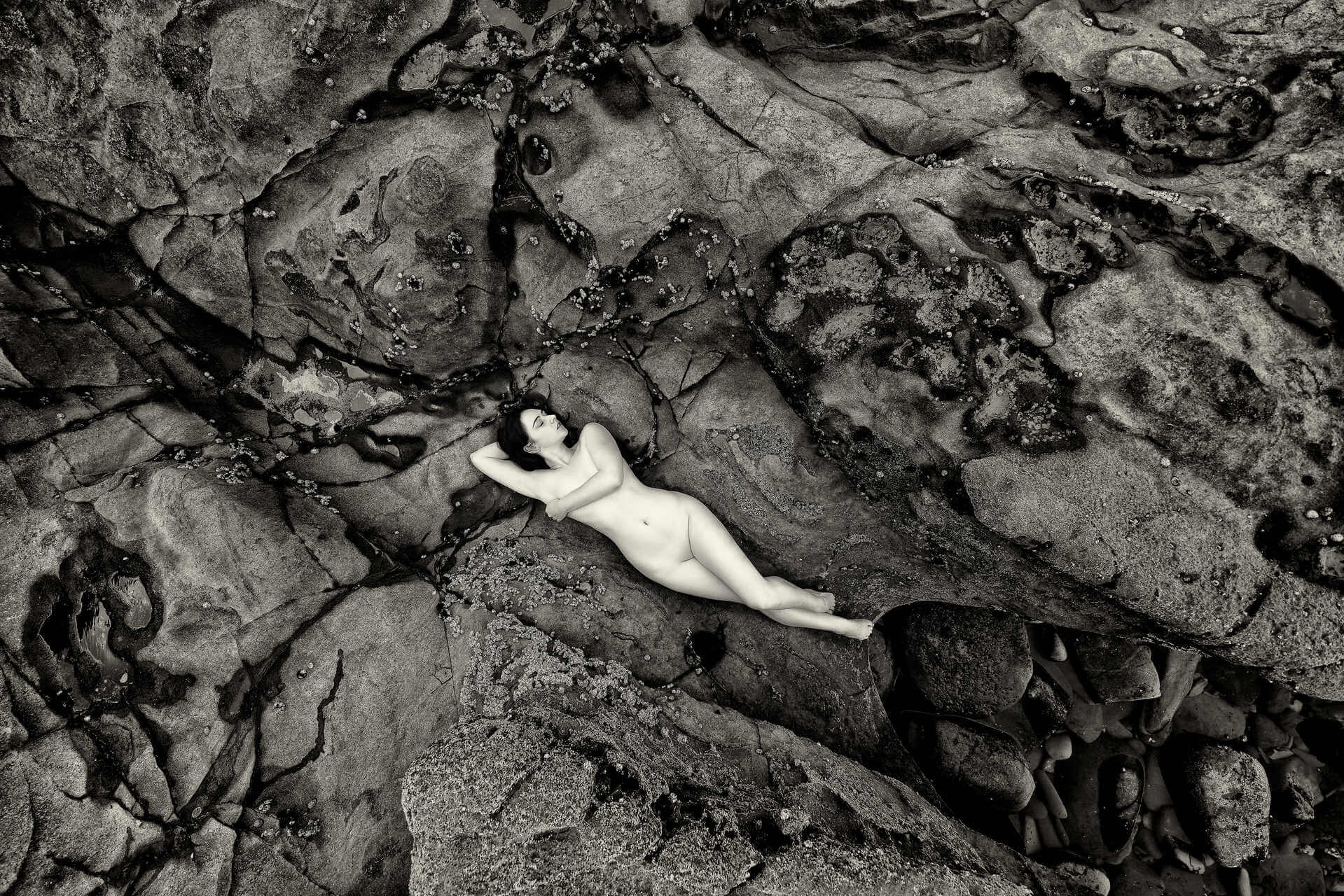
Juxtaposition
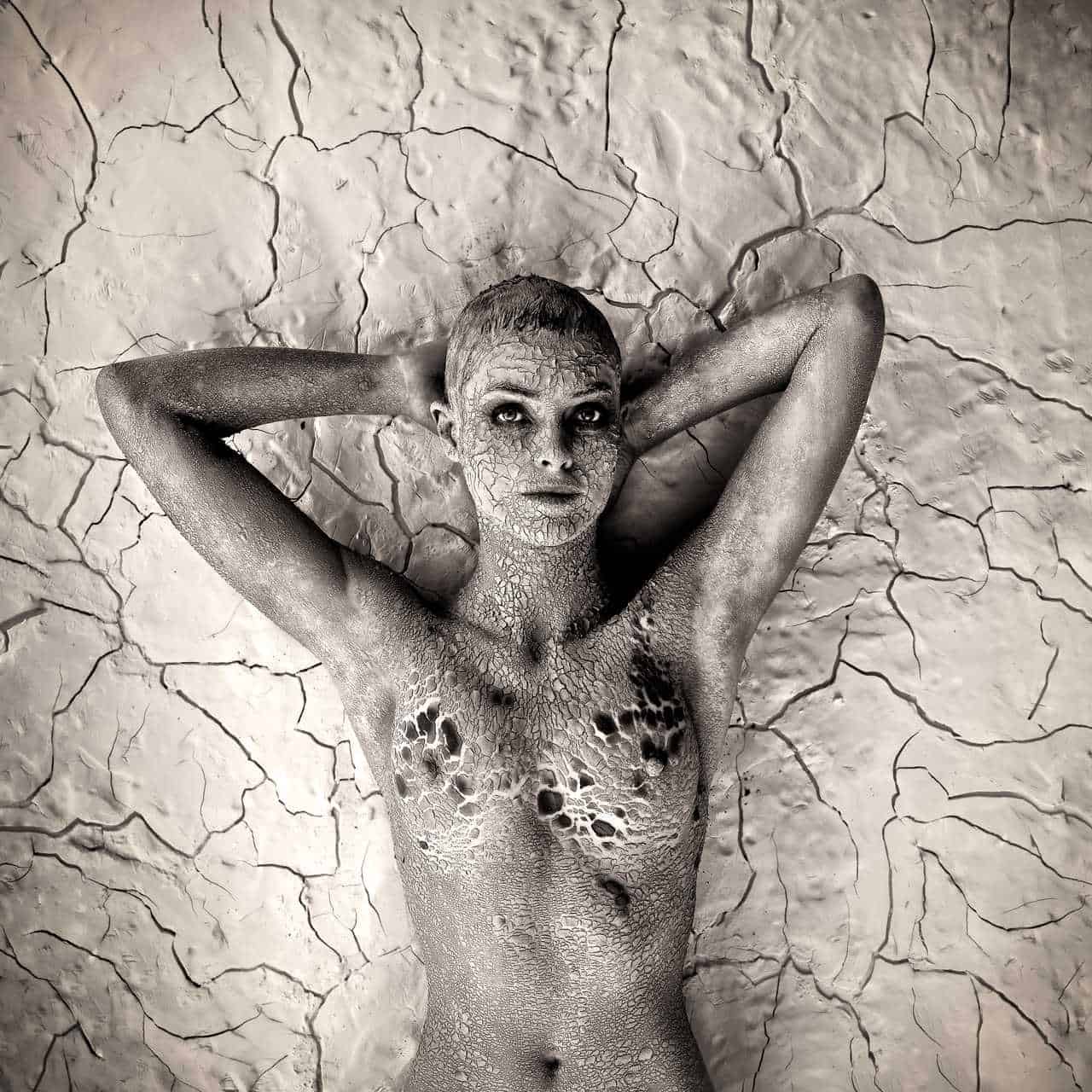
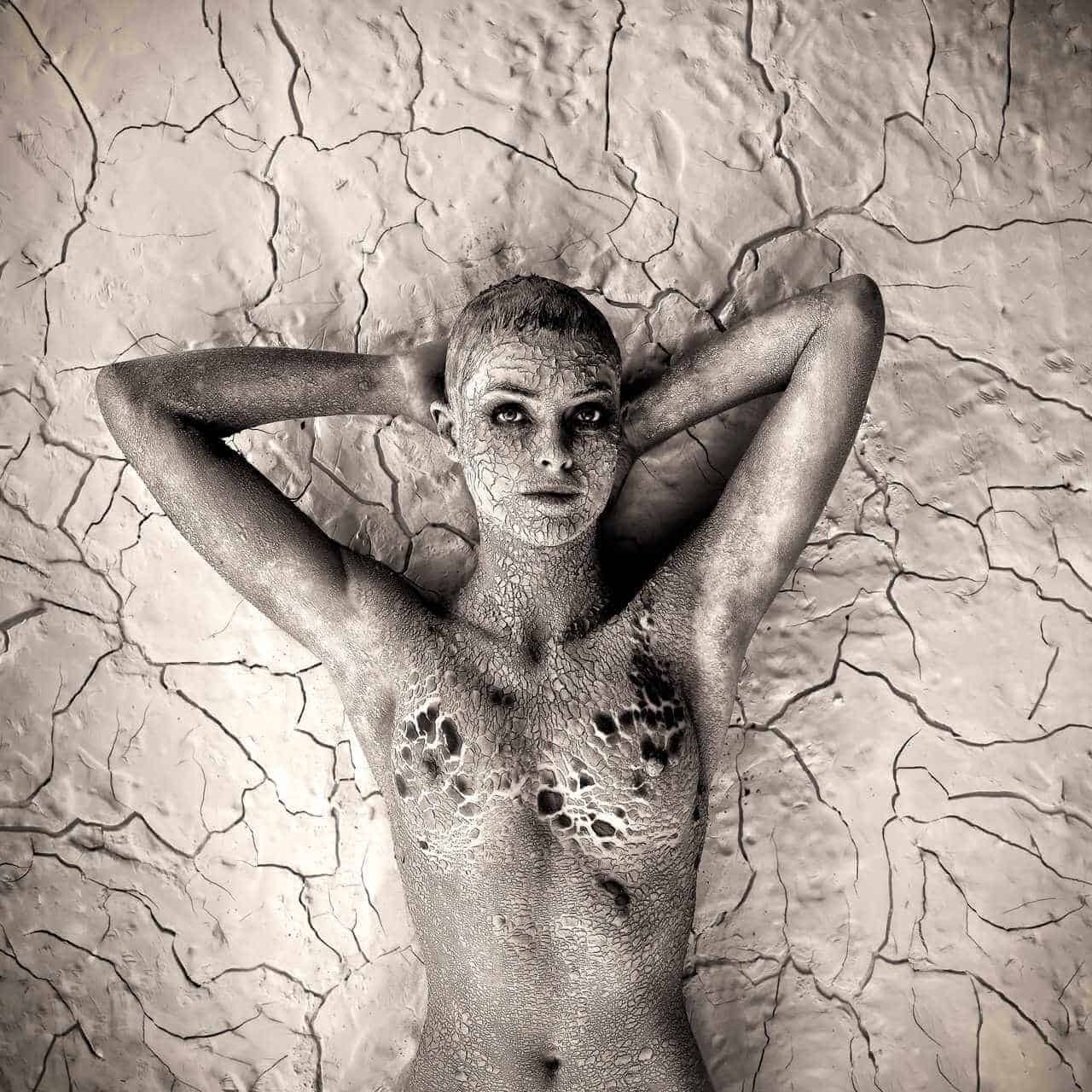
Drought
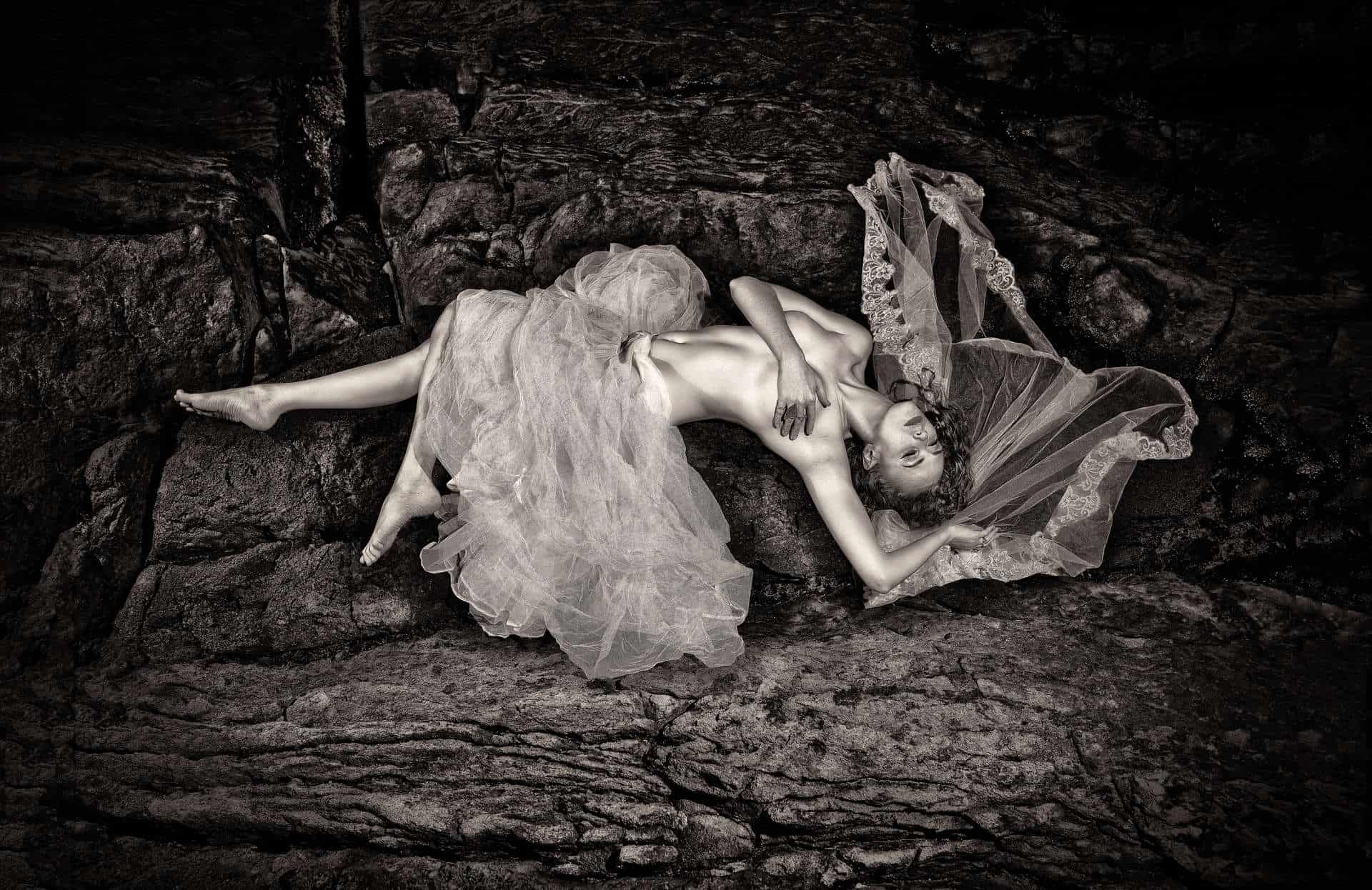
The Bride
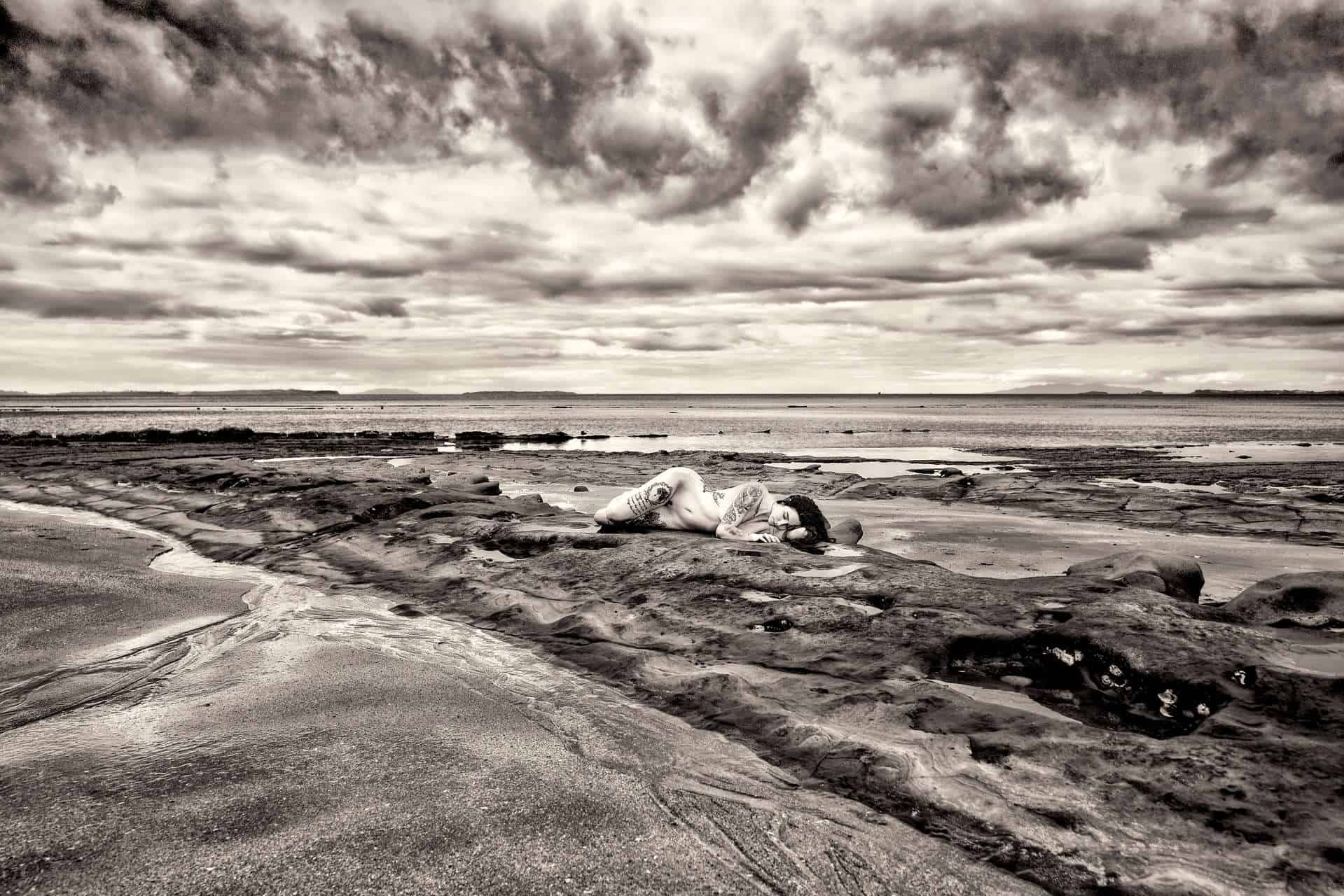
By the Sea
I let the cold porcelain bruise it’s way into my knees
Some days I sit there long enough that my skin looks like it could peel from my flesh
I feel each individual drop of water soak the skin on my back rising and falling down protruding vertebrae
It flows no different to the rapids of a river rolling across jagged stone
And quietly to myself I beg it to wash away the ache that seems it has so effortlessly weaved its way into every cell in my body
The way cancer would spread
Or weeds over grow a garden once cared for
You are how I measure time now
Before you and after you
And you are how I measure beauty too
No one quite compares to you
I am not afraid of the dark anymore
It lives inside of me and I in it
On the nights my hearts composure decomposes
and my grief feels no different to drowning
I walk the streets of this ghost town I once walked with you
At witching hour just the moon and i
A humble smile as a disguise to mask the screams I hold inside
My body feels like bags of rocks
And I wonder if my blood feels the same way I do
As it pumps through each barren chamber of my heart pounding with each step I take
Slowly making its way through the road maps that are my veins
There’s life here
It’s just locked away somewhere hiding in fear
But I promise you a broken heart doesn’t beat the same as a happy one
I can feel it with every heaving breath that exhales from my blackened lungs
I can feel it
I am lucky
I walk amongst the living still
I say lucky because
I swear most nights I looked death in the face
As she invited me into the comfort of her embrace
I have knelt before the reaper
And let her seductively run her scythe along my throat
I wiped my tears on the foot of her robe
And let her fill my head with fantasies
Where we could run away together
She promised I wouldn’t miss you
She said if I let go
That she would take me to the oasis of souls inhabiting the emptiness that grief holds
But the grief would no longer be mine to hold
Most days now when death comes knocking at my door
I politely ask her to leave
I know my time will come but for now
I do not wish to be the reason that many may grieve
Or the reason their bodies become heavy with sadness that was never theirs to carry
So with the space you left in me
I raised an army of dead
With each day I’d wake and die all over again
And every version of me that buried itself
My body became its own graveyard
I used my necromancer hands to pull each piece of my soul from its grave
I collected my ashes and rose again with the fire of a phoenix
And I told her to wear the heartbreak like armor
Hold the emptiness as a shield
And anything that tries to take you let it fall into the void
Pick up your words, pick up your integrity
It is your weapon
And with each piece of me that has risen again
I slay the thoughts that threaten me
And I remain
With the words engraved in my body
I refuse to die.
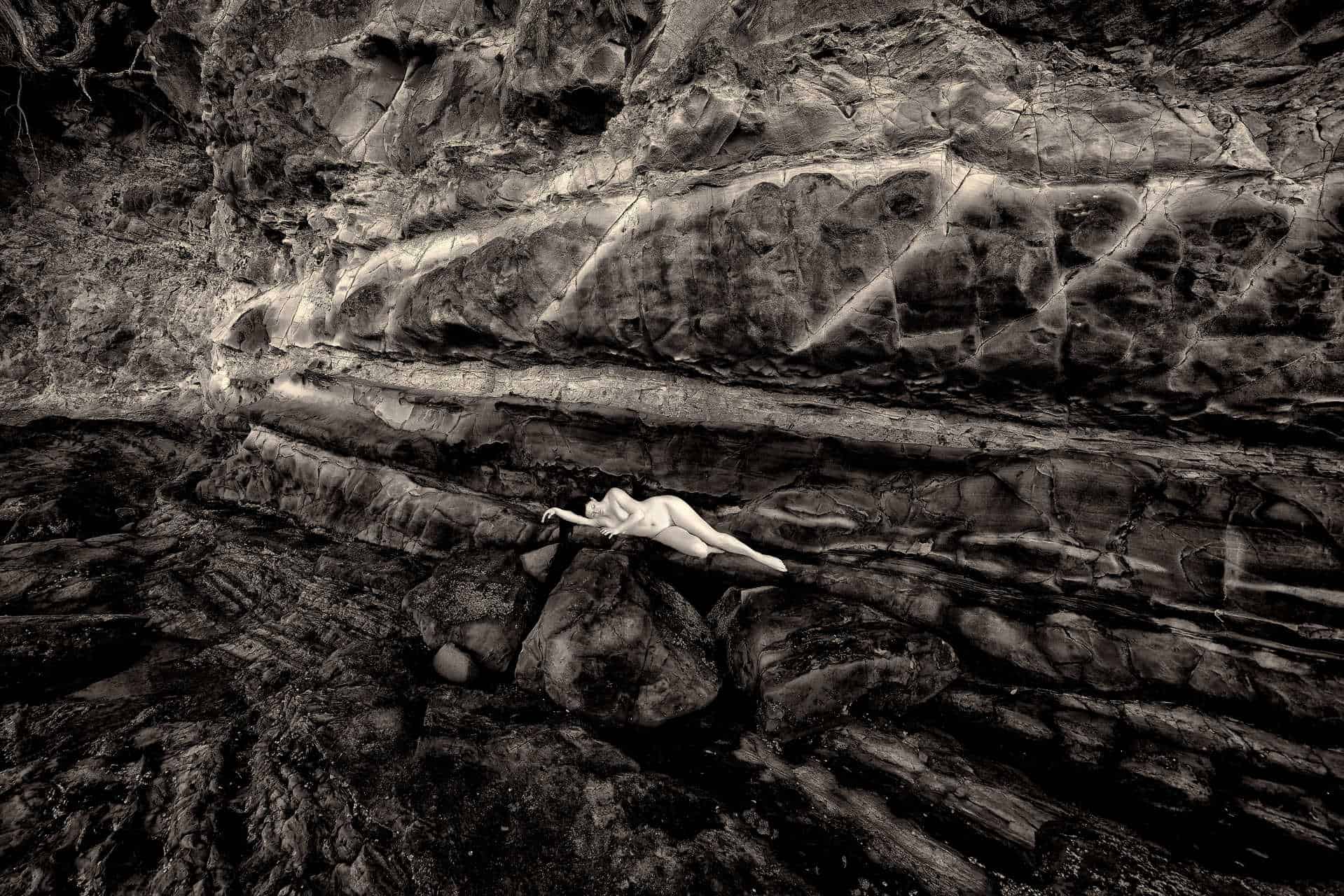
Encapsulated
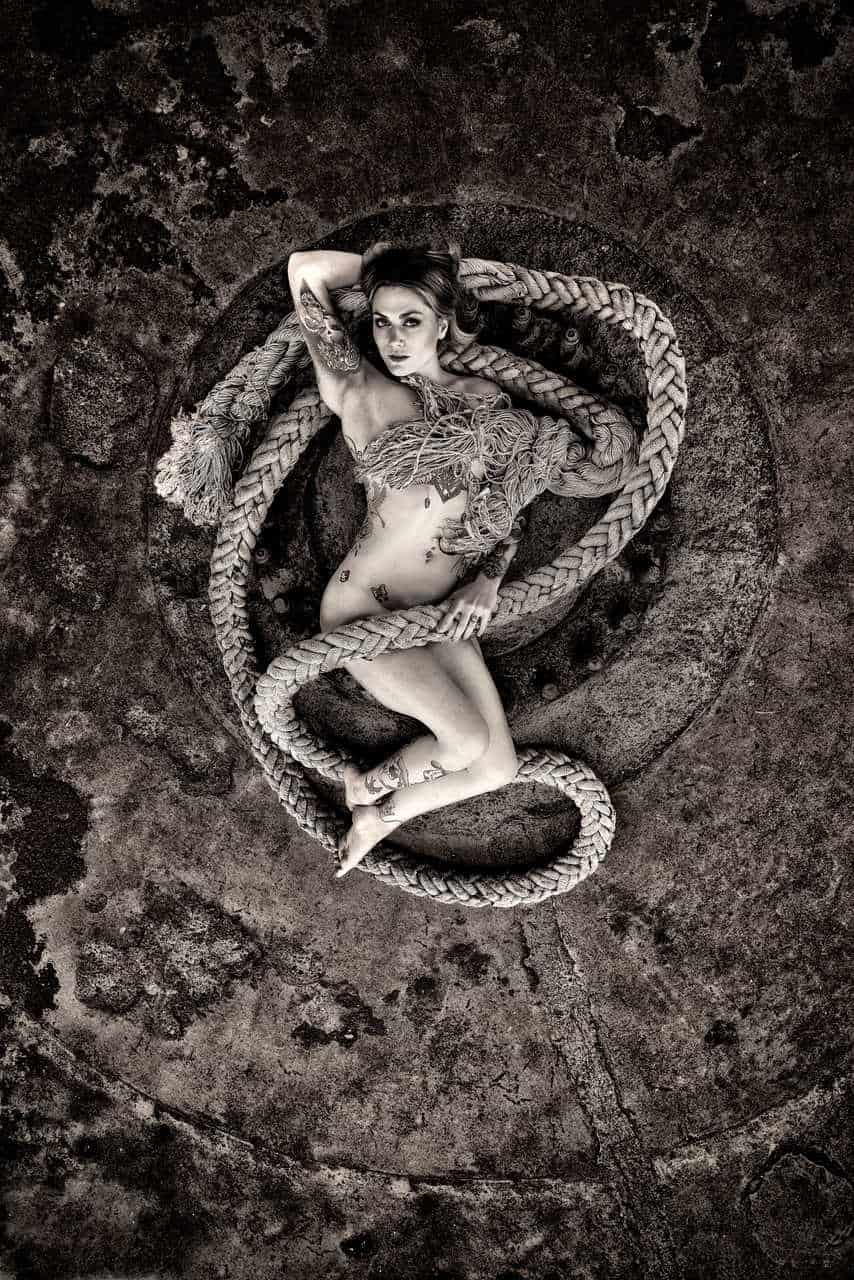
Temptation
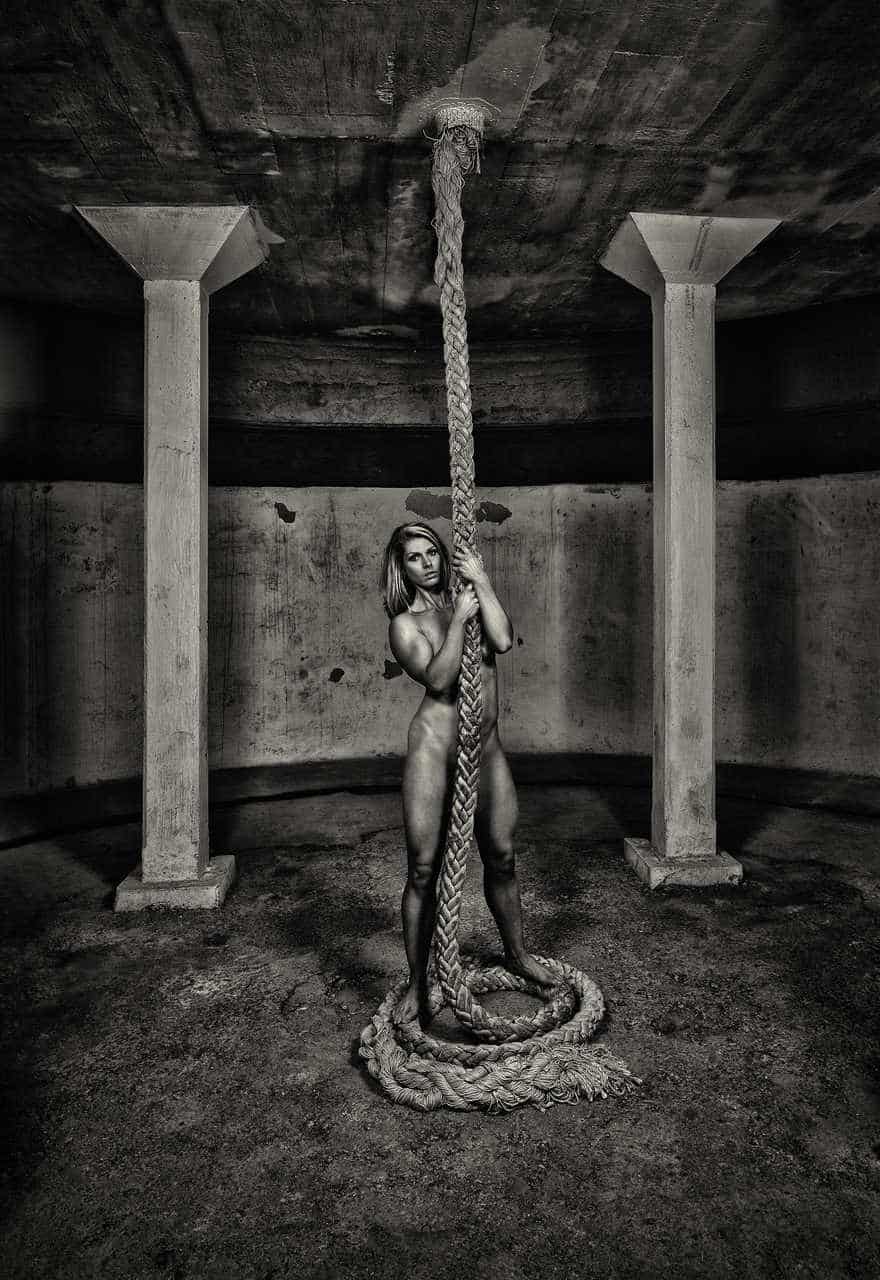
Climbing Up

Mud
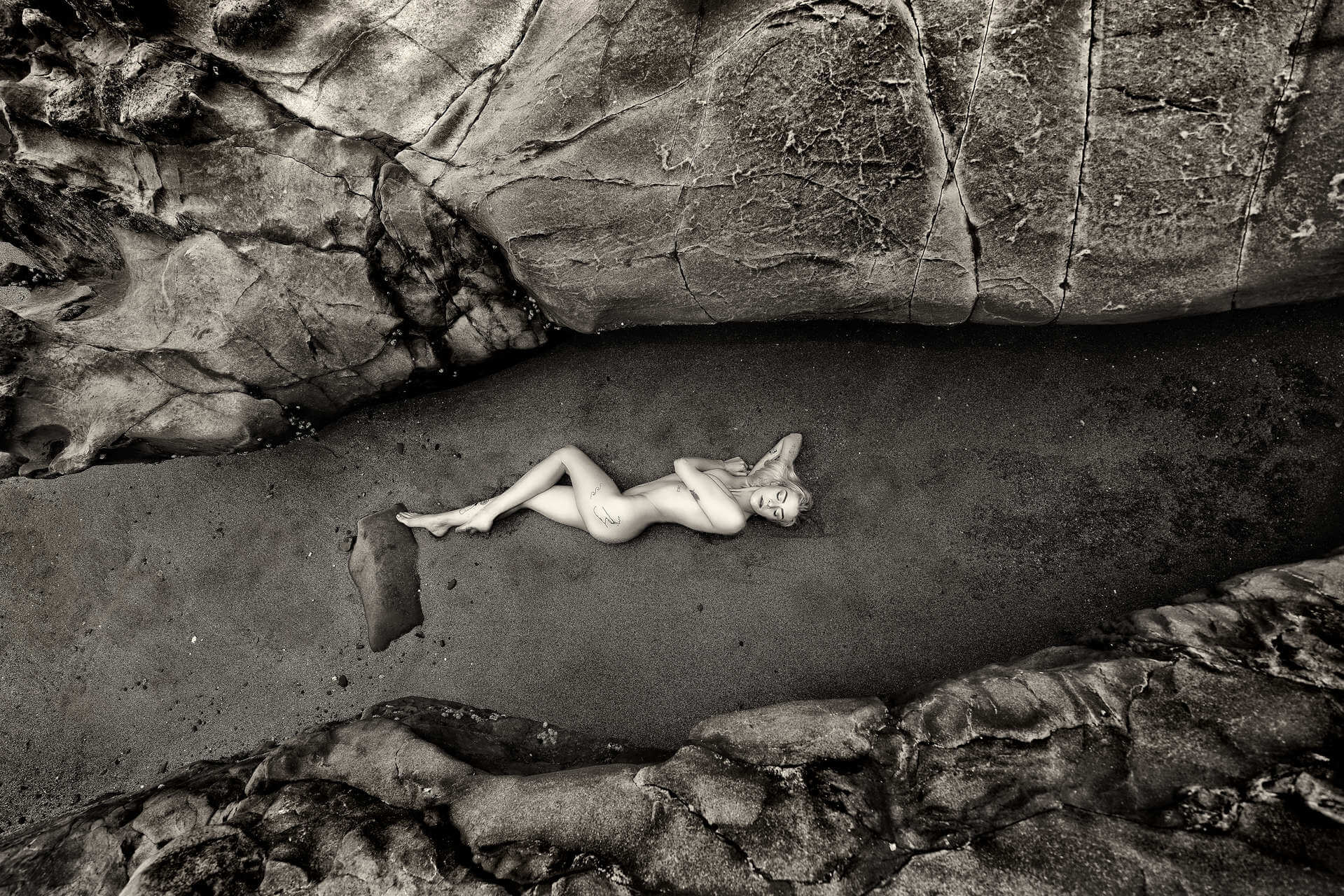
Between two Rocks
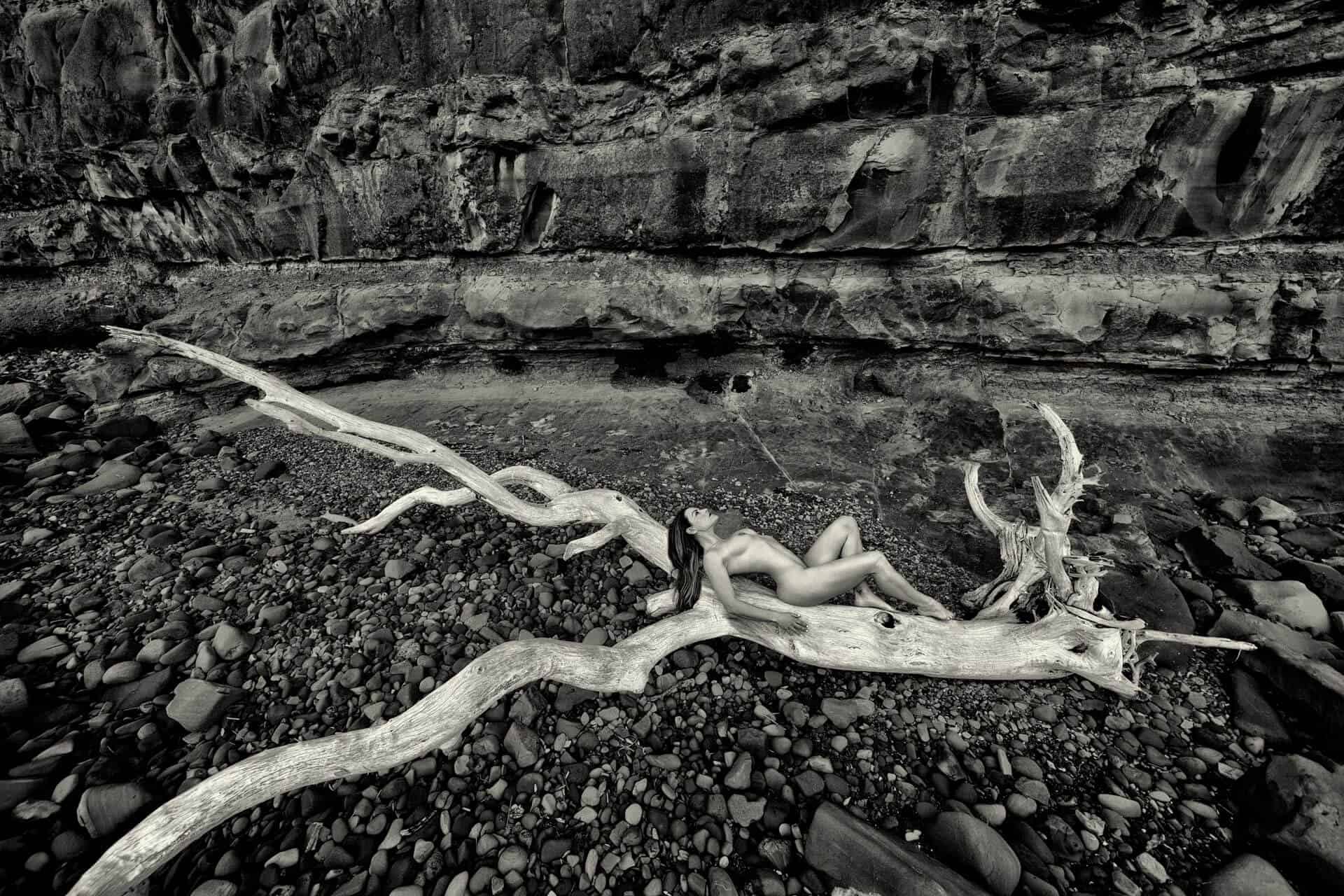
The Tree

Paul Gilbert – Bare Truth
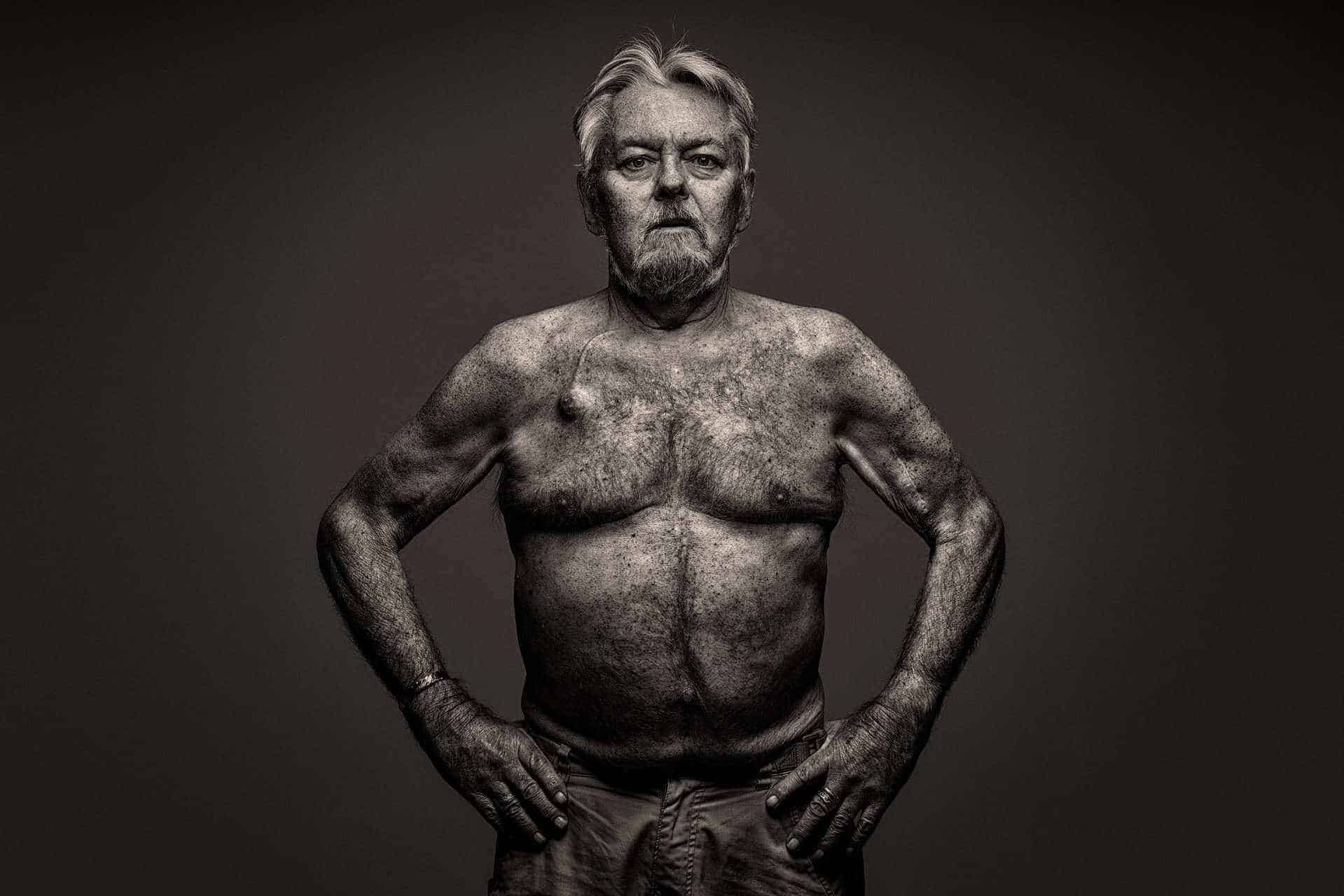
July 28, 2019
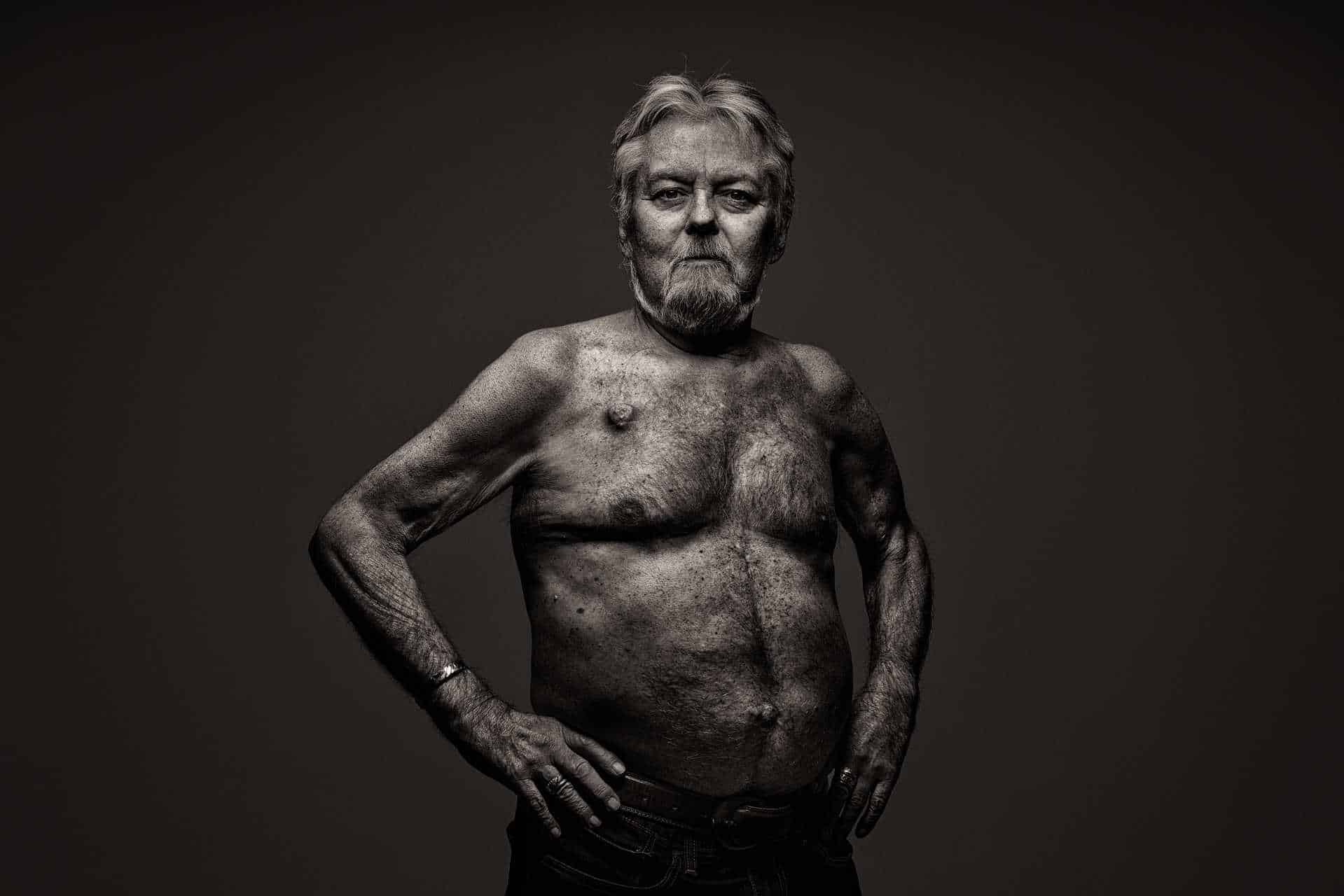
August 8, 2019

August 19, 2019
“I am due to be 65 years old (New Zealand’s retirement age) in early December 2019. I have a very aggressive cancer and am in palliative care after two chemotherapy rounds and a failed drug trial. I’m hoping to stay well enough to make that date or better. I have been a “dead man walking” since a burst colon tumour nearly took me out with septicemia, and that certainty transformed and tested my philosophical outlook. I have been very surprised that my previous lip service to my beliefs have now actually been tested and find me in a very rich part of my life. My collateral has always been in relationships, not cash currency and I’ve found this never devalues. Indeed I’m overwhelmed by the support and love returning my way from family, friends and acquaintances, much of it from the many wonderful people working in this often devastating area of care. I have never been more relaxed in my attitude to life and am sensitive to the fact that my calm demeanour attracts simple smiles, gifts and shared enjoyment. Likewise, my forthright opinions and dark humour are often very challenging, but go figure? Why blues music?
Tunnelling down to try to fathom this wonderous shift has not revealed any deliberate or constructed effort. I will take this gift and, while my quality of life is medically managed, try to maintain my voluntary activities with Hospice and elsewhere the need is felt.
Born in a relatively impoverished inner-city suburb with a fabulous mixed ethnicity, I enjoyed primary and intermediate school with good if challenged teachers and a great local library. During my parents’ discord and break up, books were my refuge. It was a household of drink and violence from my father, deep love and sacrifice from my mother.
My life has been strongly influenced by necessity and responsibility. Healthwise I have been free, by and large, of injury or disease and that has allowed me to spot the gap and with some tantalising risk, embark on photographic and maritime adventures when responsibilities lessened. Of course we navigate much of our life with youth’s immortal horizon. I used to say I liked the sound of deadlines whistling by, but no more.
My siblings and I lost our mother to high blood pressure, stress, and little available support, when I was 17 years old. With an absent father, and having just started work, I supported my younger brother and sister through their secondary school years. We ate well on very little because of a socialist food co-operative. My philosophy was forming along with a period of intense and at that time obscure soft-style martial arts training with a weighting toward meditation and energy integration. I have always been grateful that mum passed on her interest in photography, which, at age 7, along with a boat trip, cemented two combined lifelong passions. I have lived aboard yachts, photographed them, and enjoyed that wonderful lifestyle that our sparkling waters provide.
I progressed to a series of technically skilled high-end jobs including teaching. Although low paid these jobs allowed for a parallel passionate development in personal documentary and fine arts efforts. Maintaining an active exhibiting profile fell to one side due to financial constraints. The work however, which is always primary, has continued unabated, if unrecognised, in the fine arts arena. I’m currently looking to house my marine archive.
I became a solo parent to my two year old son after completing a documentary project. He returned to his mother at age 12 and then moved to Australia when he was 17. I have a daughter from a subsequent relationship, access to whom was very sadly limited. I have been recently blessed by Eamonn and Laura gifting us a grandson. Life is a circle.
I am currently very busy trying to organise things for my passing, to save anguish for my loved ones in the rather unknown time ahead. The time feels short, the list long. I’m planning a “Way out Party” to gather with and enjoy my friends and family as soon as is practical, to help them ease into their grief process in a face+to-face farewell, with laughter, ribald stories and much love. Boats will play a part in my crossing the bar.
My very unconventional urn will reside under Mum’s memorial tree, planted by Bruce, Linda and myself when I turned 50 years old. The tree overlooks my wondrous Hauraki Gulf and its islands from above the bay where I lived aboard my yacht for eight years. Traumatised by Mum’s early death it was devastating many years later to return to the cemetery and find they had lost the ashes. The now 3m high tree and its simple bench and plaque, is a place to stand, rest and remember. I am very happy with these arrangements.
Enough of that rough sea!
Being a photographer, I rarely am caught north of the lens hence my appearance here as a record. What have I learned about Photography? Only two things matter:
1. It’s where you stand
2. It’s when you trip the shutter Practice refining this for as long as possible.
Add a decent amount of saltwater. Mix well. Enjoy the Journey.”

Portrait of Humanity
Delighted to have my photo ‘Man with a leather jacket’ published in Portrait of Humanity. This is a hardcover book by the publisher of The British Journal of Photography, in partnership with Magnum Photos, containing 200 portraits taken by photographers from 65 countries. The book celebrates global citizenship at a time of great instability. It serves as a timely reminder that despite our many differences, we are able to unite as a global community through the power of photography and to create a collaborative photography exhibition. Portrait of Humanity is a celebration of our shared values: individuality, community and unity. The photos show us the world, documenting the universal expressions of life; laughter, courage, moments of reflection, journeys to work, first hellos, last goodbyes and everything in between. Funny, revealing and often moving, the faces and stories show that we are all wonderfully unique, yet at the same level, deeply the same…

Portrait of Humanity


2019 North Shore Salon
Delighted to win a plethora of awards including seven medals at this year’s North Shore Salon! “Don’t enter again please” said one of the volunteers who helped out on the opening night…
“I am very excited to win these prestigious awards” says Ilan. “I am a portrait photographer, so winning both Gold and Silver in the People category is especially meaningful to me. I first entered this wonderful competition in 2010”, says Wittenberg “and it’s a big honour even to get an Acceptance”.
Established in 1995 by the North Shore Photographic Society [NSPS], the North Shore National Salon of Photography aims to promote the art of photography in New Zealand through a respectful and inspiring annual event. Founded in 1954, the NSPS has 150 members ranging from amateurs to professionals and from beginners to experts. Affiliated with the Photographic Society of New Zealand, it is part of a network of photographic clubs and societies across New Zealand. Each year, the Salon has run a competition for New Zealand photographers, with the 2019 Salon attracting 1,800 entries from 600 entrants including members from 33 photographic clubs and societies from Whangarei to Southland and overseas. The Salon convenes independent panels of six selectors to judge entries in various categories such as Impressionism, Scapes, People, Open, Abstract, Fantasy, Street Photography, Monochrome and Colour.
All awarded prints and digital images will be publicly exhibited at Mairangi Arts Centre and all accepted photographs are reproduced in a beautiful printed catalogue. The show is currently exhibited at Mairangi Art Centre until June 17 – entry is free.
Where
Mairangi Bay Art Centre, 20 Hastings Rd, Mairangi Bay, Auckland
When
Mon-Fri 9:30am-4pm
Sat-Sun 10am-2pm
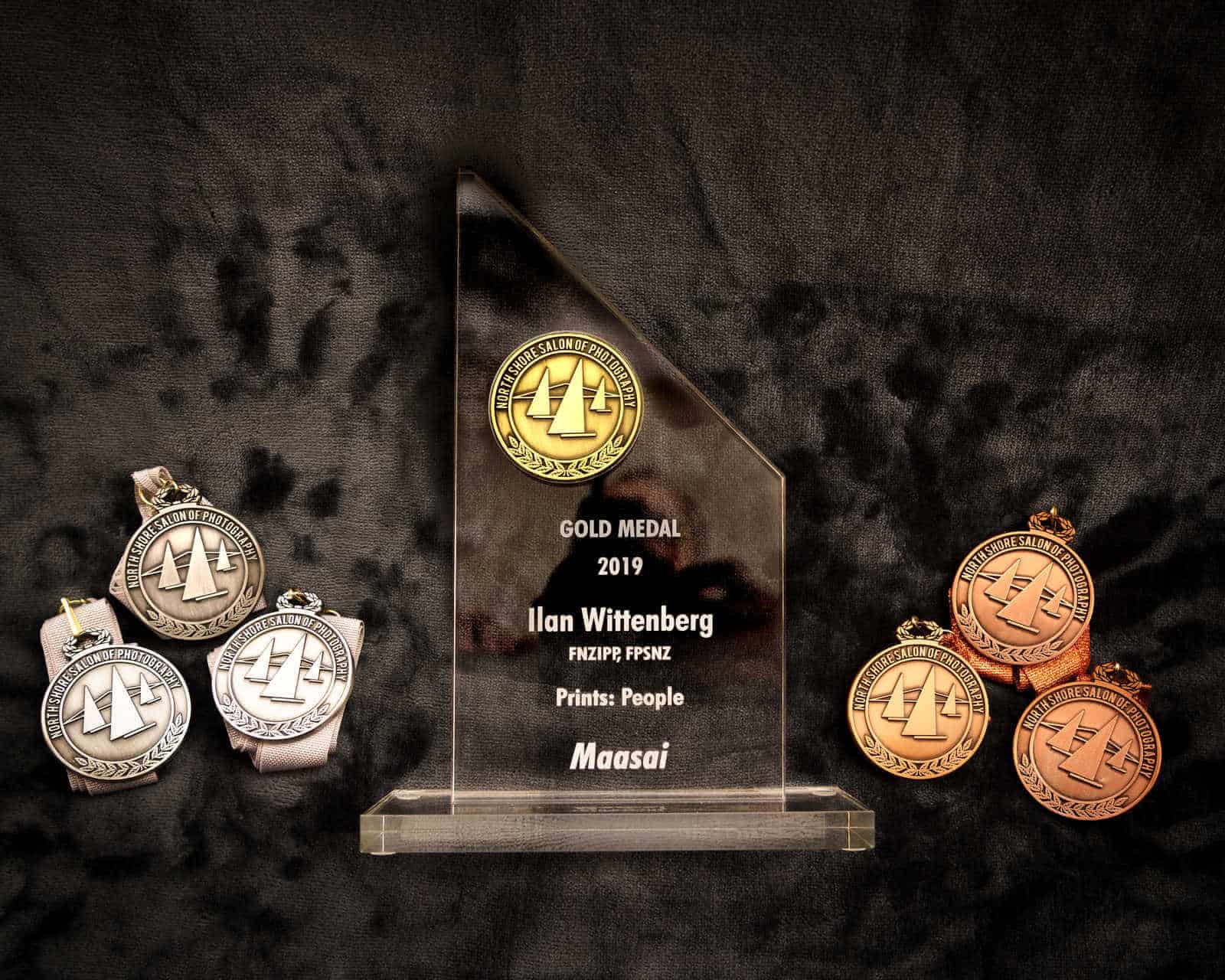
2019 North Shore Salon of Photography
Gold medal – 2019 North Shore Salon – People category, print
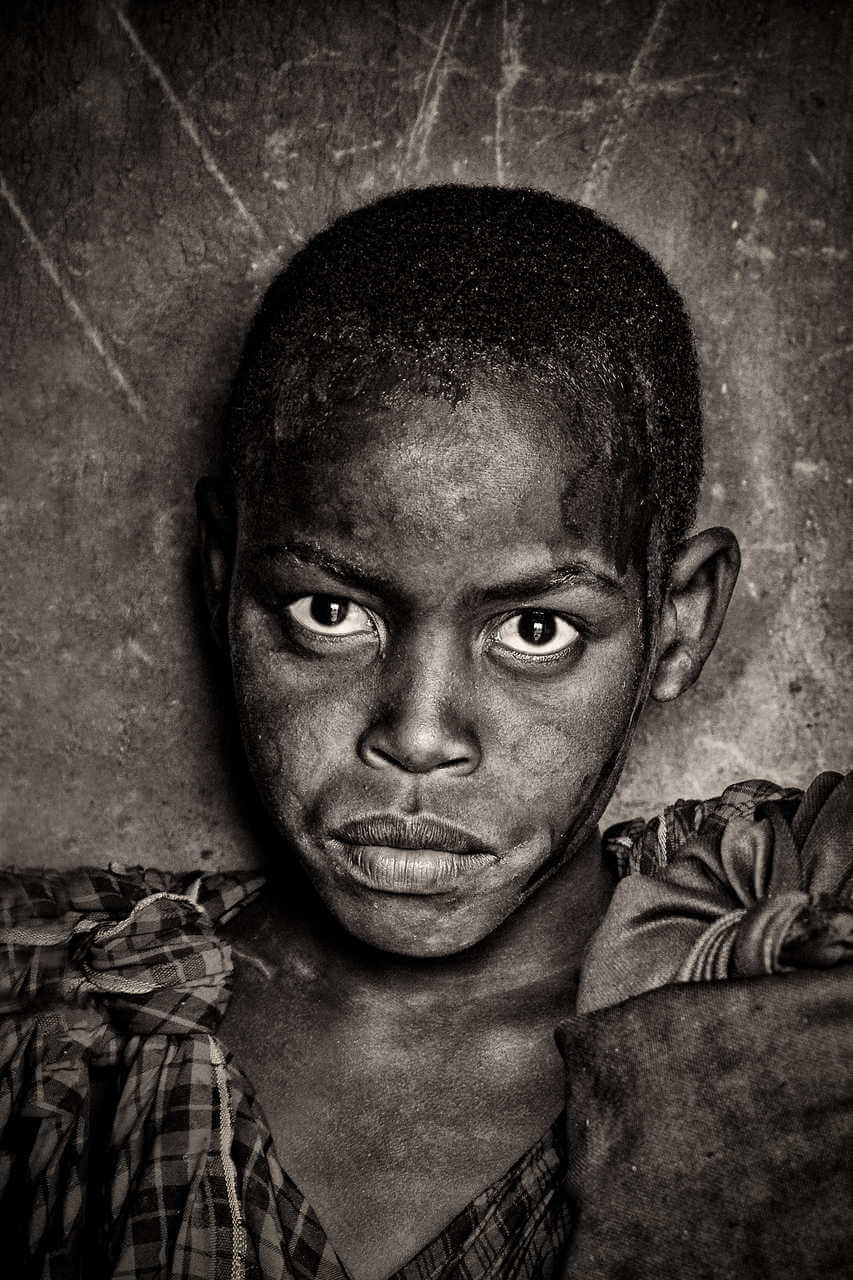
Silver Medal – 2019 North Shore Salon – People category, print
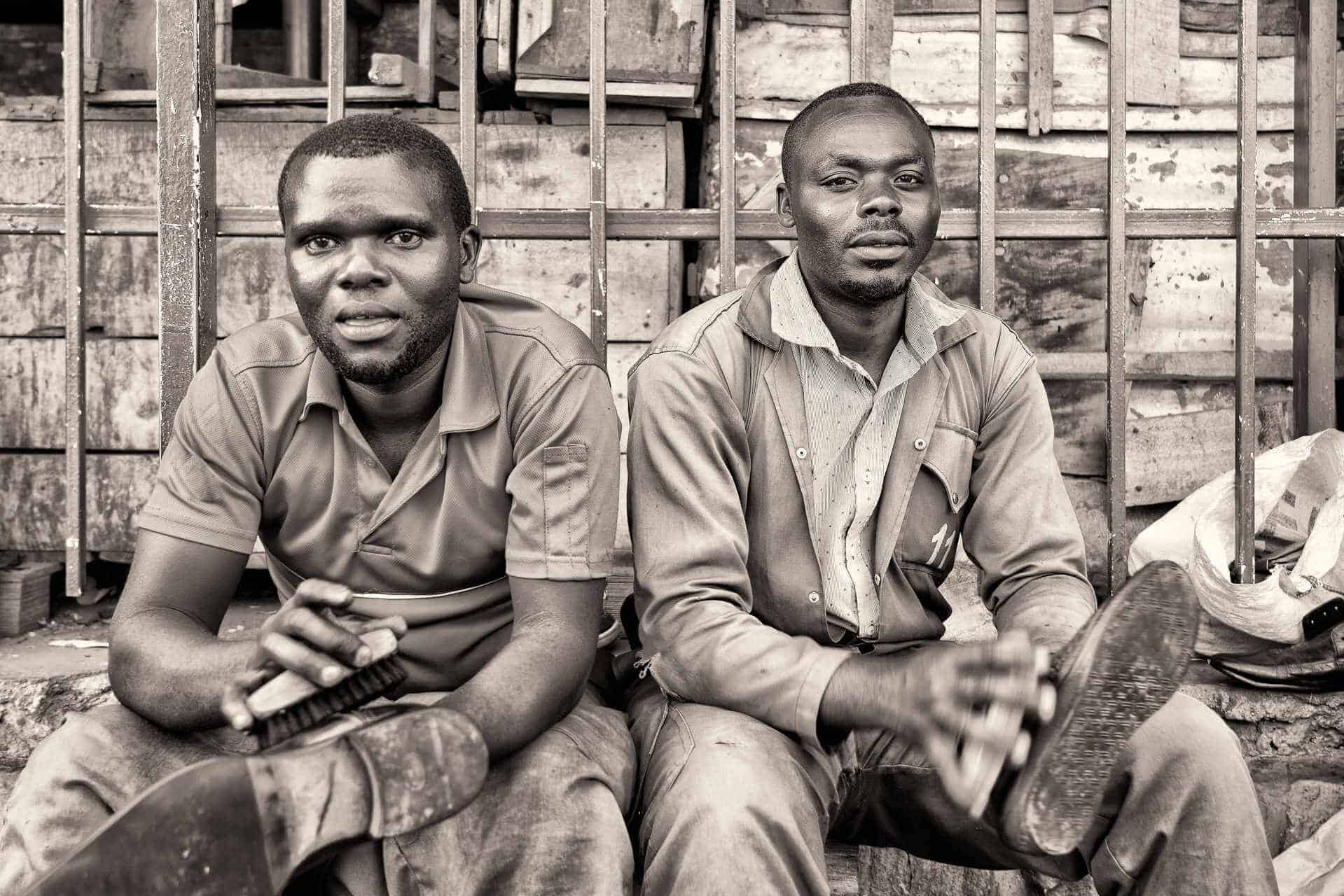
Silver Medal – 2019 North Shore Salon – Street Category, digital
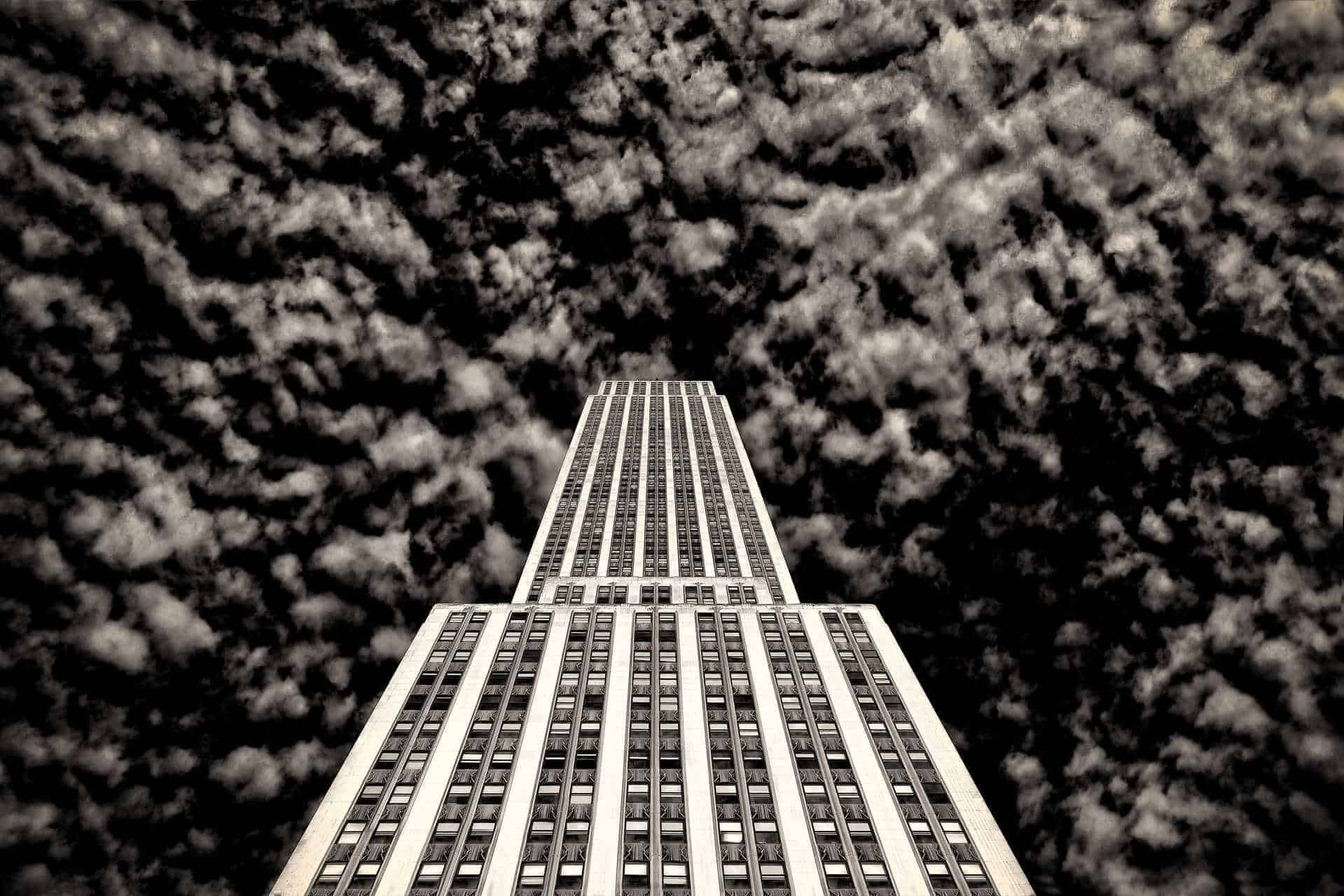
Silver Medal – 2019 North Shore Salon – Scapes category, print
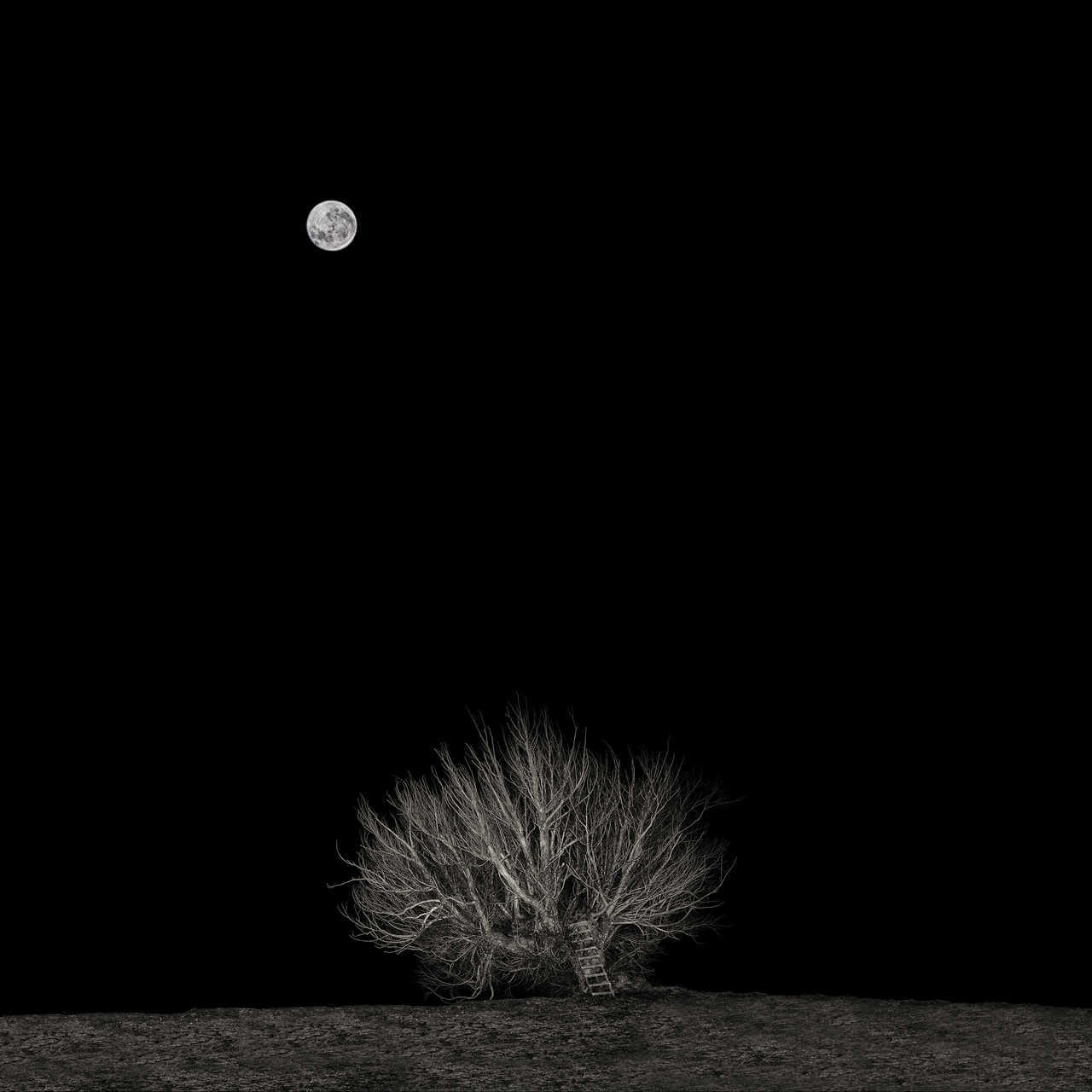
Bronze Medal – 2019 North Shore Salon – Scapes category, print
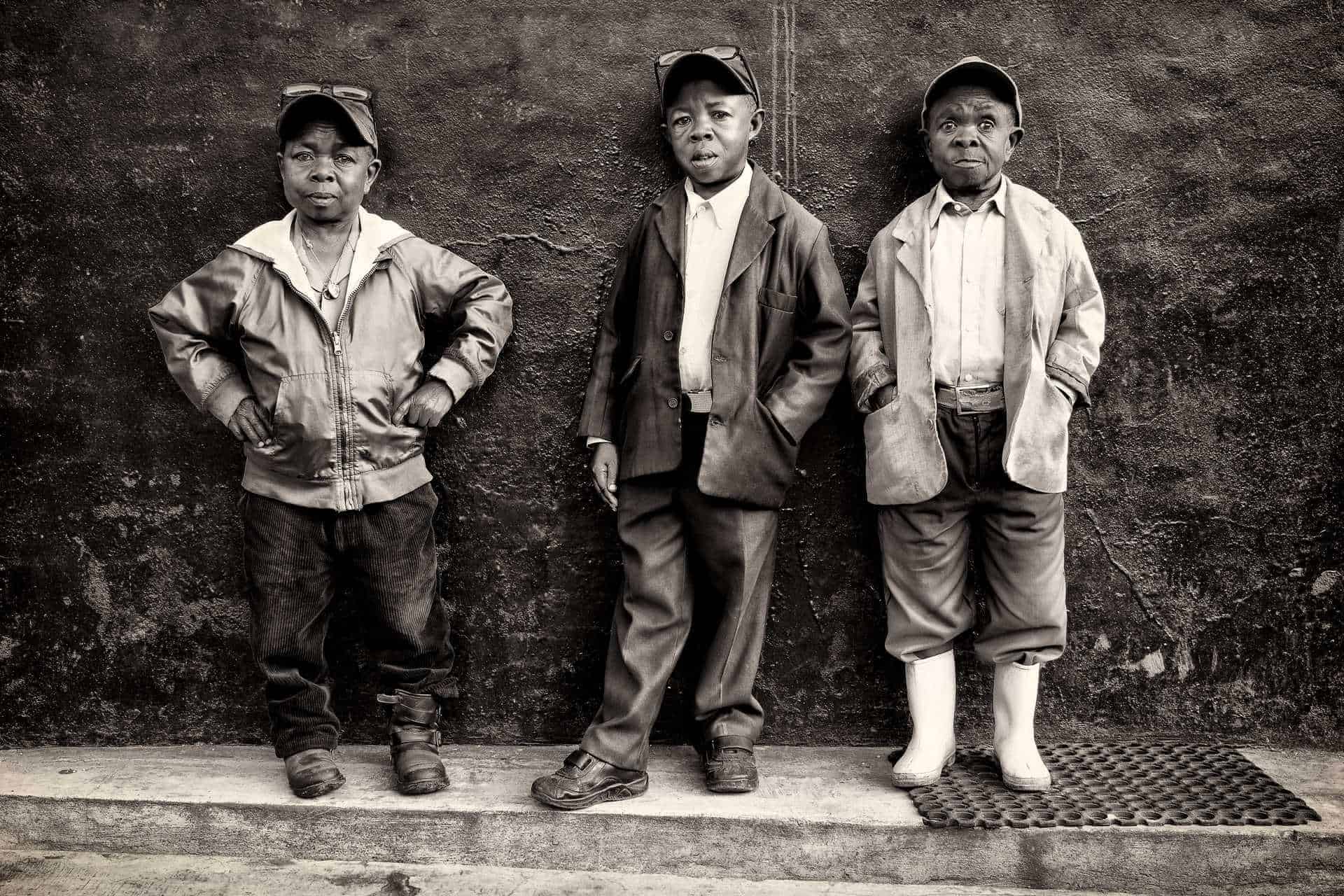
Honours – 2019 North Shore Salon – Street category, digital
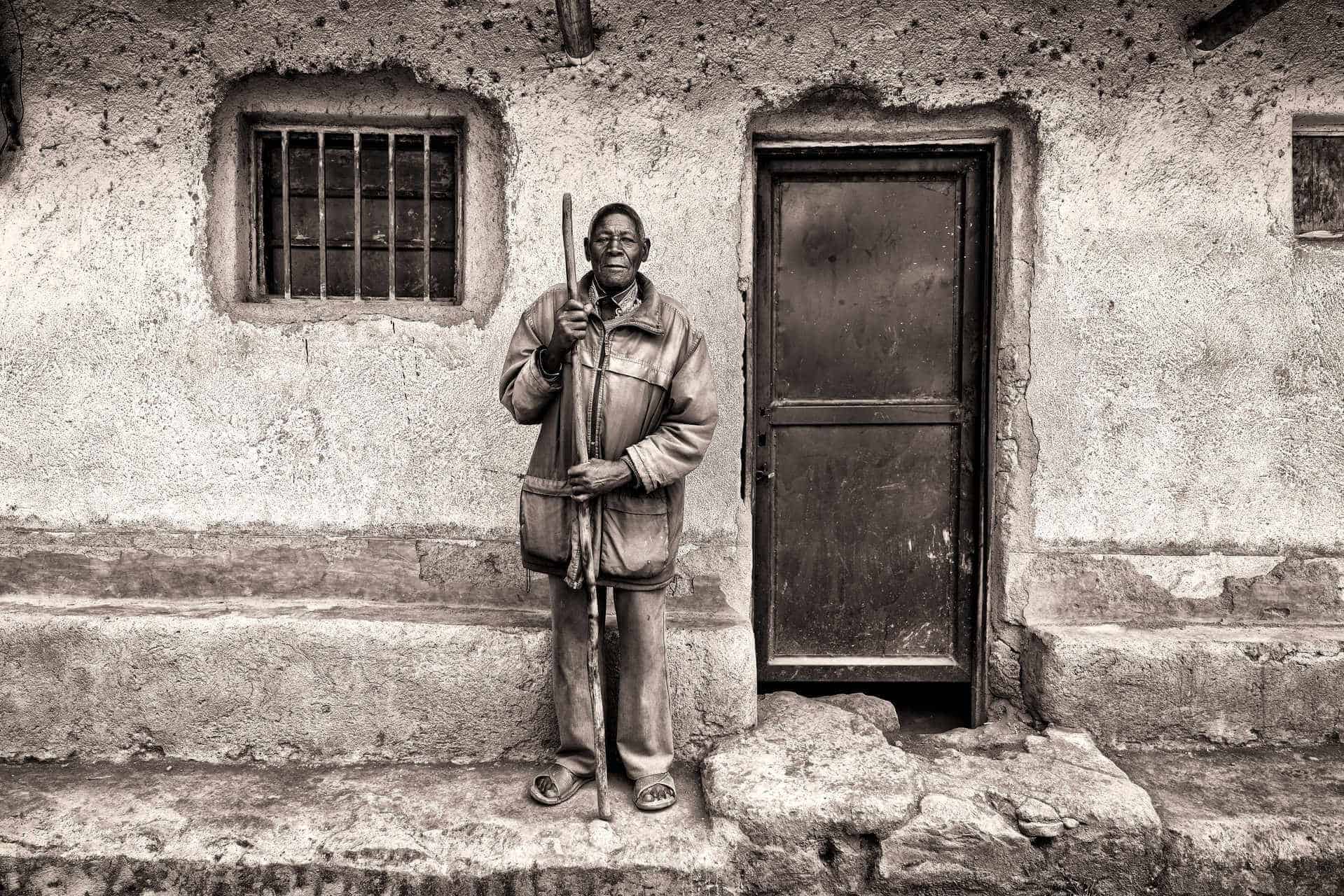
Honours – 2019 North Shore Salon – Street category, digital
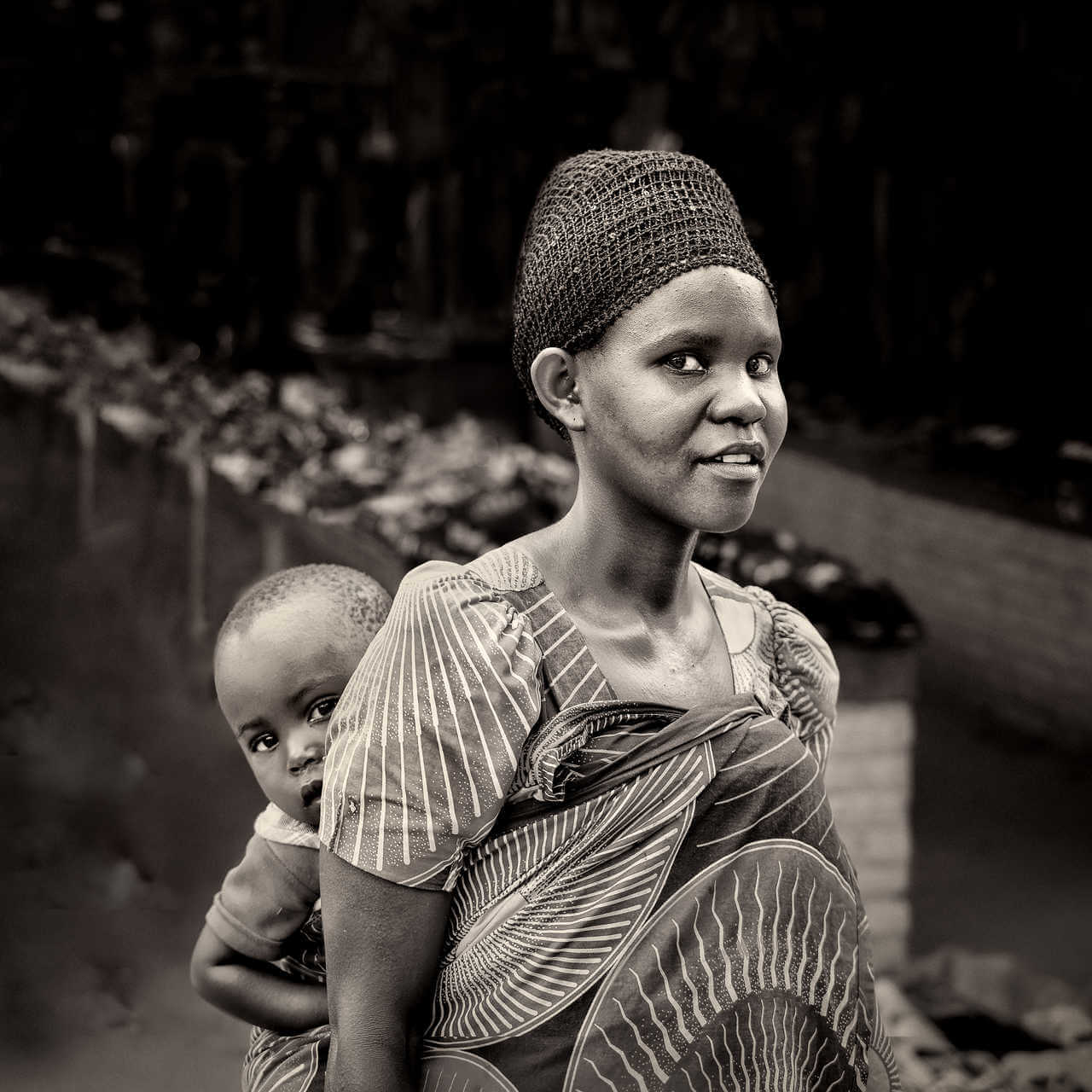
Acceptance – 2019 North Shore Salon – Street category, digital

Honours – 2019 North Shore Salon – Open category, digital
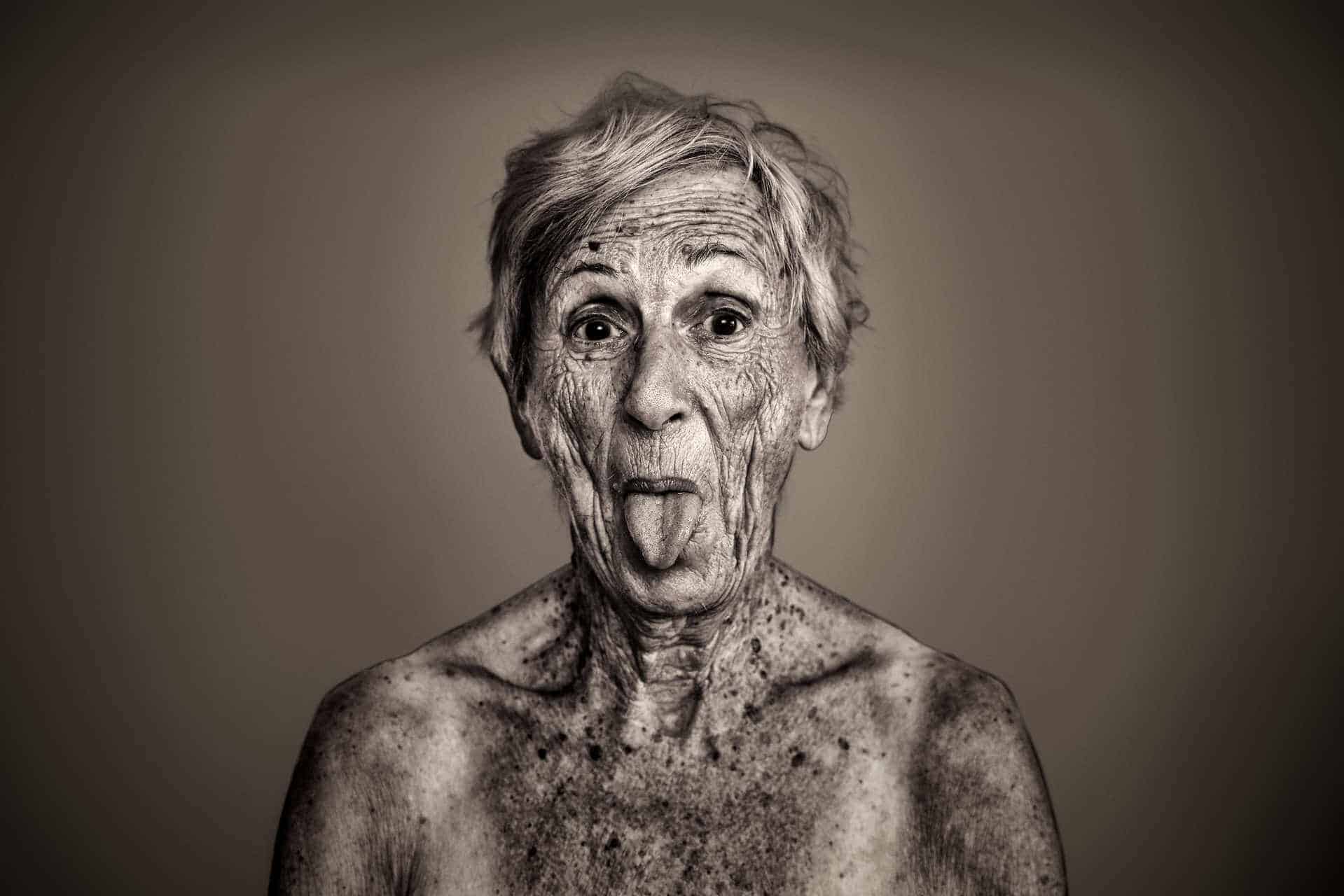
Acceptance – 2019 North Shore Salon – Open Monochrome, print
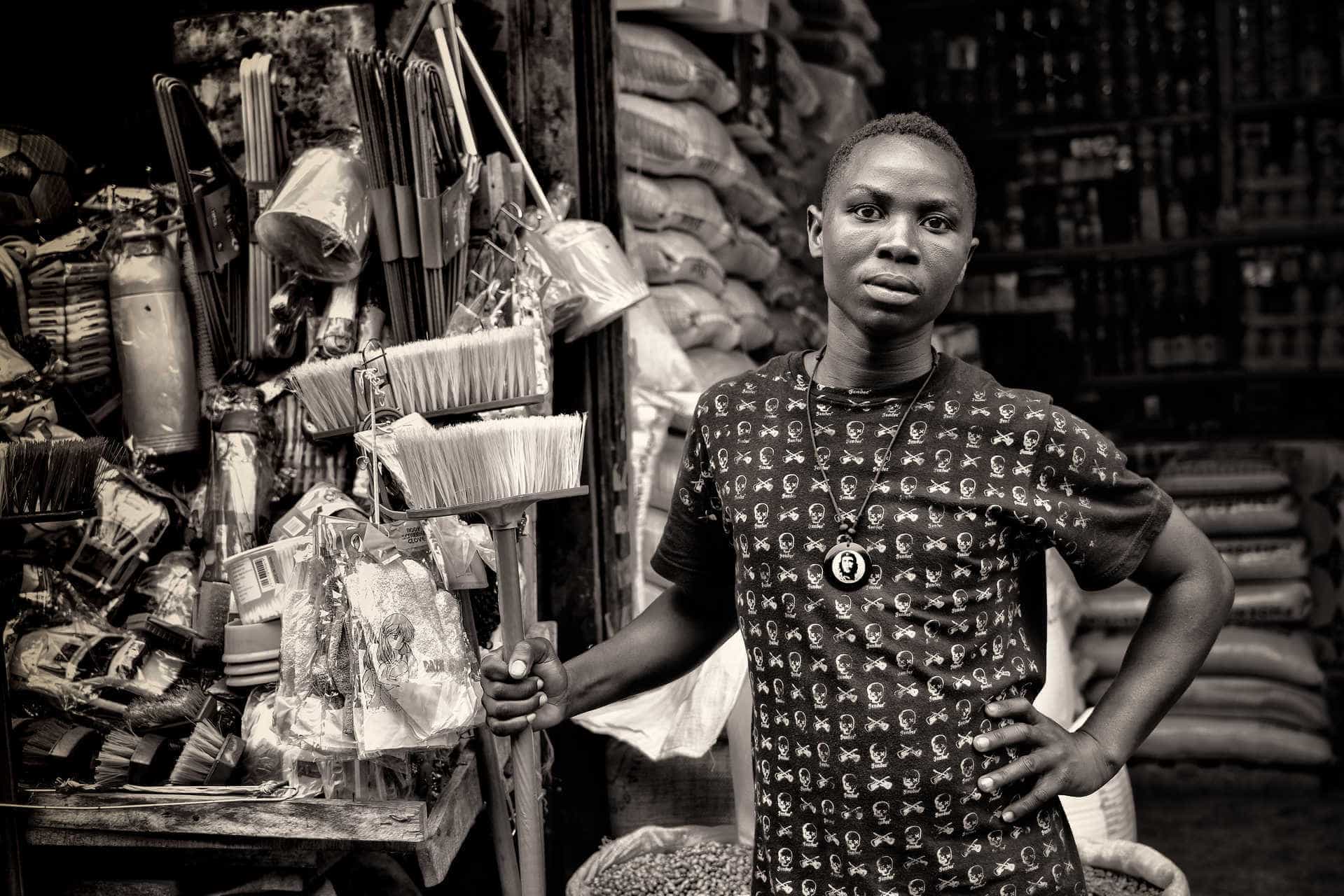
Honours – 2019 North Shore Salon – People category, print
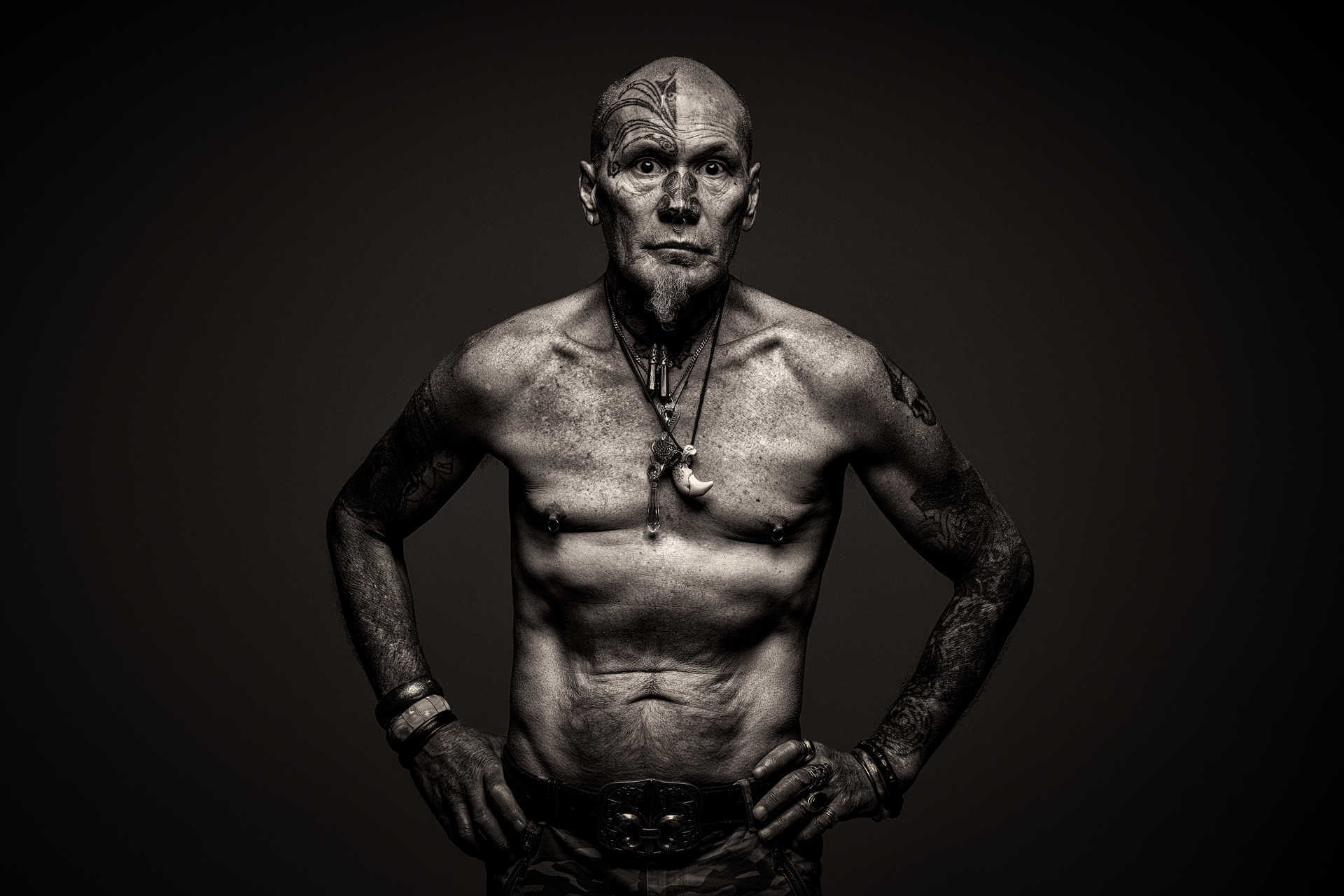
Highly Commended – 2019 North Shore Salon – Open category, digital
Honours – 2019 North Shore Salon – Open category, digital
Bronze Medal – 2019 North Shore Salon – Open Colour category, print

Bronze Medal – 2019 North Shore Salon – Open Monochrome category, print

The Old Willow Tree
Willow Tree and Moon © Ilan Wittenberg 2018 Limited Edition of 20 + 2AP Buy Now

Drought
Drought © Ilan Wittenberg 2018 Limited Edition of 9 + 2AP
This image represents drought. Climate change has brought drastic changes to many regions on earth. Global warming is causing severe drought. Huge areas that were once fertile are no longer suitable for agriculture. Millions of people are already impacted by these catastrophic changes. A deadly civil war in Syria has erupted when the government decreased the allocation of irrigation water to farmers. Vast regions in Iran are no longer cultivated and the population is helpless. They cannot grow any fruits or vegetables. The earth is dry and so is the woman’s skin, both are cracked. The woman is bare, she is completely exposed – just like our land. This is a desperate call to stop the devastating impact of industrial pollution on our planet.

The Huntress
The Huntress © Ilan Wittenberg 2018 Limited Edition of 9 + 2AP

Timid
Silver Medal – 2019 North Shore Salon – People category, print

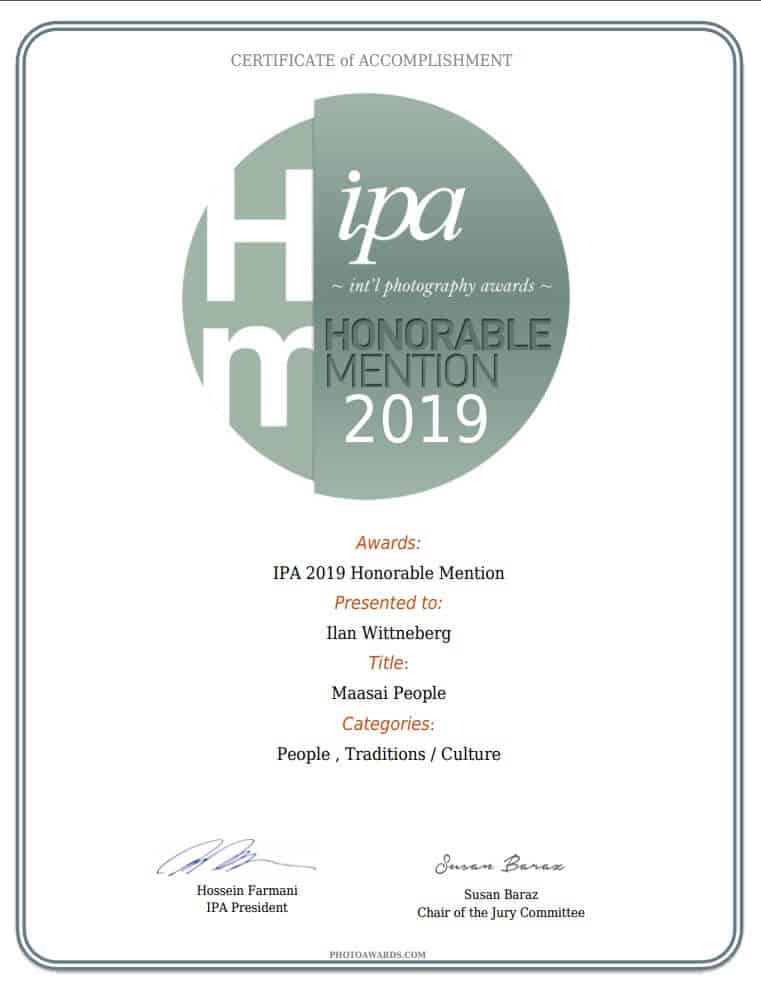
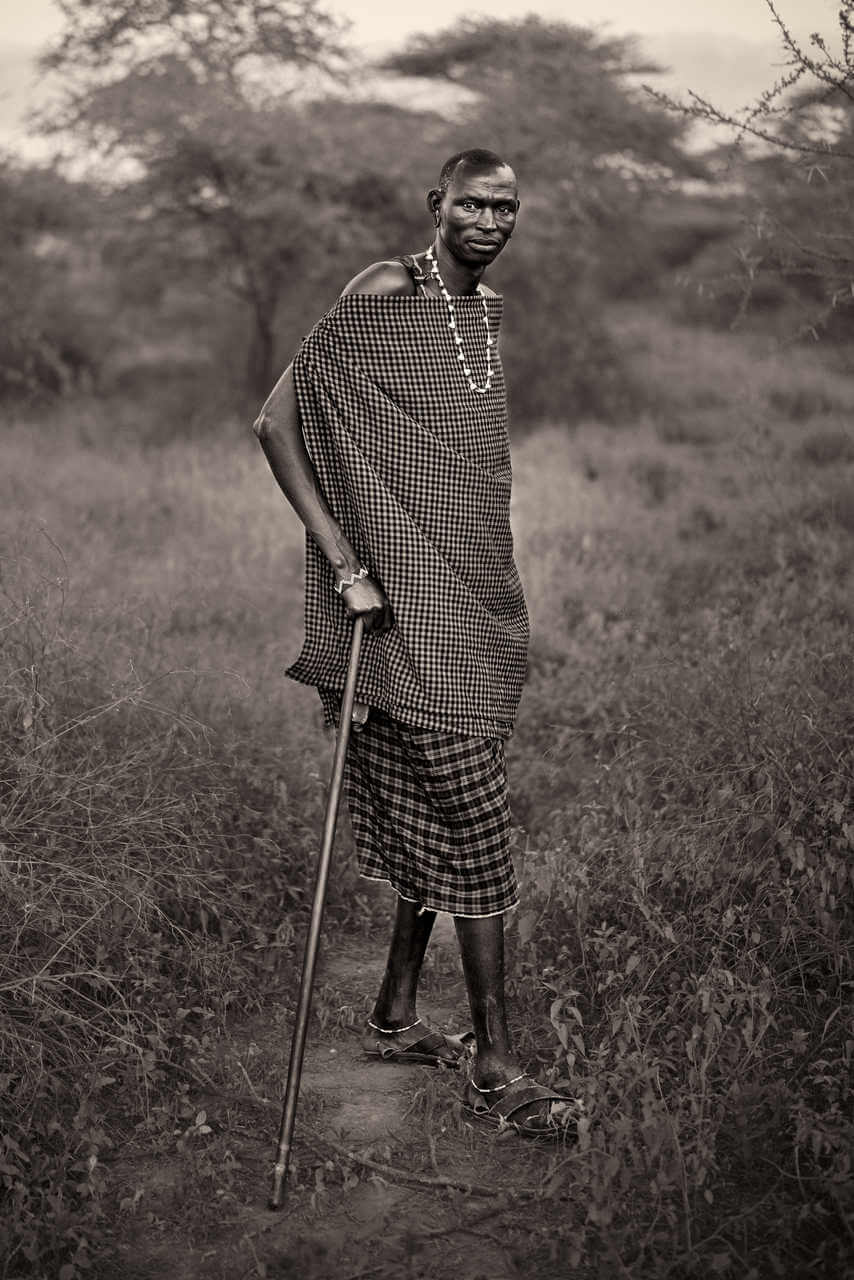
The Maasai

The Maasai – Gold Medal, 2019 North Shore Salon of Photography: Portrait category, print
The Maasai inhabit the African Great Lakes region and arrived via the South Sudan. The Maasai are famous for their fearsome reputations as warriors and cattle-rustlers. Maasai society is strongly patriarchal in nature, with elder men, sometimes joined by retired elders, deciding most major matters for each Maasai group. A full body of oral law covers many aspects of behavior. Formal execution is unknown, and normally payment in cattle will settle matters. An out-of-court process is also practiced called ‘amitu’, ‘to make peace’, or ‘arop’, which involves a substantial apology. The monotheistic Maasai worship a single deity called Enkai or Engai. Engai has a dual nature: Engai Narok (Black God) is benevolent, and Engai Na-nyokie (Red God) is vengeful. There are also two pillars or totems of Maasai society: Oodo Mongi, the Red Cow and Orok Kiteng, the Black Cow with a subdivision of five clans or family trees. The maasai also has a totemic animal which is the lion however, the animal can be killed. The way the Maasai kill the lion differs from trophy hunting as it is used in the rite of passage ceremony. The “Mountain of God”, Ol Doinyo Lengai, is located in northernmost Tanzania and can be seen from Lake Natron in southernmost Kenya. The central human figure in the Maasai religious system is the laibon whose roles include shamanistic healing, divination and prophecy, and ensuring success in war or adequate rainfall. Today, they have a political role as well due to the elevation of leaders. Whatever power an individual laibon had was a function of personality rather than position. Many Maasai have also adopted Christianity and Islam. The Maasai are known for their intricate jewelry.
The piercing and stretching of earlobes is common among the Maasai as with other tribes. Various materials have been used to both pierce and stretch the lobes, including thorns for piercing, twigs, bundles of twigs, stones, the cross section of elephant tusks and empty film canisters.
As a historically nomadic and then semi-nomadic people, the Maasai have traditionally relied on local, readily available materials and indigenous technology to construct their housing. The traditional Maasai house was in the first instance designed for people on the move and was thus very impermanent in nature. The houses are either somewhat rectangular shaped with extensions or circular, and are constructed by able-bodied women.
The structural framework of a typical hut is formed of timber poles fixed directly into the ground and interwoven with a lattice of smaller branches wattle, which is then plastered with a mix of mud, sticks, grass, cow dung, human urine, and ash. The cow dung ensures that the roof is waterproof. The enkaj or engaji is small, measuring about 3 × 5 m and standing only 1.5 m high. Within this space, the family cooks, eats, sleeps, socializes, and stores food, fuel, and other household possessions. Small livestock are also often accommodated within the enkaji. Villages are enclosed in a circular fence (an enkang) built by the men, usually of thorned acacia, a native tree. At night, all cows, goats, and sheep are placed in an enclosure in the centre, safe from wild animals.
Shúkà is the Maa word for sheets traditionally worn wrapped around the body. These are typically red, though with some other colors such as blue and plaid patterns. Pink, even with flowers, is not shunned by warriors. One piece garments known as kanga, a Swahili term, are common. Maasai near the coast may wear kikoi, a type of sarong that comes in many different colors and textiles. However, the preferred style is stripes.
Many Maasai in Tanzania wear simple sandals, which were until recently made from cowhides. They are now soled with tire strips or plastic. Both men and women wear wooden bracelets. The Maasai women regularly weave and bead jewellery. This beadwork plays an essential part in the ornamentation of their body. Although there are variations in the meaning of the color of the beads, some general meanings for a few colors are: white, peace; blue, water; red, warrior/blood/bravery.
Beadworking, done by women, has a long history among the Maasai, who articulate their identity and position in society through body ornaments and body painting. Before contact with Europeans, the beads were produced mostly from local raw materials. White beads were made from clay, shells, ivory, or bone. Black and blue beads were made from iron, charcoal, seeds, clay, or horn. Red beads came from seeds, woods, gourds, bone, ivory, copper, or brass. When late in the nineteenth century, great quantities of brightly colored European glass beads arrived in Southeast Africa, beadworkers replaced the older beads with the new materials and began to use more elaborate color schemes. Currently, dense, opaque glass beads with no surface decoration and a naturally smooth finish are preferred.


Woman on a Tree
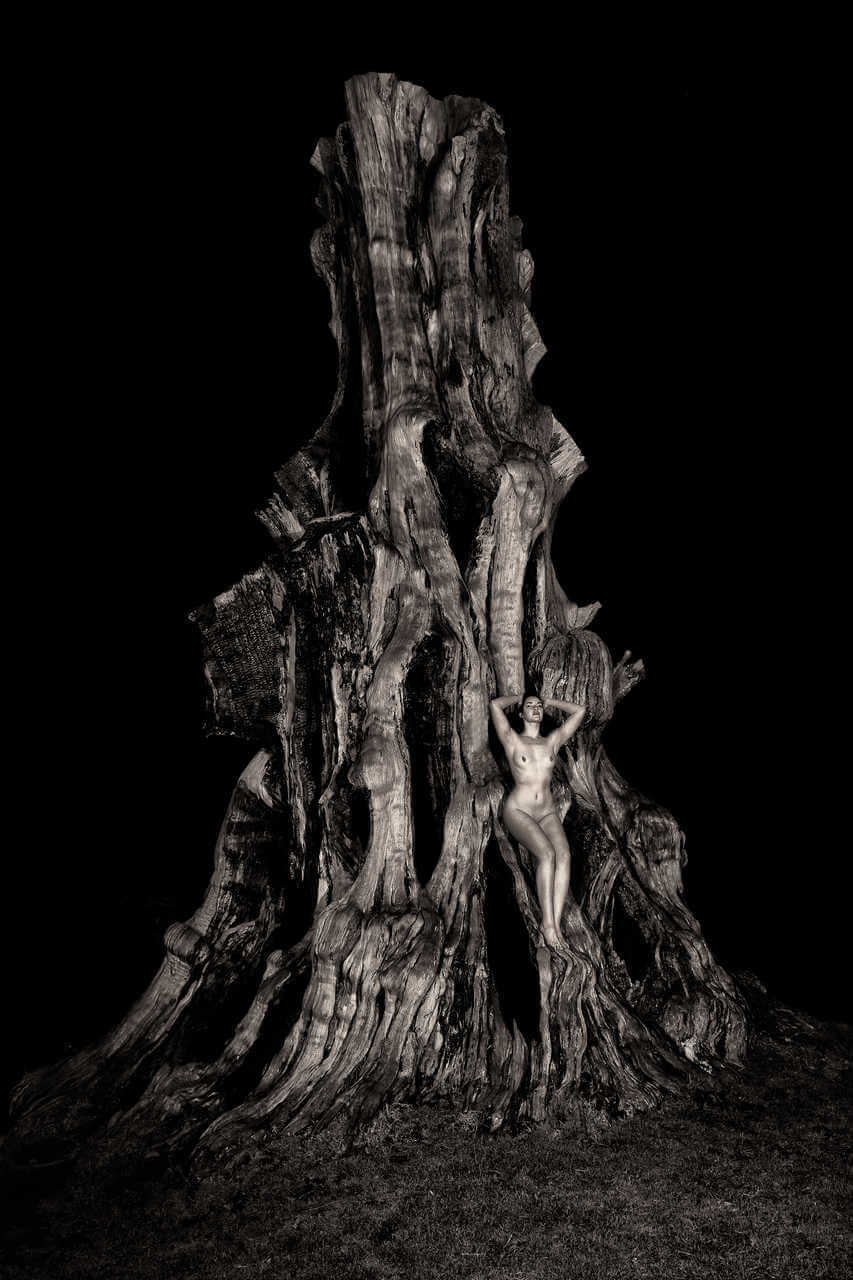
Gold Award – NZIPP 2019 Iris Awards
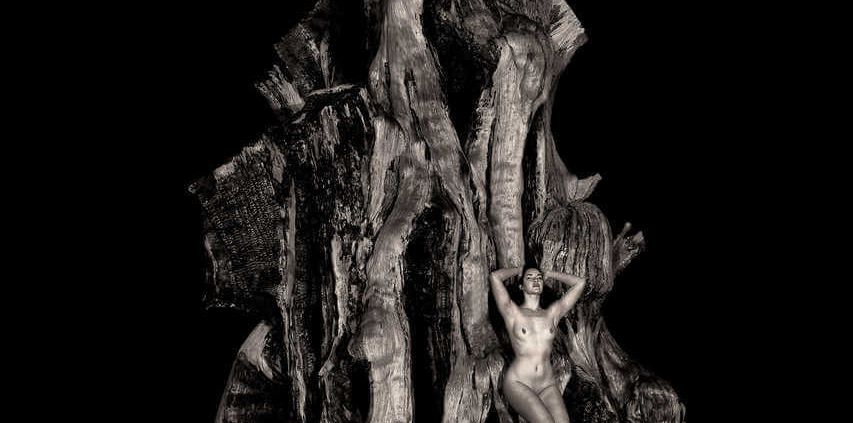
Woman on a Tree is an exploration of opposing forces: life and death, young and old, power and vulnerability, soft and hard. Its pertinence lies in the symbolism of contradictions. Contradictions are all around us.
Humans continue to exploit and overwhelm the natural environment with industrial pollution despite global warming, and its ever present impact on earth. The dead tree, scarred from fires, represents mother nature’s vulnerability to the forces we inflict upon her. I explore the paradox that humanity needs trees to live, yet we keep cutting them down. Despite the beautiful environment being subject to incessant abuse, western society considers itself to be thriving, ignorant to greater issues.
The interaction between the human form and the tree is like a love dance. An intimate moment, where the body caresses the tree and with that, offers a gentle apology, a moment of compassion. Humans can empathise with nature’s scars. We have scars too. Some are visible and others are hidden: scars from neglect, abuse, addiction or violence. We have the power to conceal our scars yet the tree is forever exposed.
This woman is bare, reflecting the state of the tree. Demonstrating that despite paradoxical contradictions which taint our relationship with earth, we can still find comfort, as she does here. Comfort in one’s skin and comfort in the company of nature. The story that accompanies this piece invites the viewer to reflect on their own identity politics, creating a moment to contemplate our complex relationship with nature.
I depict the woman in her most natural state, one with nature. By embracing the human form in all its glory and portraying the woman and tree side by side, it is my vision that the viewer embraces nature as a precious ephemeral organism that needs to be cherished and protected.
