

Yawning Camel
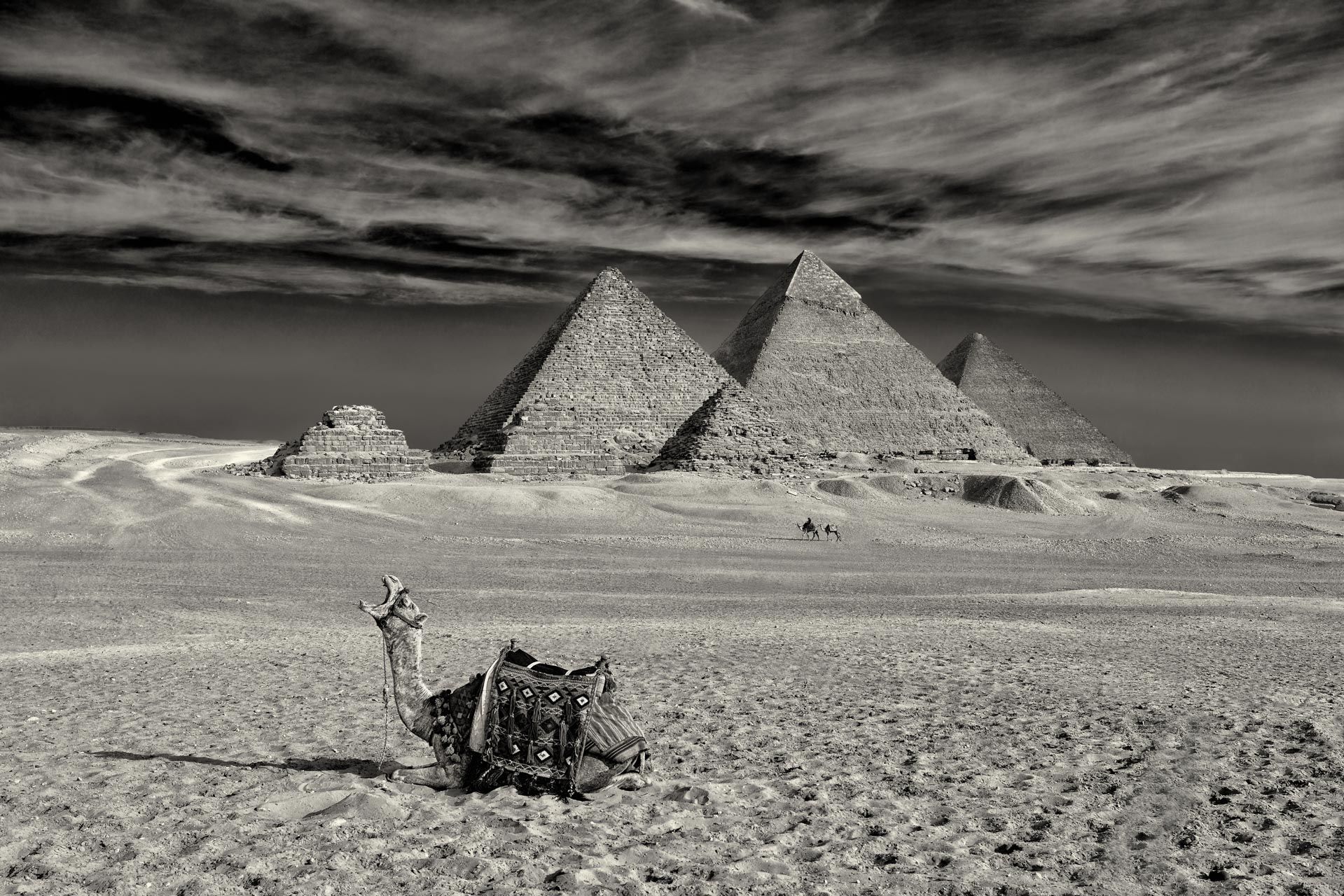
Built around 2630 BCE for Pharaoh Khufu, the Great Pyramid of Giza, is the largest of the three pyramids on the Giza Plateau in Egypt. Standing at 146.5 meters (481 feet) tall, it was the tallest man-made structure for over 3,800 years. Constructed with approximately 2.3 million limestone and granite blocks, each weighing 2-50 tons, it showcases remarkable engineering precision. Its alignment to true north is accurate within 3/60th of a degree, and it originally covered 13 acres at its base.
The pyramid was part of a complex including two mortuary temples, a causeway, and smaller pyramids for Khufu’s queens. Its internal structure includes the King’s Chamber, Queen’s Chamber, and a Grand Gallery, with narrow passageways and a subterranean chamber. The exact construction methods remain debated, but theories suggest ramps, levers, and a workforce of tens of thousands, likely not slaves but skilled laborers and conscripts.
It was originally clad in polished white limestone, making it gleam in the sun, though much of this casing has been removed over time. The pyramid’s purpose was primarily as a tomb, though no mummy was found, and it holds cultural and religious significance tied to Egyptian beliefs about the afterlife.
Today, it’s a UNESCO World Heritage Site and one of the Seven Wonders of the Ancient World, drawing millions of visitors. Its enduring mystery fuels speculation, from precise astronomical alignments to fringe theories about lost technologies, though mainstream archaeology attributes it to the Old Kingdom’s advanced organizational and engineering capabilities.








Leave a Reply
Want to join the discussion?Feel free to contribute!